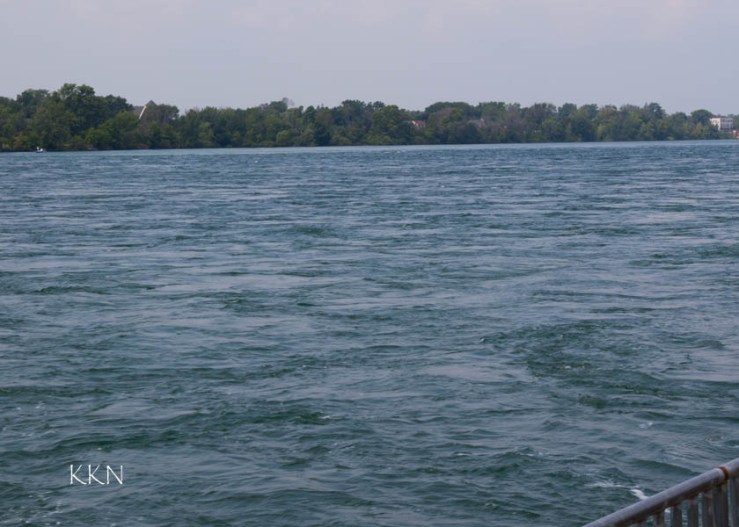
I heard of Bird Island Pier, but never visited before. We stopped on our return from a day trip, and took a walk toward the Peace Bridge. The strong wind made conversation a little difficult as we walked toward the Peace Bridge on the paved path along the Niagara River. Many ducks gathered in various places on the leeward side, grooming and taking a break from the wind and waves.
The path goes under the Peace Bridge, but we turned back before then. We visit this area to see family. On this visit we realized we needed more time, not only to visit family but also explore the area again. We even passed on our annual Shakespeare in Delaware Park visit because of time constraints, and that has been a family tradition for decades.
We flew into Buffalo this year, and took little in the way of camera gear. I carried my Canon 7D with the 24 – 70 mm lens. I did manage to get some interesting shots of butterflies, dragonflies, and various other insects, but bird photography eluded me. Warblers are fast and small whether here in central Florida, or in their summer home in Buffalo, NY.
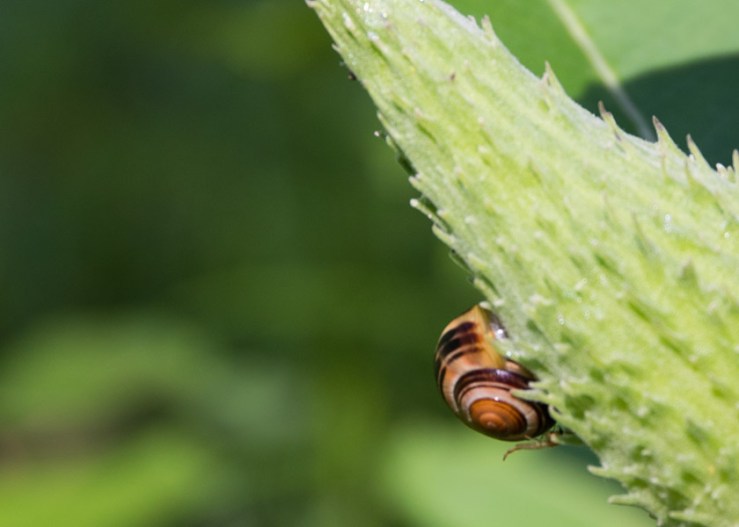
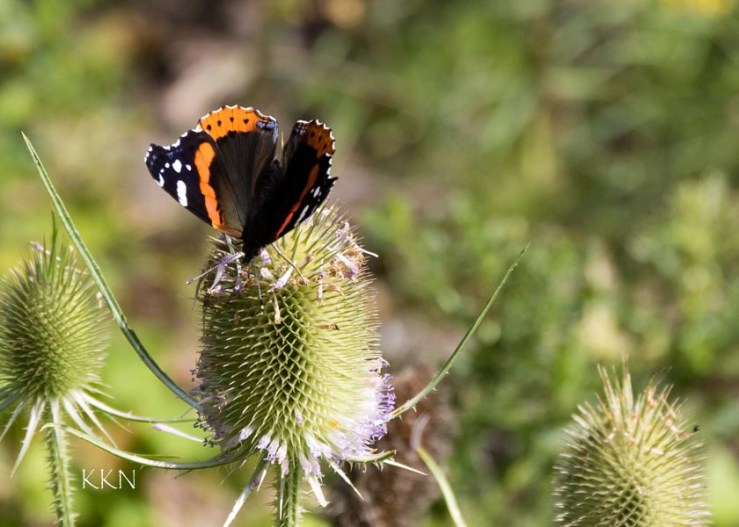
Unknown snail, but liked the shotRed Admiral, one of my favorite butterfliesCabbage White – I saw several of these flying about.
Walking along the boardwalk, we surprised a couple white tailed deer. One further on expressed no surprise at all but watched us without fear.
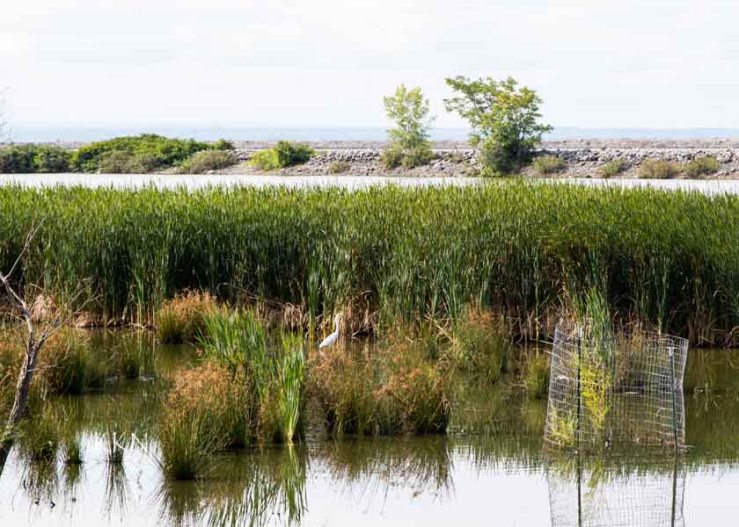
I noticed many warblers flying around, but the denseness of the canopy and underbrush hid them well. Two or three bird blinds gave views of several wading birds, but unlike the deer above they flew away quickly.
A lone Great Egret. Two Little Blue Herons flew almost immediatelyWhen we see these guys in Florida, they are in their non-breeding drab colors. Love seeing them “dressed up”.
One more set of photographs from Times Beach Preserve in the next entry, this time the butterflies and insects.
More personal observations about Buffalo picking up from the last post:
The 1980s and 1990s saw some resurgence for the city. In the 2000s, I heard many comments from locals of all education levels that civil service remained the way to go for any kind of career and pension in the area. The locally owned small and medium sized businesses of my youth and very early career either no longer existed or merged into larger multi-nationals and reduced the number of local employees. The very large employers making steel and automobiles either closed or reduced and consolidated.
Over these years we visited with our tourist hats on, took family around to places we discovered (many new to them), sometimes in disrepair and difficult to find, and complained that the area did not capitalize on its assets. Luckily others living in the area felt the same, and now tours of the older sections run regularly in the summer months, and the waterfront looks wonderful and attracts summer crowds. Buffalo made its name in innovation (think electricity and city of light), heavy industry (steel, auto, grain silos), and transportation (Erie Canal). Finally, though past their prime in terms of many of those businesses, these areas are being highlighted and explored for their history and contributions to the country at large.
We ate at a local bar/pub/small brewer (Gene McCarthy’s, check it out) in the old First Ward that served an old fashioned beef on weck with fries and gravy! Only a native of Buffalo who grew up going to the local nightclubs/pubs/beach bars to dance and have fun with friends, and then retreated to a local diner about 3 a.m. for coffee and talk about the evening understands the perfect comfort food of fries and gravy to absorb some of the adult beverages imbibed!
We both grew up in the suburbs of the city of Buffalo, but different suburbs, at different times. When we met and married, nearly forty years ago now, we left the area, Karl for the third time. We visit family who remained there at least once annually, and we enjoy being tourists re-discovering and sometimes discovering for the first time the nature and history of the area where we grew up.
Located on the shoreline of downtown Buffalo where the Niagara River and Lake Erie meet, the Times Beach Preserve provides a needed conservation site for birds, and judging by the day we visited, for butterflies.
Only about 50 acres, the history of the area includes use as a public beach (though not for long due to contamination), waste area for dredged material, and finally closed off due to contamination in the 1970s. Nature took over from there, and now it provides important habitat for birds, migration, insects, and mammals including White Tailed Deer.
We first visited the preserve two years ago, and hiked in amazement at this little piece of natural paradise surrounded by the industrial city of Buffalo. We decided to visit again this year, and had a wonderful hike in some very hot, sunny weather (for Buffalo at least).
The city of Buffalo, NY saw several ebbs and flows in fortune. In the early part of the 20th century it rose to prominence due to its location, the use of the Erie Canal, and the fact that power development at Niagara Falls made Buffalo one of the first cities to enjoy electric streetlights. In the middle of the 20th century heavy industry dominated the landscape. Steel mills, automobile manufacturing, and manufacturing of all types found a home here. As the world recovered from WWII and industry started up in other countries, Buffalo saw a decline of the industries that defined that era. The glory days ended in the 1970s as other countries started making their own steel and cars.







 Nichter Photography PLUS