Remembering 14 Years

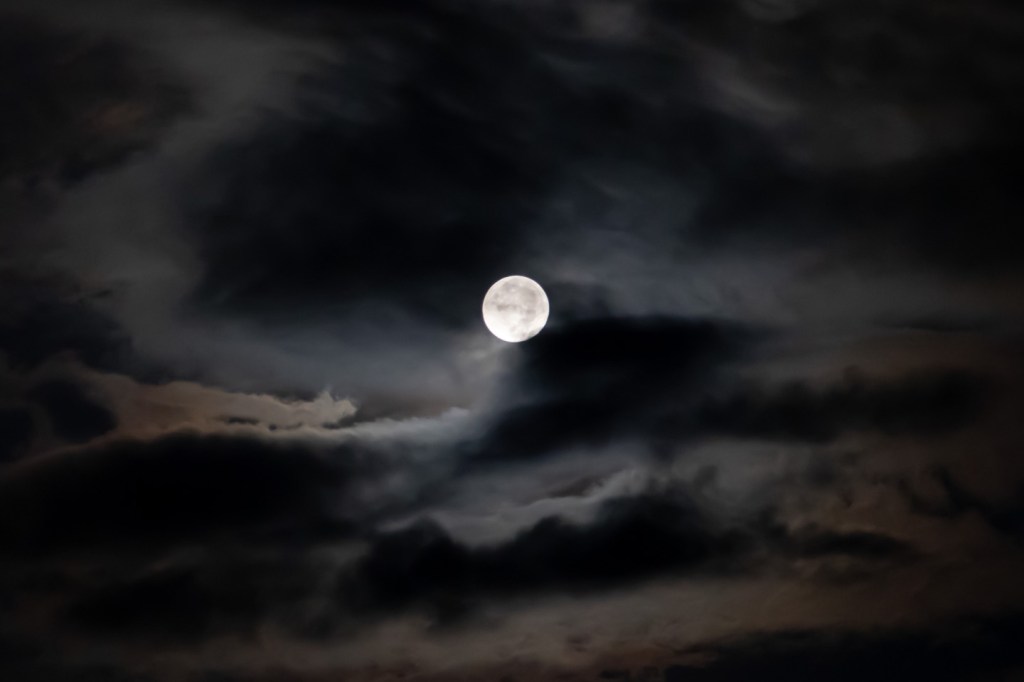
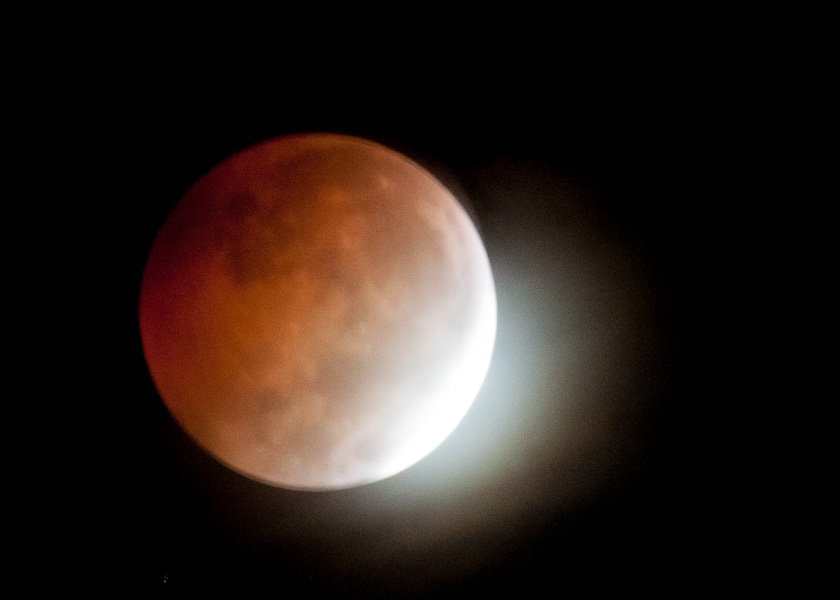
Blood Moon 2014

Computer issues with Karl’s photo computer led me to examine my own files, and the external hard drive I use for my not very regular back-ups. Clicking through the various folders containing older blog posts and photos, projects started and not completed for one reason or another, I realized I needed to do some pretty serious clean-up. I also loved looking through the work done for the past almost 14 years of the blog. The photo of the Blood Moon, above, was one of my first attempts at moon photography. This shot was my favorite of the series, just before the moon was completely red and some moon shine still visible. Of course, looking at the setting I realize I would do things differently now.

Cedar Waxwings Feasting 2012

We hiked at Fort DeSoto Park in Pinellas County Florida early one Spring and as we drove toward the parking lot saw birds flying into and out of the tree. A flock of Cedar Waxwings gathered stocking up on energy before making their way further north to their summer grounds.

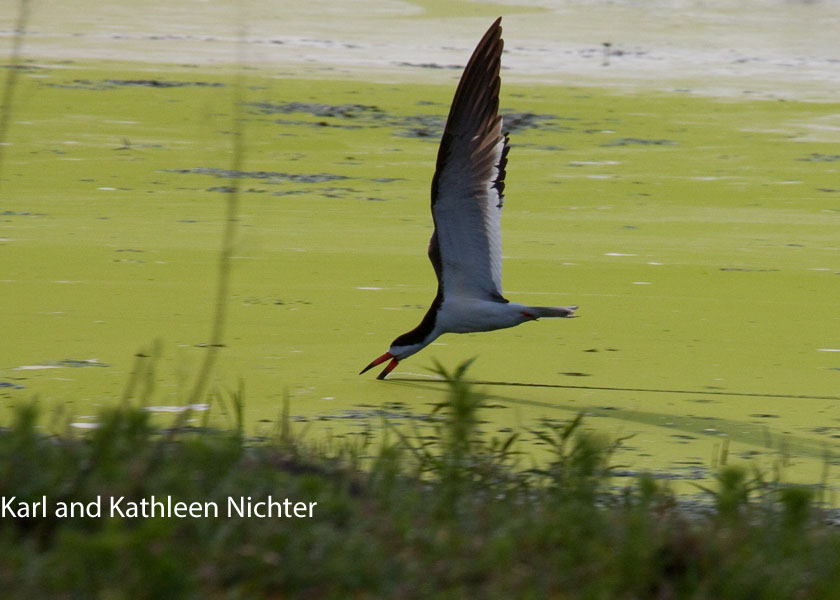
Black Skimmer 2013

I learned a lot about tracking a bird in flight taking this series of shots. I took a lot of photos, and this one is the only one I liked. Isn’t that how nature photography goes…

September usually brings some relief from the higher humidity and temperatures, and we look forward to getting back to our hiking and nature photography.

Nature in August (Florida)

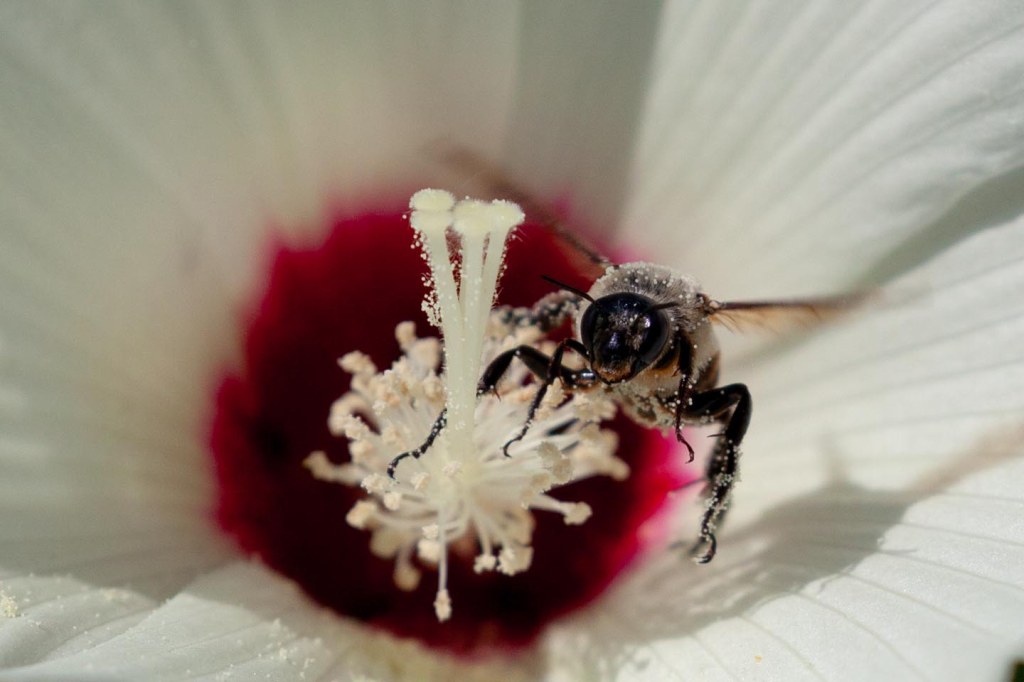
Pollen Covered

For us, August passes by slowly. The temperature and humidity stay high enough to make walking outdoors when the sun is up just plain too hot, so we stick to mornings, evenings, and shade the rest of the time. Insects love this weather, so they tend to be my primary subjects. Most things green thrive on the humidity, then rain, then hot sun. We watched the small field behind our house grow so fast in one week we felt we could see the motion. Tropical Storm/Hurricane Debby passed by us taking the worst of its fury further north, but we did get drenched. Rain came down in bands for three days. We lost electricity briefly a few times, and then for a few hours. Thankfully the storm drains managed to keep up with the torrential downpours.

Dining at Adjoining Tables

Our presentation at Brooker Creek Preserve went well. Once again with questions and comments we exceeded our time by at least 30 minutes, but with no other program behind us we kept going until everyone had their questions answered.

Green Leaf Scape

My one year experiment using a mobile phone camera and Super Zoom type camera (also called a bridge camera) turned into a year and a half. I mentioned in my last post my mobile experience. The super zoom camera (built in lens that zooms out to 600mm or more) was a little more familiar to me since I could shoot in RAW and had various settings. It took time to get used to the fact that while I may be at 400mm according to the camera, the lens is much smaller and most of that is digital zoom so the results were not always as I envisioned. It weighs so much less than my SLR and lens with a much smaller footprint, so I really wanted it to work for me.

For this experiment, I often left my SLR home to force myself to use one or both of the above for traveling or hikes. My conclusion: Both stay in my everyday carry bag and have their place in my photography, but my SLR will still be my primary camera. Part of it is experience and familiarity, and part that my nature photography in particular often requires zoom and a high level of sharpness, and the larger lens produces the shots I envision.

Summer Came Early for Us

We cut short our travels in mid June, before the official start of summer, when the forecast for our mid-Florida camping area called for temperatures of 98 degrees F for the next few days, and a much higher heat index. For Florida that is a high temperature, even if it occurred during August, our hottest month.

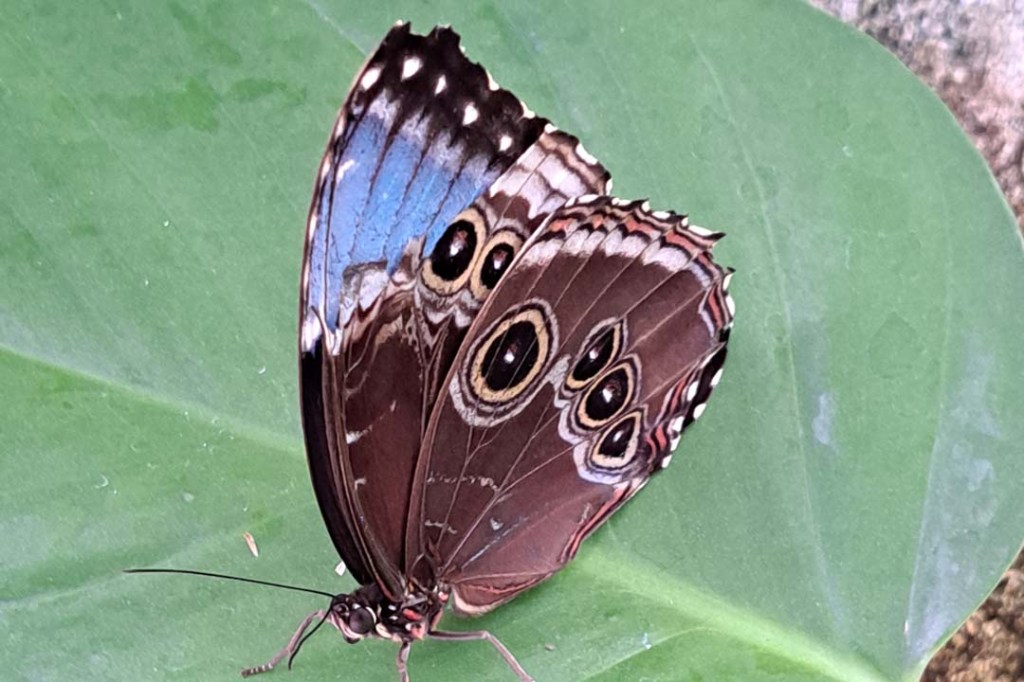
These are some mobile phone photographs from the Butterfly Rainforest at the Natural History Museum in Gainesville, FL. I’ve worked with the phone camera for over a year, determined to become more proficient with using it taking something other than quick family photo shots. After so many years as a nature photographer using a SLR and usually a 100mm – 400mm lens or 24mm – 105mm, it took me a bit to get used to using it for travel and nature photos. I like it for photos in situations where using the SLR might not be convenient or situations where I don’t have it available. If I use camera lens 2X with limited digital zoom I find I get more consistent quality.

We are once again presenting our class Nature Photography with Any Camera on July 27 at Brooker Creek Preserve in Tarpon Springs, FL. Last year we had a lot of fun, and had a lot of questions, discussions, and conversation. We look forward to the same this year.

Hiking at Tuscawilla Preserve

We visited the Gainesville area, which for us means camping at Paynes Prairie Preserve. Researching the trip, I realized that Micanopy had two small preserves we somehow missed in our travels, so we took a morning to explore them.

Located not far from the main street of Micanopy, we found the Tuscawilla Preserve, the Seminole name for the area from the time of Chief Micanopy. We walked into the entrance, and found kiosk with a map of the area, description, and history, and brochures with the hiking trails. Online research claimed 1.5 miles of hiking trails, but according to the brochure the trails measured less than a mile. We started off on a nice, slow hike. The high, dense tree canopy on the trail provided welcome relief from the sun as June in this area usually means highs of 89 degrees during the day, and this June started out hotter than usual.

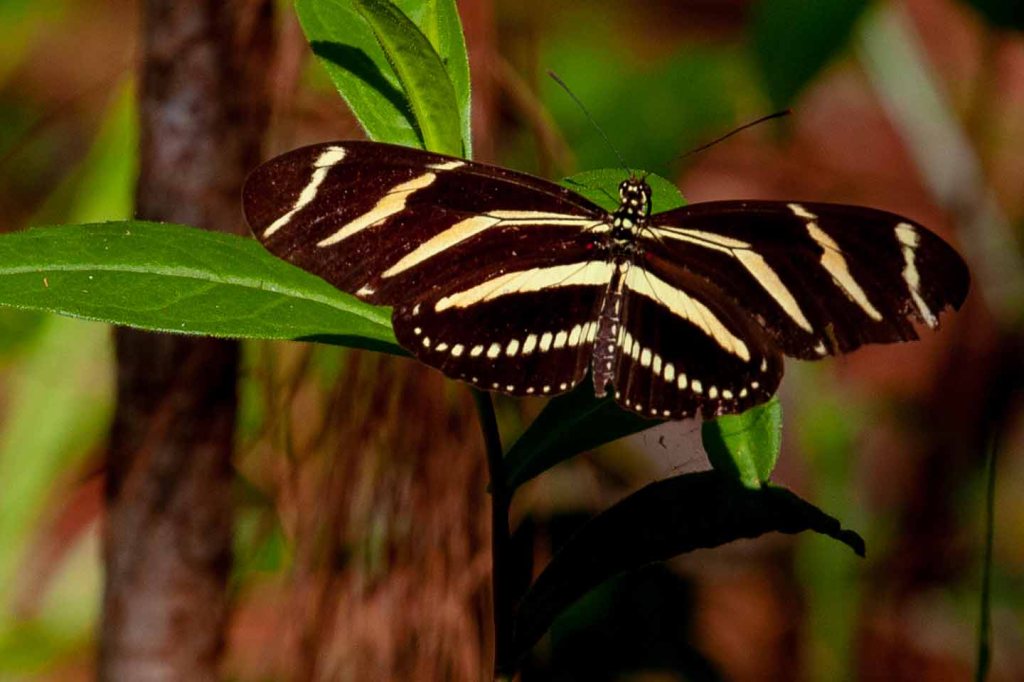
We heard birds, and saw the occasional one fly by. The dragonflies and butterflies flew everywhere. Our state butterfly, the Zebra Longwing, moved from place in place in front of us giving me the opportunity for a shot. We found the overlook, which overlooks the marsh basin, and found it full of American Lotus in varying states of bloom.

The vegetation surrounding the trail leading to the edge of the basin felt like a small forest of thistle plants. Karl photographed me at 5’7”next to one individual to show their height. Insects busily worked the pollen in the thistle as I tried to photograph them.

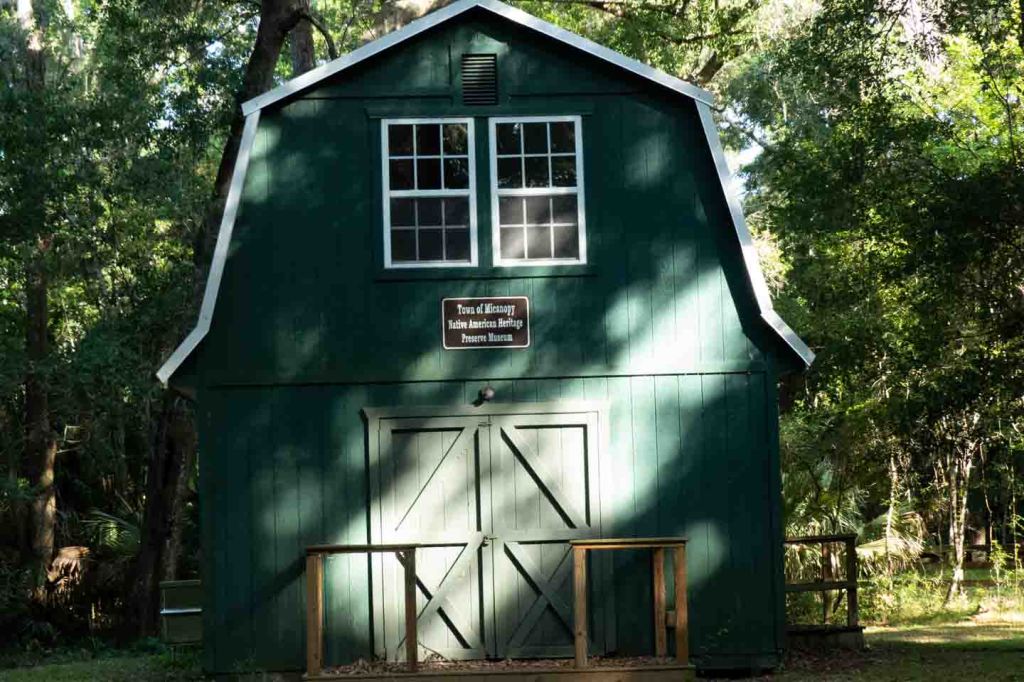
The second preserve is right across the road, in fact, that is the parking lot you use to hike Tuscawilla. The Micanopy Native American Heritage Preserve starts with a large board relating the history of the Native Americans in this area. As you move into the Preserve a marked trail appears, but no interpretation is given. We were told that a brochure explained the trail and was available at the board kiosk, but no brochures and no place for brochures. We walked to the museum building, but it was locked with no information of any sort on the outside except for the name. Behind the building is the remains of mound, fenced with a small placard in front. We hope to visit again and perhaps see the museum and find the brochure guide to the trail.

Falling Waters State Park

View showing sinkhole cavern at bottom into which the falls water flows

In flatlands Florida a waterfall has little competition for the title of highest. Falling Waters falls 73 feet down into a sinkhole cavern. With all the rain that fell on the Florida Pandhandle prior to our visit, we suspect it would be flowing well. The sign at the ranger station confirmed that.

Standing on one of the boardwalk platforms

A closed sign blocked the boardwalk leading to the Wiregrass Trail and then back to the parking lot. We returned to the parking lot and talked to a volunteer. She told us that if we followed the road to the beach area on Turtle Lake, we could walk the Trail backwards.

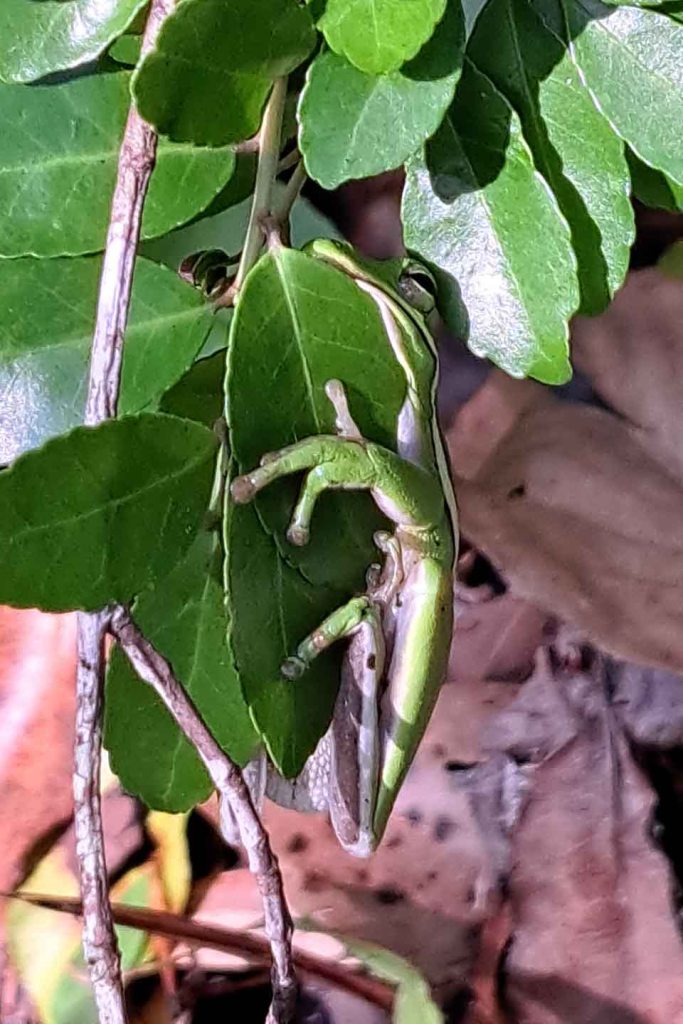
Close to the falls I saw a green flash jump from the railing to a leaf. My first thought: green anole. I looked closely at the area carefully as not to cause another jump, and finally saw it was green tree frog, now hiding behind some leaves. It never moved as I took a photo. Had I not seen the movement and visually searched, I would not have seen the frog.

And yes, we did see a turtle on Turtle Lake, but just this one.

Here and There…

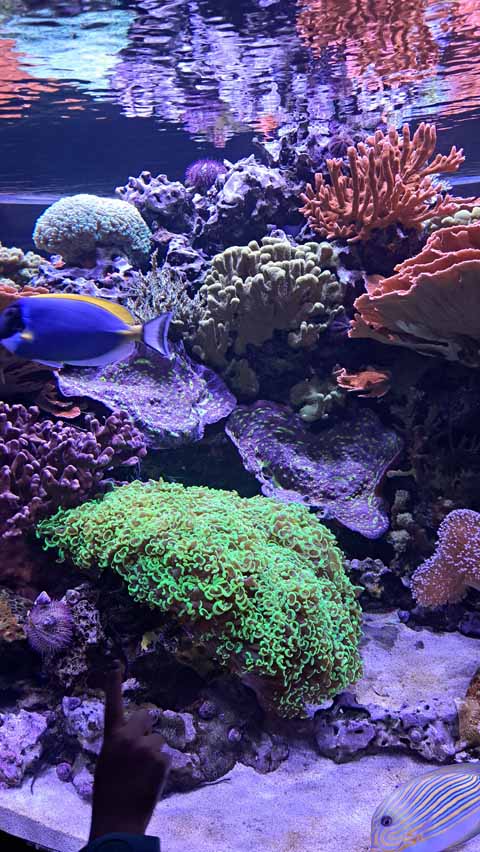
Aquarium at Epcot

We took the RV to Orlando twice for nearly a week each time in the last few months, both times to connect with out of town family bringing the kids to Disney. Time in-between trips ended up minimal, but well worth it to spend a week with the families. We last visited Orlando several years ago, and the amount of new construction, especially housing, and incredible amount of traffic shocked us. So, we spent both visits stuck in traffic, a lot, but of course it was worth it to see everyone. Most of the photos taken during those trips were family snaps, but I did get one or two when we visited the aquarium in Epcot. I loved the lighting, and the colors.

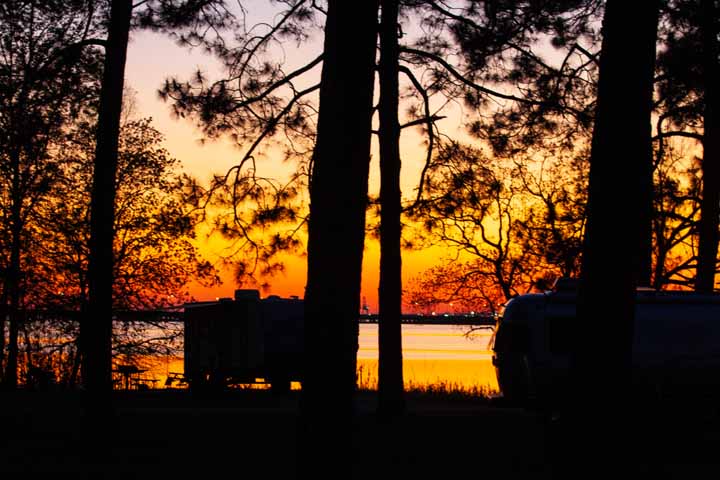
In-between our Orlando trips we enjoyed a two week visit to Mobile Bay. A weather front greeted us, and the entire southeast U. S., but once it cleared, spectacular sunsets lit up the sky every evening. I took this photo sitting in front of our camper, looking toward the water. We love the park, notice the distance between campsites.

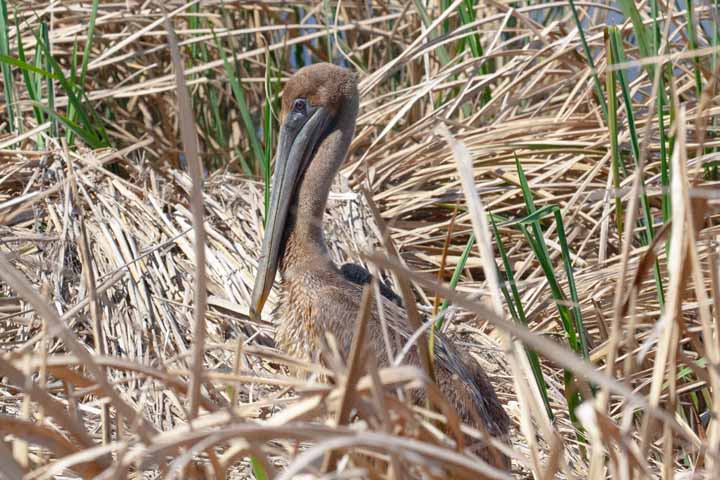
Starting soon, we go back to our usual travel and photography, like this Brown Pelican sitting in the reeds, watching me and not really caring as I passed by watching him.

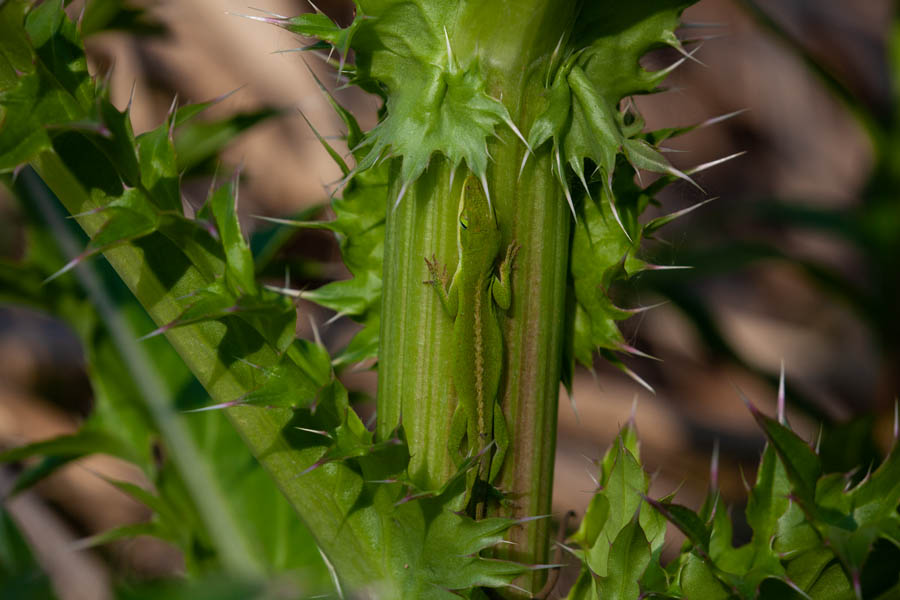
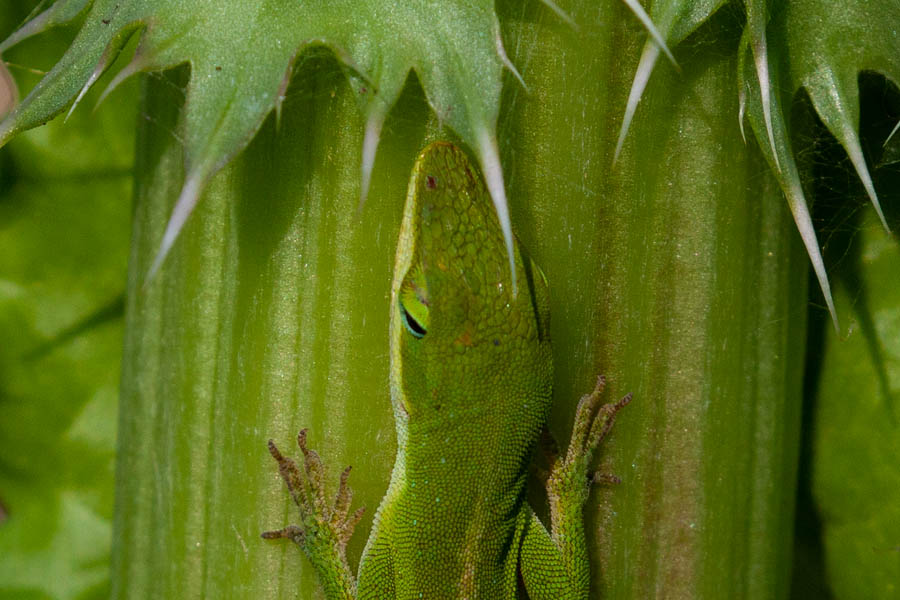
Green Anole on Thistle

Or, A Study in Green

I just happened to see this Green anole resting on a Cirsium horridulum, which we call a Horrible Thistle as to not have to pronounce the Latin. Of the common thistles in the southern U.S., this one tends to get very large depending on the surrounding area and sunlight. This particular thistle stood almost as tall as me, making it around 67 inches tall, and the thickness of the main stem is apparent from the photograph. The Anole stayed very still, even as I approached, giving me the opportunity to take several shots and just stand and observe for a bit.

This closeup of the above image shows the blue around the eyes. The green anole changes color, from shades of green to shades of brown, and the blue around the eyes (if you can get that close) during the brown phase gives a positive ID. It also shows the texture of the skin, and the sharp points of the thistle. It found an ideal hiding place, it blended almost perfectly, and with the size of those thistles very few predators would risk attempting to make this anole lunch.

Sharing Space

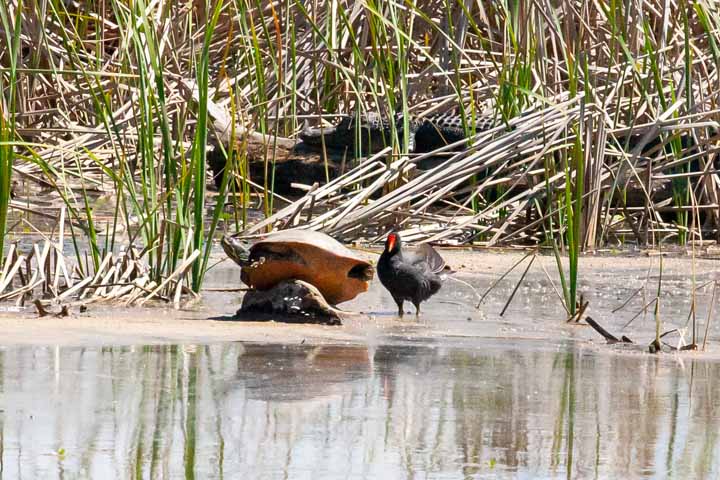
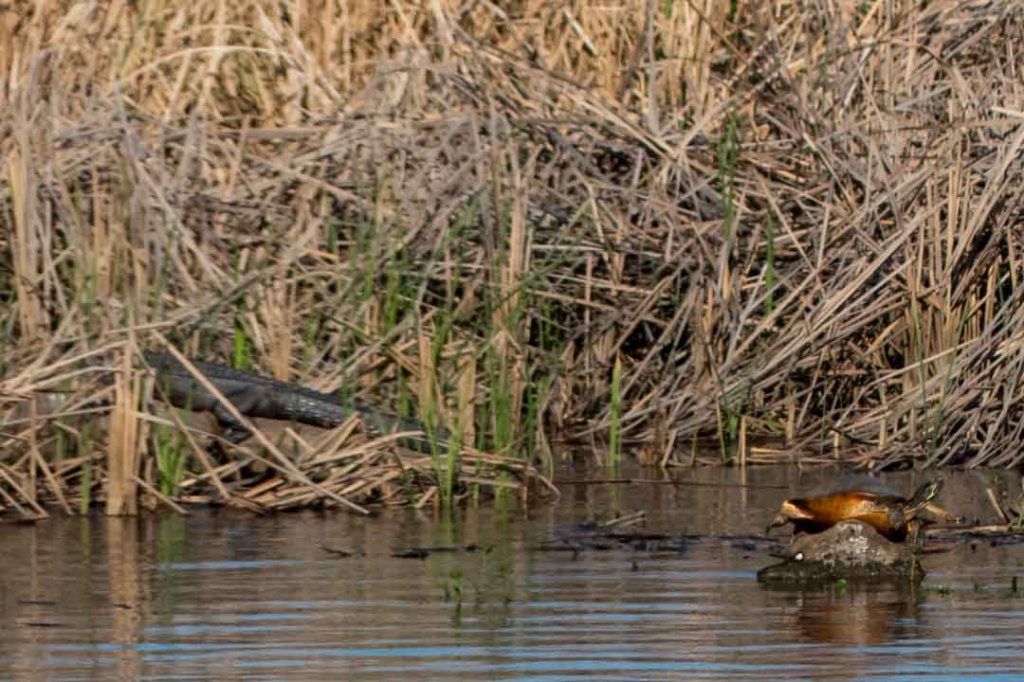
First the Great Egret and the alligator shared the space. The egret, with spring plumage blowing in the wind, eyeing the water for fish and the gator occasionally. The next day the egret moved on, but a large turtle, red slider, sunned itself on a log with the gator watching from the shore. Two days later, a gallinule busied itself right next to the turtle, alligator in the background.

For the next few days the gator sat alone, and then disappeared from that area. Walking the area at least once a day, I encountered several other regulars hikers looking for the alligator and the companion of the day. Though other wildlife took its place, for about a week that alligator and friends provided an enticing snapshot of the Mobile delta.

Walk at Key Vista

We’ve reached the end of January, a month which for us brought many more gray, overcast days than usual for this time of year. The day started sunny for a change, but windy, so we decided to take a walk at a local park, Key Vista. In addition to the trails, Key Vista extended the boardwalk to connect to the nearby Anclote Park years ago. I took this photograph of an inquisitive Red bellied woodpecker from the boardwalk, giving both he and I a more eye level look at one another than usual. A wind ruffled Osprey sat in a snag, near a branch that appeared freshly broken. The strong winds from recent storms likely cause this “widow maker” branch. We saw a lot of birds, including our winter residents like the Gray Catbirds, and with a low tide even spotted some Roseate Spoonbills through our binoculars, walking the water’s edge near the Anclote park pier. We left after a couple of hours just as the clouds came back and took away our nice, sunny day.

January Walk at Brooker Creek Preserve

Sleeping in on a cold morning

January weather varies near the coast in west central Florida, from beautiful, sunny days with no humidity that remind us of the coming spring, to dreary gray skies and temperatures in the 40s or 50s with a cold north wind, often within the same week. Though usually our dry season, this January started and so far remains rainy and more overcast than usual. Photography tends to slow also, brown and green predominate, and both the fauna and flora keep a low profile, though fungi look healthy due to the wetter weather.

Even though this day started gray and cold the promise of some sunshine made us grab our binoculars and cameras and head to Brooker Creek Preserve. I walked the trails, enjoying the fresh air but the colder breeze diminished the nice warmth of the sun.

At the bridge I spotted a Black-crowned night heron. Unlike me, he knew how to enjoy this day. Sitting on a branch in the sun but protected from the wind, he fluffed his feathers and tucked his head down into them, apparently sound asleep.

P.S. By cold I do mean cold for those of us who live here! I saw neighbors recently arrived from New England in shorts and a t-shirt, that cold north wind didn’t bother them.