Fall Butterflies!

Cloudless Sulphur

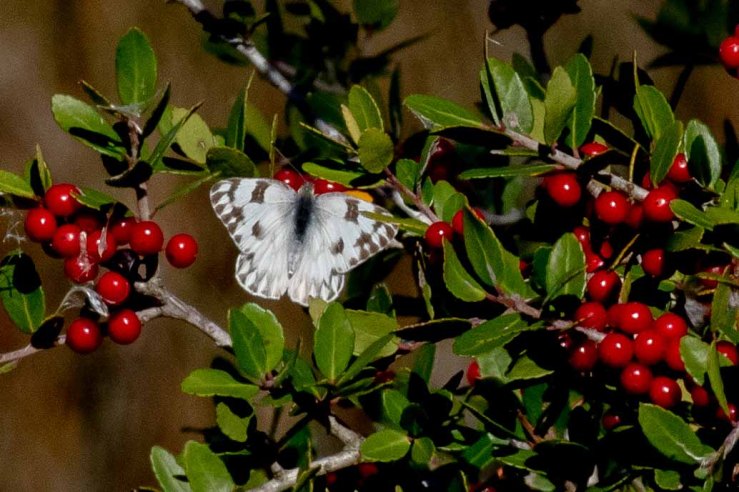
On our hikes this past autumn I saw a lot of butterflies. This series was taken on the barrier island off of the Florida Panhandle. I saw mostly four species, the Cloudless Sulphur, the Buckeye, and the Gulf Fritillary, and Monarch, but numerous individuals of all four. The white butterfly which I have not been able to positively identify flew on its own, as far as I could tell. I took most of these in the mornings, which were cold but sunny.

Unknown species but pretty especially against the green leaf and red berry
Monarch and Gulf Fritillary sharing blossoms
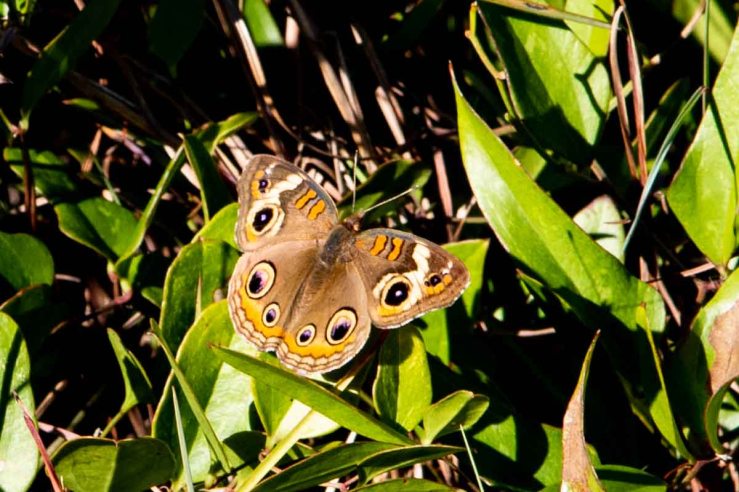
Common Buckeye taking the sun

Paynes Prairie Preserve Hike

Our mid-February hike at Paynes Prairie Preserve State Park started cold, 41 degrees with a nice, brisk 10 mph north wind. Luckily the sun shone brightly with no clouds in the sky. Our trip here was not one of our usual hikes; we were asked to appear in a segment of “Florida on a Tankful”, a Spectrum News feature in Florida featuring places to visit in the area. The unique feature of this park: wild bison and wild horses. Karl and I hiked here many times over the past 20 years or so, and saw the horses many times. We often saw the bison too, mostly in the distance. Our closest sighting of the bison occurred in 2019. Since we shoot our photographs from trails and areas open to the public, we know it is possible for any visitor to see them. Both the horses and bison roamed this area in early Florida history, but died out as civilization encroached. In 1975 ten bison were reintroduced and the herd has grown since, and in 1989 the Florida Cracker horses also found a home here.

We met Randy Rauch, the journalist from Spectrum, at the Visitor’s Center where we talked to the staff about the park and where we might find the bison and horses. We hiked and explored together, and from the Observation Tower on the Bolen’s Bluff trail spotted some of the wild horses. The bison did not made an appearance this time. If you would like to see the segment, click on this link: Florida on a Tankful 2/28/25.

The story of our closest sighting with the bison is in this blog here: Paynes Prairie Bison

The Golden Hour

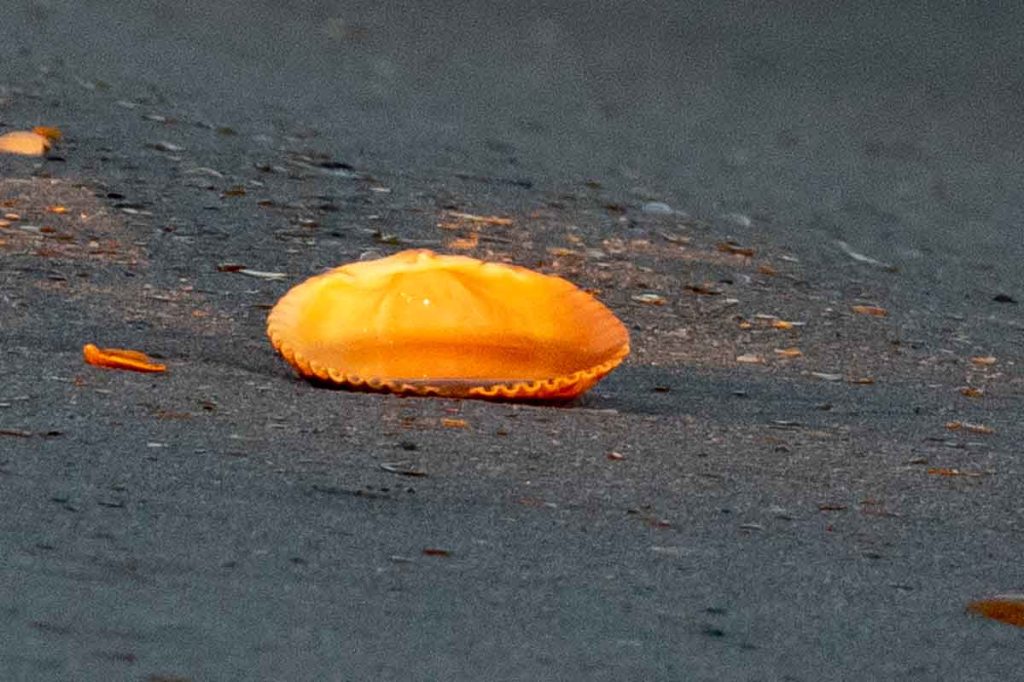
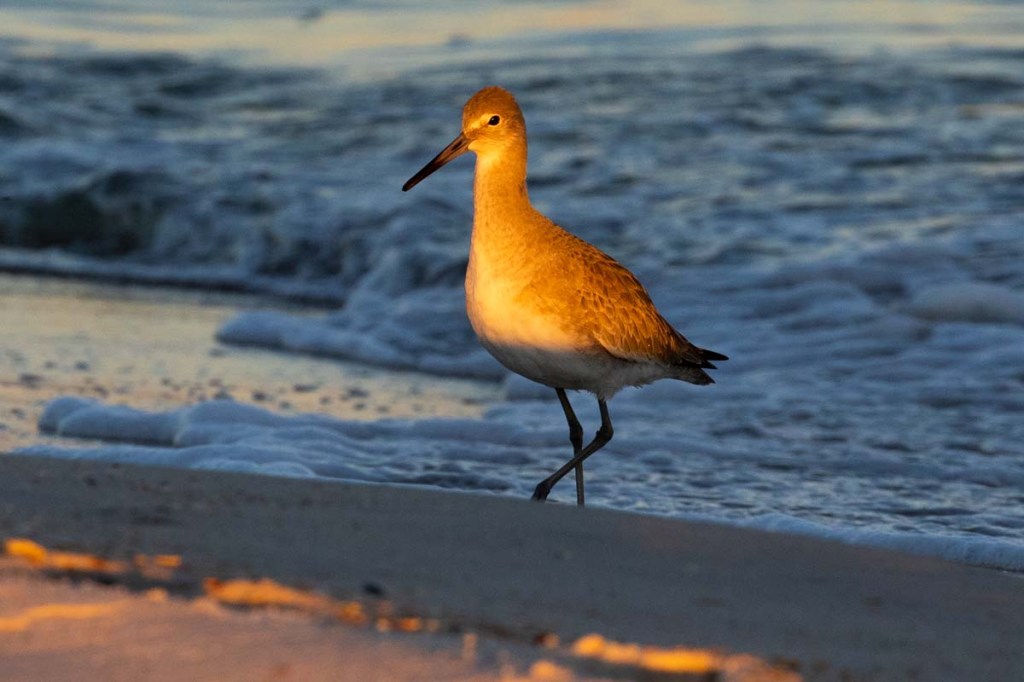
In photography, the Golden Hour occurs just after sunrise and shortly before sunset. Some days the better light manages to be just a little bit better than other days. I experienced an exceptional sunset while walking the beach and took the above shell photo, and the shorebird, along with many others.

The Ghost Crab appeared just after sunrise on another better than average day. The gold of the sun appears on the sand mound just to its left. Mornings tended to be cold during this visit, and this guy turned out to be the only one I saw, or at least the only one who wasn’t a blur as they quickly ran into their burrows, though it is apparent by the pose that he was just waiting for me to move. When I did, he disappeared.

Beach in the Fog

Fisherman in the Fog

Though I walked the beach several times daily during our stay on the barrier island, the morning of dense fog proved the most interesting. I felt somewhat disoriented standing on the beach, hearing the water only a few feet away but unable to see it, surrounded by dense whitish gray. Startled by a lump in the fog, I moved closer until it formed. A man fished, a gray outline in a gray sea with gray air.

The Great Blue Heron I saw each morning standing in about the same place on the dune still kept watch through the fog.
The shoreline with the deadwood snags took on an eerie air, even more than usual. The dense fog lasted all day, dispersing only very slightly around mid-day.

Happy New Year 2025

Green on Green on Green

Our carefully planned travels and photography ran into reality during 2024. Our preferred mode of travel, in our RV, is now the preferred mode for many, many others so the campgrounds we like fill faster and earlier leading to changed destinations. We can’t forget to mention the weather this year which resulted at different times in a 24 hour notice to evacuate a campground due to impending flooding, another canceling just before our arrival due to weather damage, and watching TV from a couple of hundred miles away as our home area experienced a hurricane wondering we would have a home upon our return. We did, and consider ourselves very fortunate.

We have some photography programs lined up for 2025, a gallery exhibition retrospective of some of our work (more on this as plans solidify), and a continuation of our nature and travel photography primarily in the southeast U.S. but maybe a surprise trip or two.

Saying good-bye to 2024, here is some of our photography from our hurricane interrupted travels. Have a wonderful and safe 2025, and we hope you will stop in to our blog and website for our photography and stories.

Hurricanes & Evacuations…Twice

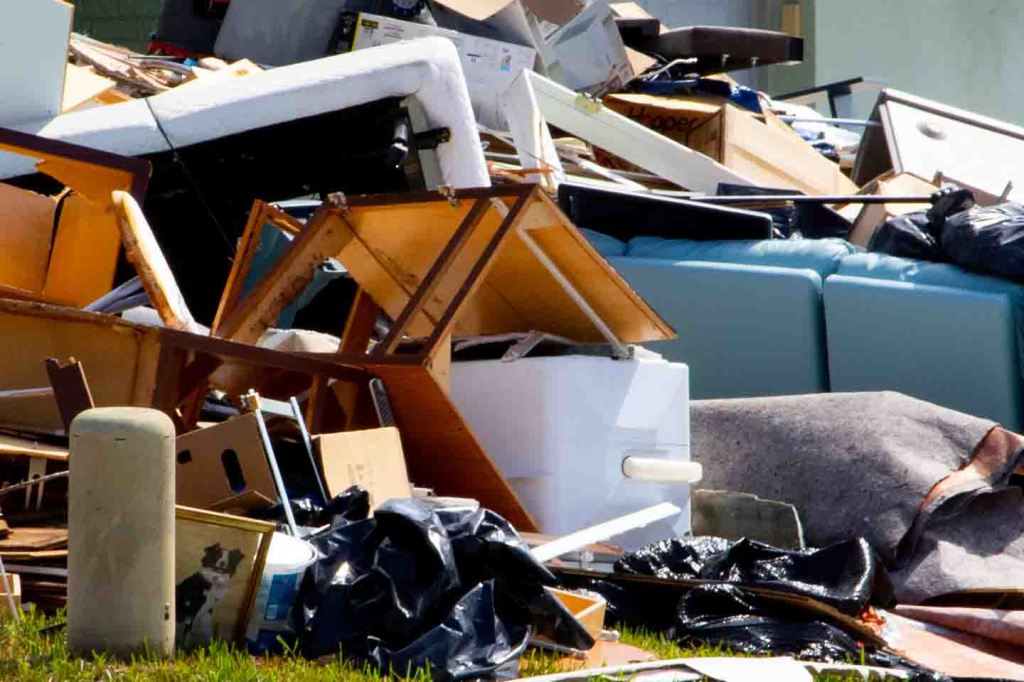
We were lucky, twice within two weeks. Our home took minor damaged but remained intact. The photograph above represents the scene not only in a neighborhood we knew, but in many places throughout the Tampa Bay area and the Big Bend area of Florida.

Just before our annual month long October RV trip, Helene formed. Our area declared mandatory evacuations later than other areas, and we scrambled to find a hotel room. Helene severely affected the coastal areas but spared those of us even just a few miles inland. It devastated the area we planned to travel, mostly with power outages. We left a few days later than planned, and with changed destinations and unsure of anything beyond two weeks of the planned four week trip.

After a few days of hiking and photography, we became aware of another tropical depression. Everyone we spoke with said it would not be strong, just a rainmaker. It quickly turned into a storm, then hurricane, then a hurricane headed toward our home area as a major hurricane. The next several days passed slowly as we watched reports of its strengthening and its path, realizing that had we known our trip would turn into an evacuation we would have packed much differently. We tried to continue with the plans of our trip, but mentally found it impossible. We saw what happened to houses where Helene hit only a week before on our travel north, and realized we could be homeless in a few days. That weighs heavily. Within a day or two our half empty campground suddenly filled with RVs of all kinds, most with both of their cars along and clearly many of their household belongings.

It struck further south than forecast, and spared our home the worst of it, though our street, not a in flood zone, did flood. As soon as the water receded enough and we confirmed the availability of fuel along our route, we returned from our trip, a week early. We needed to ensure our house did not take in any water, fix a couple of minor screen problems from the hurricane, and check on friends. As we drove to our regular shops and other places, we saw debris, furniture, household furnishings along the sides of the roads. We visited our old neighborhood to see friends, and discovered that our former home of 24 years (we moved further inland only 1.5 years ago), flooded along with those of many of our former neighbors.

We saw a lot in our area, but took only two or three photographs. It just hit too close to home.

Remembering 14 Years

Blood Moon 2014

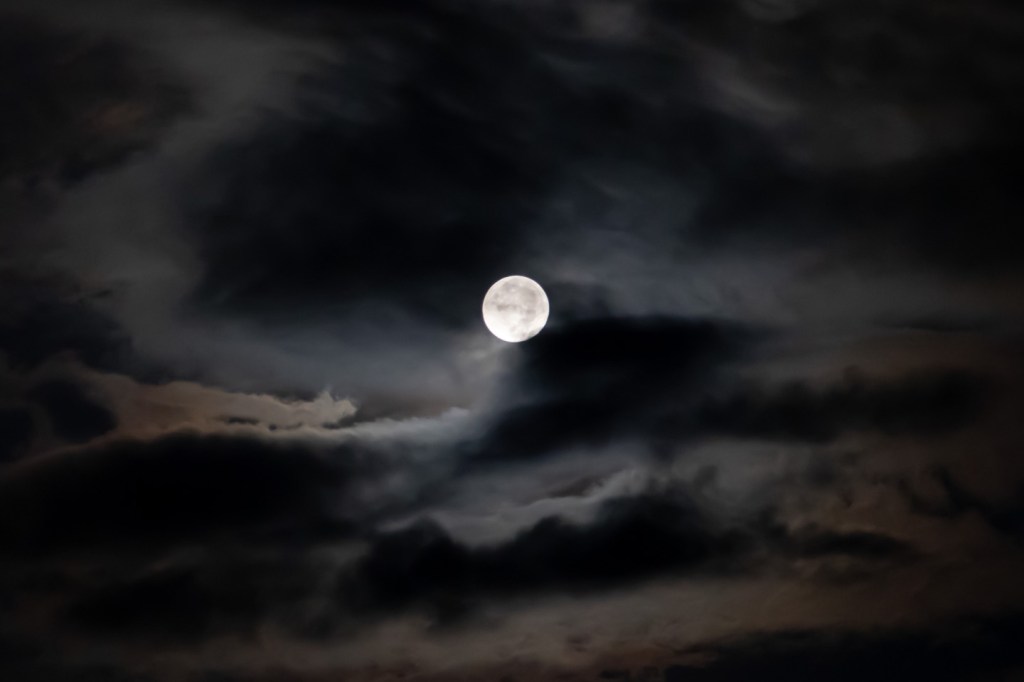
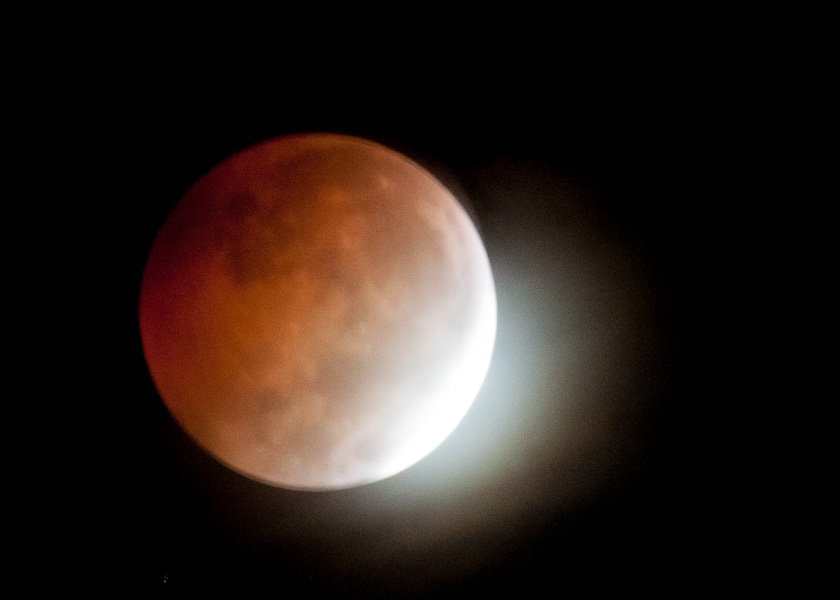
Computer issues with Karl’s photo computer led me to examine my own files, and the external hard drive I use for my not very regular back-ups. Clicking through the various folders containing older blog posts and photos, projects started and not completed for one reason or another, I realized I needed to do some pretty serious clean-up. I also loved looking through the work done for the past almost 14 years of the blog. The photo of the Blood Moon, above, was one of my first attempts at moon photography. This shot was my favorite of the series, just before the moon was completely red and some moon shine still visible. Of course, looking at the setting I realize I would do things differently now.

Cedar Waxwings Feasting 2012

We hiked at Fort DeSoto Park in Pinellas County Florida early one Spring and as we drove toward the parking lot saw birds flying into and out of the tree. A flock of Cedar Waxwings gathered stocking up on energy before making their way further north to their summer grounds.

Black Skimmer 2013

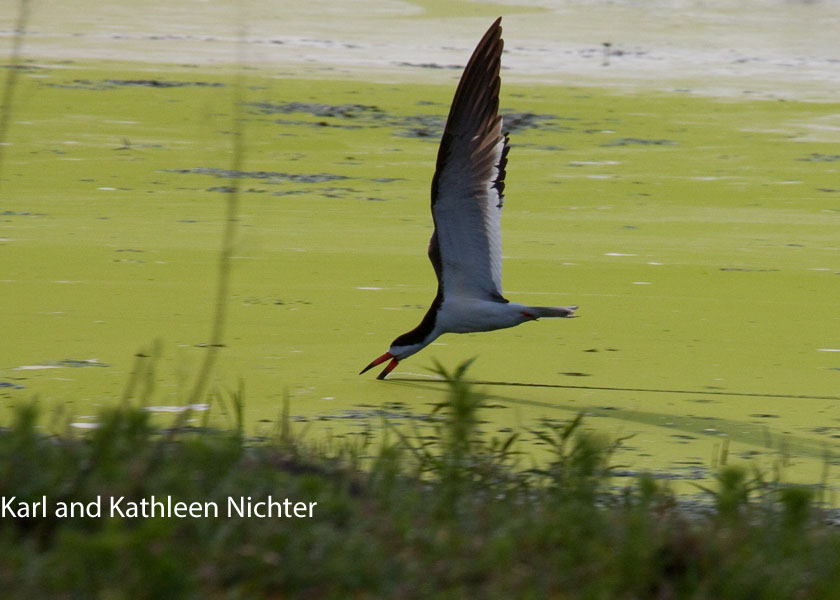
I learned a lot about tracking a bird in flight taking this series of shots. I took a lot of photos, and this one is the only one I liked. Isn’t that how nature photography goes…

September usually brings some relief from the higher humidity and temperatures, and we look forward to getting back to our hiking and nature photography.

Nature in August (Florida)

Pollen Covered

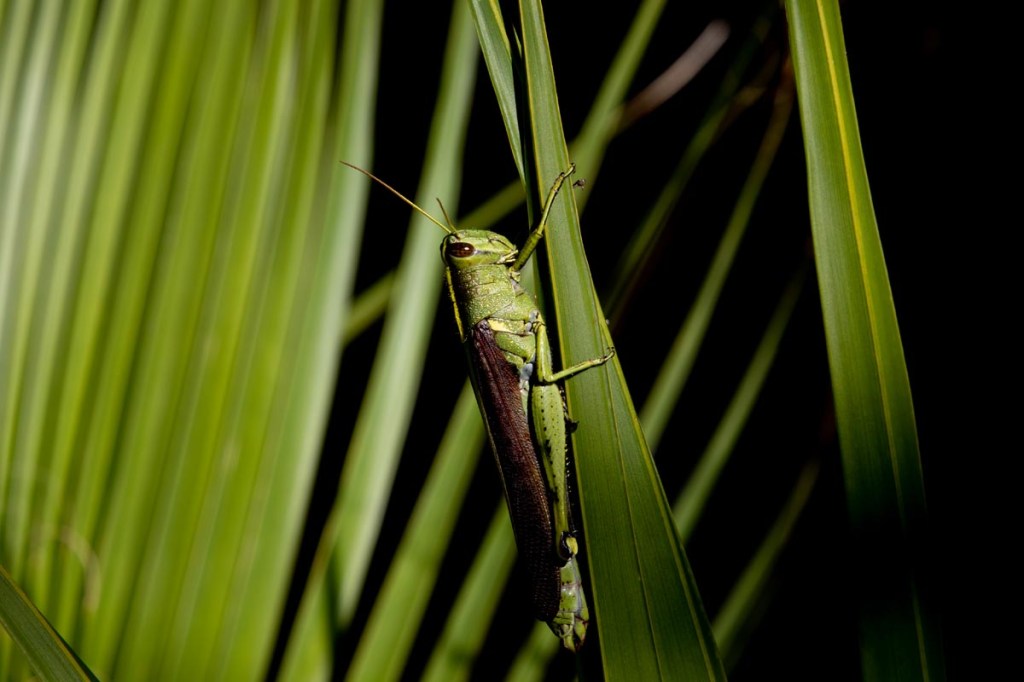
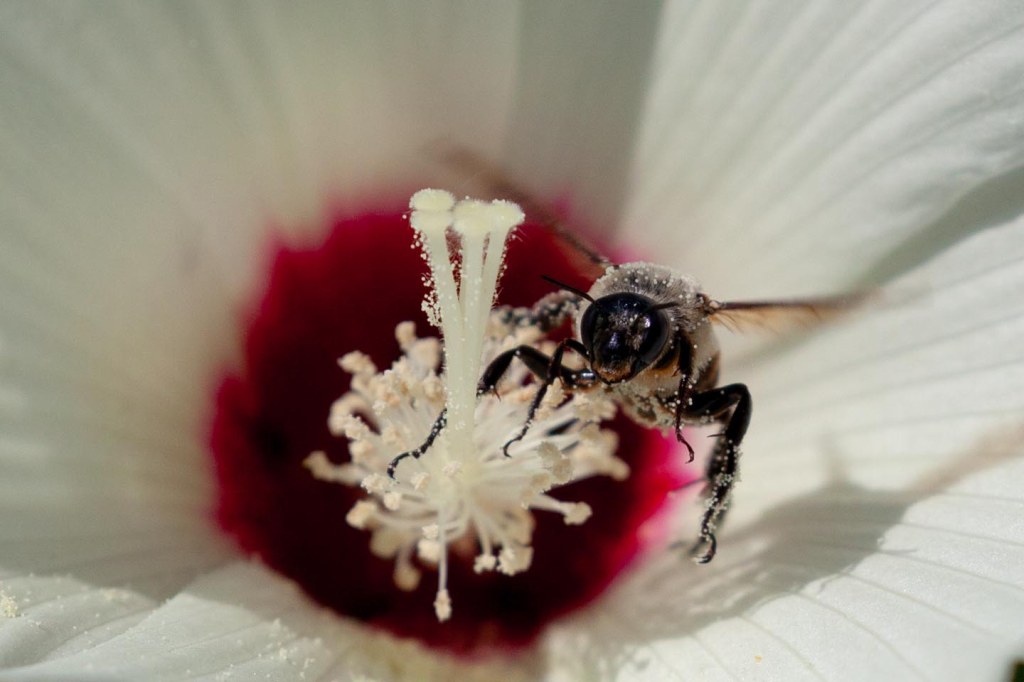
For us, August passes by slowly. The temperature and humidity stay high enough to make walking outdoors when the sun is up just plain too hot, so we stick to mornings, evenings, and shade the rest of the time. Insects love this weather, so they tend to be my primary subjects. Most things green thrive on the humidity, then rain, then hot sun. We watched the small field behind our house grow so fast in one week we felt we could see the motion. Tropical Storm/Hurricane Debby passed by us taking the worst of its fury further north, but we did get drenched. Rain came down in bands for three days. We lost electricity briefly a few times, and then for a few hours. Thankfully the storm drains managed to keep up with the torrential downpours.

Dining at Adjoining Tables

Our presentation at Brooker Creek Preserve went well. Once again with questions and comments we exceeded our time by at least 30 minutes, but with no other program behind us we kept going until everyone had their questions answered.

Green Leaf Scape

My one year experiment using a mobile phone camera and Super Zoom type camera (also called a bridge camera) turned into a year and a half. I mentioned in my last post my mobile experience. The super zoom camera (built in lens that zooms out to 600mm or more) was a little more familiar to me since I could shoot in RAW and had various settings. It took time to get used to the fact that while I may be at 400mm according to the camera, the lens is much smaller and most of that is digital zoom so the results were not always as I envisioned. It weighs so much less than my SLR and lens with a much smaller footprint, so I really wanted it to work for me.

For this experiment, I often left my SLR home to force myself to use one or both of the above for traveling or hikes. My conclusion: Both stay in my everyday carry bag and have their place in my photography, but my SLR will still be my primary camera. Part of it is experience and familiarity, and part that my nature photography in particular often requires zoom and a high level of sharpness, and the larger lens produces the shots I envision.

Summer Came Early for Us

We cut short our travels in mid June, before the official start of summer, when the forecast for our mid-Florida camping area called for temperatures of 98 degrees F for the next few days, and a much higher heat index. For Florida that is a high temperature, even if it occurred during August, our hottest month.

These are some mobile phone photographs from the Butterfly Rainforest at the Natural History Museum in Gainesville, FL. I’ve worked with the phone camera for over a year, determined to become more proficient with using it taking something other than quick family photo shots. After so many years as a nature photographer using a SLR and usually a 100mm – 400mm lens or 24mm – 105mm, it took me a bit to get used to using it for travel and nature photos. I like it for photos in situations where using the SLR might not be convenient or situations where I don’t have it available. If I use camera lens 2X with limited digital zoom I find I get more consistent quality.

We are once again presenting our class Nature Photography with Any Camera on July 27 at Brooker Creek Preserve in Tarpon Springs, FL. Last year we had a lot of fun, and had a lot of questions, discussions, and conversation. We look forward to the same this year.

Hiking at Tuscawilla Preserve

We visited the Gainesville area, which for us means camping at Paynes Prairie Preserve. Researching the trip, I realized that Micanopy had two small preserves we somehow missed in our travels, so we took a morning to explore them.

Located not far from the main street of Micanopy, we found the Tuscawilla Preserve, the Seminole name for the area from the time of Chief Micanopy. We walked into the entrance, and found kiosk with a map of the area, description, and history, and brochures with the hiking trails. Online research claimed 1.5 miles of hiking trails, but according to the brochure the trails measured less than a mile. We started off on a nice, slow hike. The high, dense tree canopy on the trail provided welcome relief from the sun as June in this area usually means highs of 89 degrees during the day, and this June started out hotter than usual.

We heard birds, and saw the occasional one fly by. The dragonflies and butterflies flew everywhere. Our state butterfly, the Zebra Longwing, moved from place in place in front of us giving me the opportunity for a shot. We found the overlook, which overlooks the marsh basin, and found it full of American Lotus in varying states of bloom.

The vegetation surrounding the trail leading to the edge of the basin felt like a small forest of thistle plants. Karl photographed me at 5’7”next to one individual to show their height. Insects busily worked the pollen in the thistle as I tried to photograph them.

The second preserve is right across the road, in fact, that is the parking lot you use to hike Tuscawilla. The Micanopy Native American Heritage Preserve starts with a large board relating the history of the Native Americans in this area. As you move into the Preserve a marked trail appears, but no interpretation is given. We were told that a brochure explained the trail and was available at the board kiosk, but no brochures and no place for brochures. We walked to the museum building, but it was locked with no information of any sort on the outside except for the name. Behind the building is the remains of mound, fenced with a small placard in front. We hope to visit again and perhaps see the museum and find the brochure guide to the trail.