Brooker Creek Hike and Class

Early morning and the temperature already reached 77 degrees with some pretty high humidity. Not bad for west central Florida on September 30, well, a few degrees above average but after our record breaking heat during the summer, I’ll take it.

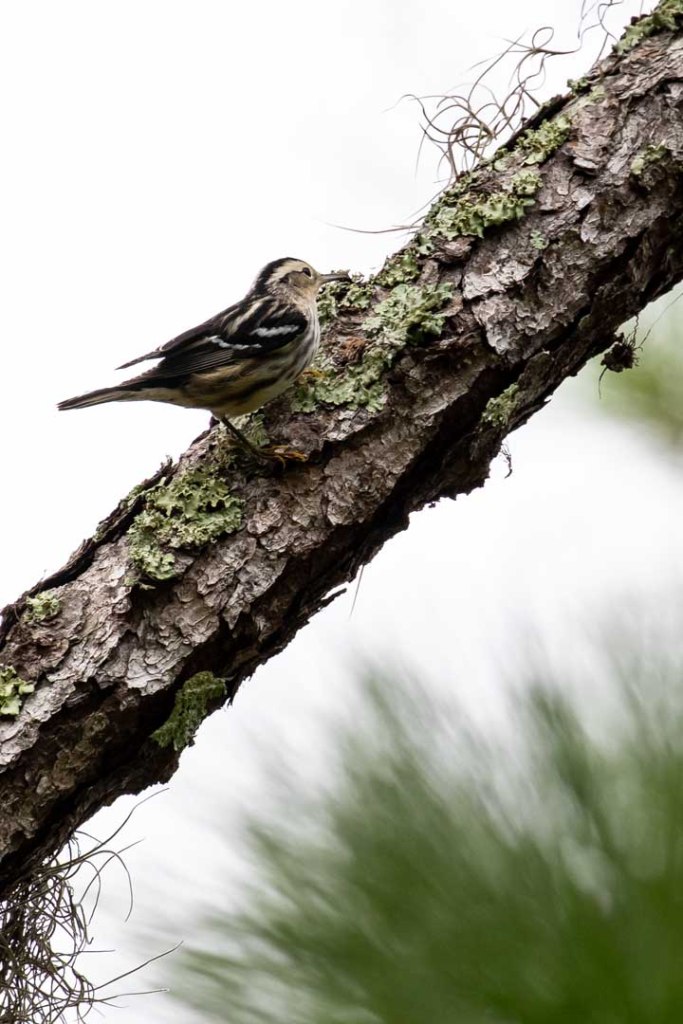
I purposely arrived very early for a class at Brooker Creek Preserve (Tarpon Springs, FL), and spent the time on a leisurely walk on the trails, in spite of feeling warm and sticky as soon as I left the air conditioned car. As to leisurely, the abundance of hungry mosquitoes did increase my pace quite a bit. Carolina chickadees and black and white warblers flitted overhead on the bird trail, two Common yellow-throat warblers flew by landing just long enough for me to get a look, and this Brown Thrasher landed right in front of me as I rejoined the main trail. I hoped for better light this overcast morning, but no such luck.

As to the class, well, I tried for years to teach myself sketching with little progress. Some online courses helped me somewhat, at least my drawings no longer looked like stick figures, but they still lacked any real features and looked awkward. I signed up for two four-hour botanical illustration workshops, and the wonderful instructor did a great job getting me past the really awkward drawings and giving me some confidence. People looked at my drawing and could actually identify it as an American Beauty Berry, though let’s face it, in Autumn in this area they are everywhere and those purple berry clusters are a dead giveaway.

Visit to Silver Springs State Park

Two weeks ago we visited Silver Springs State Park for the first time in almost two years. We finally managed to get a campsite, and grabbed it. We always camped here often, twice or more a year, but lately getting any campsite proved to be a challenge. Its natural beauty and convenient location to Ocala and The Villages apparently attracts more people now. We went to the main part of the park just at 8 a.m. as it opened. We paid a $2 admission fee, quite low it seemed. We discovered that the glass bottom boats still run, but everything else touristy says under construction.

For us, it didn’t matter, we love walking the park. Unfortunately, the Rhesus monkeys we look forward to seeing were no where to be found. A fellow walker told us he lives locally and visits nearly daily. He often sees the Rhesus, but found on days with lawn care they disappeared from the open areas until the noise abated. Naturally we inadvertently chose a lawn care day.

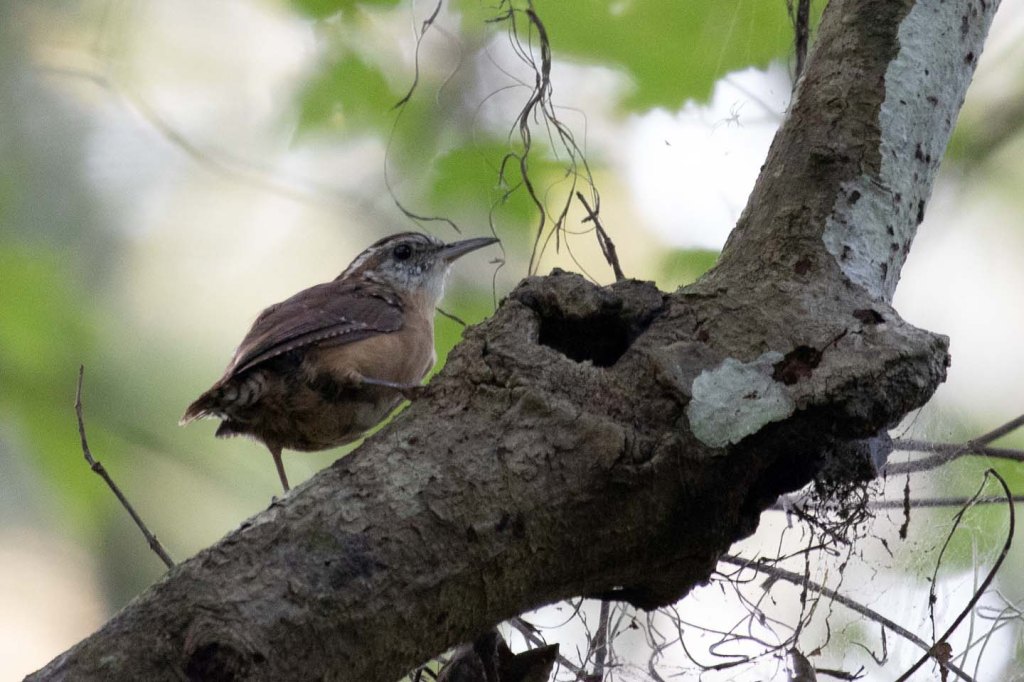
The trails around the spring remain open and very well kept. A Carolina Wren serenaded us near the “Sea Hunt” dock, then hopped into view. Turtles sunned themselves on a log in the spring, and an Anhinga darted underwater hunting for fish. As we walked through some of the lawn and garden, we disturbed a Red-shouldered hawk, on the lawn in the midst of a flock of White Ibis. As he flew, I tried to take a few shots. I liked this one best, I don’t often get such a good view of the topside of a bird.

Pink Flamingo at St. Mark’s

People living outside of Florida think of the Pink Flamingo as a common Florida bird. After all, every souvenir shop carries key chains, ornaments, dish towels, etc. with their likeness. In reality, sightings occur mostly in the Everglades, and even a visit to the Everglades does not guarantee seeing one. We heard that one flamingo spent a lot of time at St. Mark’s NWF in northern Florida, arriving several years ago with Hurricane Michael. We visited before and never saw it, though just after Hurricane Idalia a few more had been sighted so we hoped maybe this time. We drove down the road toward the lighthouse, looked to the right, and there he stood alone on the other side of the water, the only bird in sight. There is something special about a pink bird 5 feet tall. We heard of other Flamingo sightings including in Tampa Bay, believed the result of Hurricane Idalia. I’m not sure this one pictured is Pinky, the “original” resident of five years ago, or one of the recent arrivals.

We drove to the lighthouse, and looking to the sky in the east realized with the weather coming in we needed to cut our visit short. We walked around a bit more, then headed out. And yes, we did get to drive though that storm, and it was a strong one.

St. Mark’s NWR
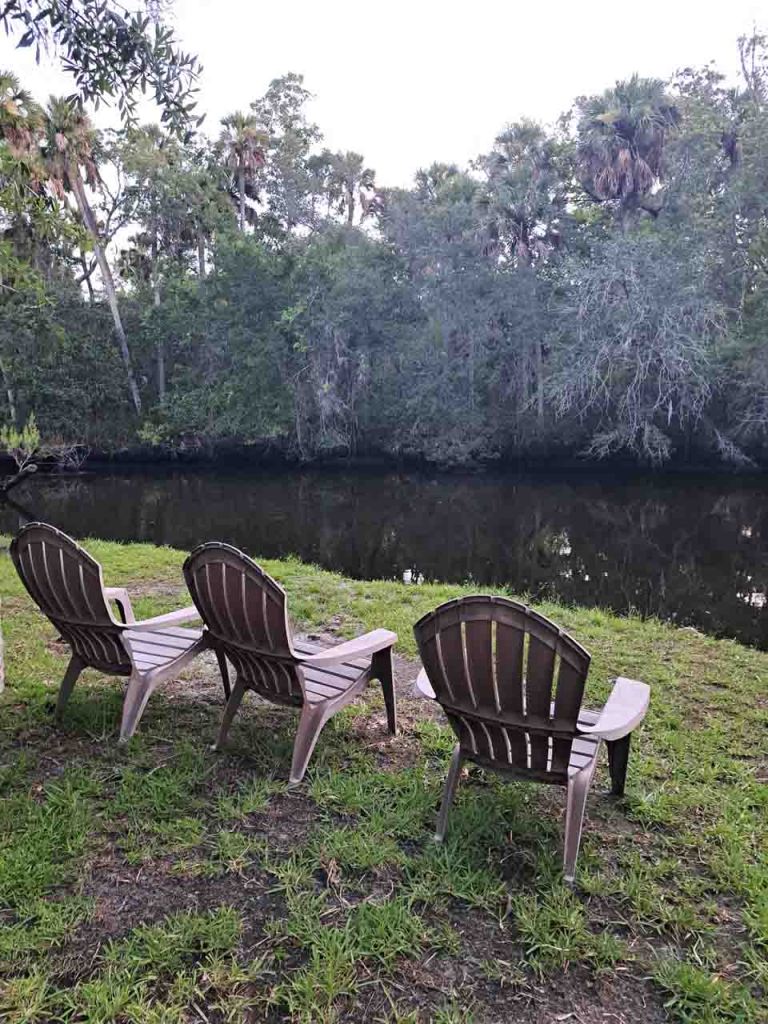
Looking for a Seat

August Heat

We really can’t complain, August is hot in central Florida and we’ve lived here for decades so know that. Like July this year, the forecast more regularly calls for near record temperatures. We get out early for a walk or a run, then do any outside work before retreating indoors.

Our July program “Nature Photography with Any Camera” attracted an audience of about 40 people. We went over our time with the program, and then another half hour at least answering individual questions and showing features on cameras. We loved it, and hope the people who spent part of their Saturday with us went away with some good ideas. We also volunteered a few times as Gallery Docents for the art show in the auditorium gallery.

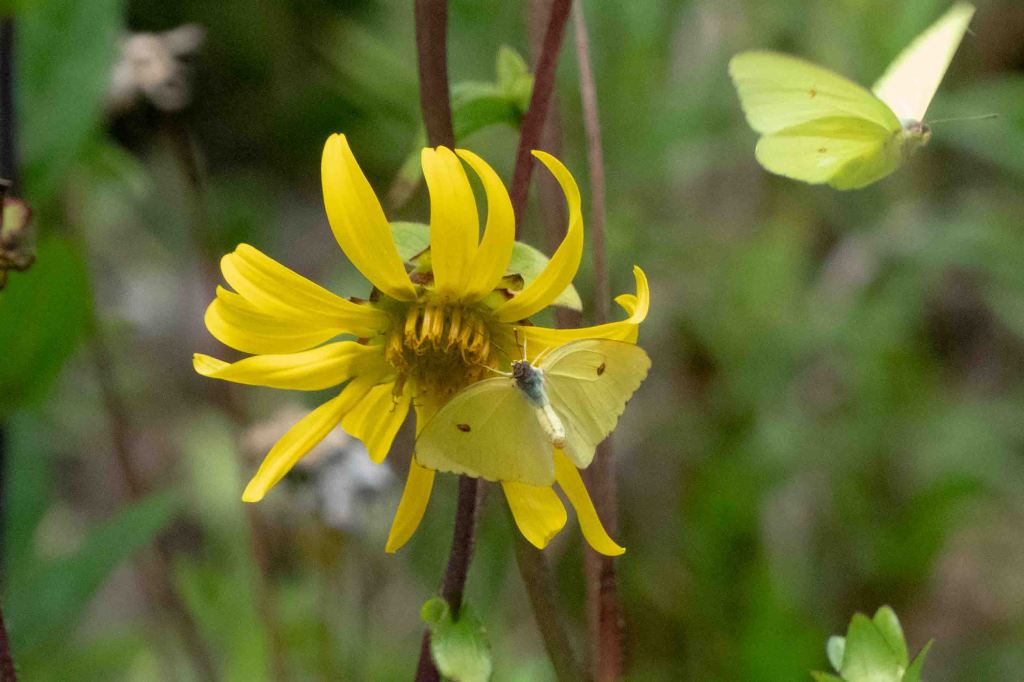
The Wildflower garden, directly outside the doors, attracted a lot of butterflies so I spent my breaks trying out various cameras and settings. The shot above was taken with a Panasonic Lumix FZ300, a “super-zoom” camera lightweight enough to slip into a small bag along with my mobile phone. The two now serve as my “take everywhere because you never know where a photo opportunity may present itself” cameras. One of the people attending our program told Karl that this type of camera is being marketed as the bridge between mobile phone or classic point and shoot cameras and the heavier and more expensive SLRs. I am working with all the various settings on mine, and testing its strengths and limits. I actually read part of the manual! Midnight the cat is a semi-willing subject for testing as long as I don’t disturb her nap too much.

Summer Walk

Cotee River

Summer in July in west central Florida is hot and humid, always. So far this year, it managed to be just a little more hot, and a little more humid than usual. The heat dome which the rest of the south and parts of the midwest experienced effected us, though our temperatures did not rise as high. We kept our outdoor activity to early mornings and later evenings during those times. Even then, the still air weighed so heavy with moisture you felt the pressure of it just stepping out the door.

This Sunday morning I took an early walk to the river. Starting just before dawn, I heard rather than saw a lot of birds already up and around. I didn’t see another person until my walk back. A yellow-crowned night heron, a familiar neighborhood resident, stood on the rocks watching me carefully. I walked on the other side of the path to cause as little disturbance as possible.

Standing near the point, I saw ripples in the river. I expected to see an otter, and followed the ripples back and forth. Suddenly to my right I saw a dolphin fin appear briefly, then back under. Excited, I waited for another sighting but due to the tannin color of the water could not follow the dolphin visually. Still, that was quite the excitement for a quiet Sunday morning walk.

I took these photos on a mid-range Samsung phone. I rarely take phone photos as I usually have a SLR or point and shoot zoom camera with me, but so many people use them and want to use them as their primary camera Karl and I get questions all the time. After much prodding from friends, I am learning what I can and cannot do in my range of nature photography using the phone. Any suggestions are very welcome!

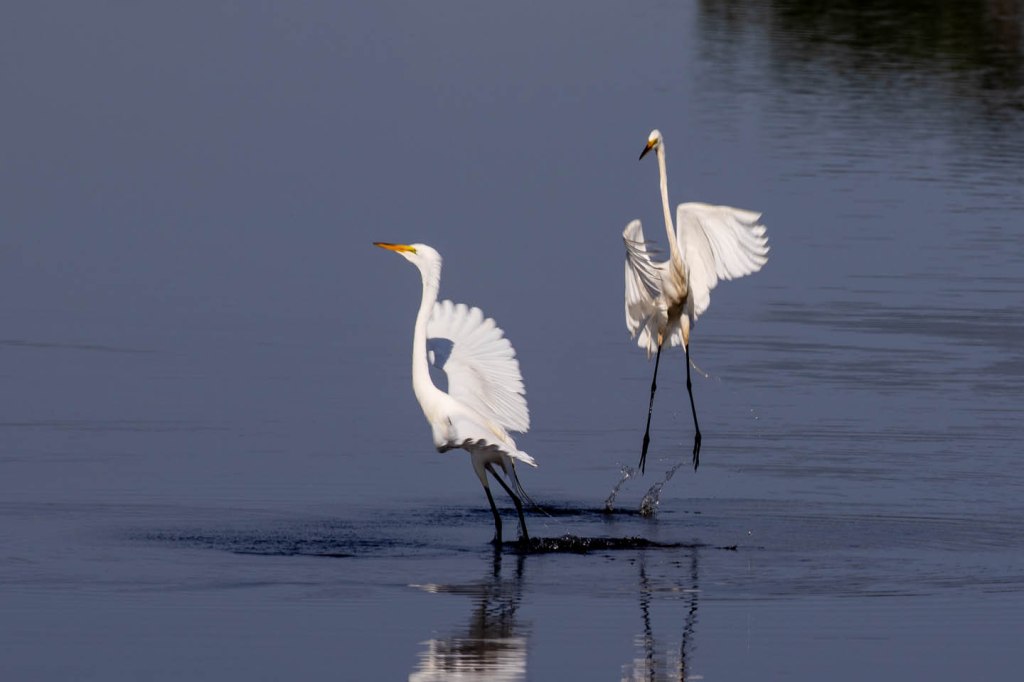
Dancing Birds

All the surrounding birds stood in the water, fishing. The sudden appearance of the second bird, the subsequent “dance” and then following one another away took me by surprise. It was beautiful, I did get a couple of shots, but mostly I just watched.

The second part of June here in west central FL felt more like August with higher than usual humidity and toward the end some of the higher temperatures from the system west of us. We usually get it gradually, and can adapt so when August arrives the shock to the system is less. We will be doing our annual nature photography class/presentation at Brooker Creek Preserve in July, but due to the early arrival of the August heat it will be all classroom.

Bird Mothers and Chicks

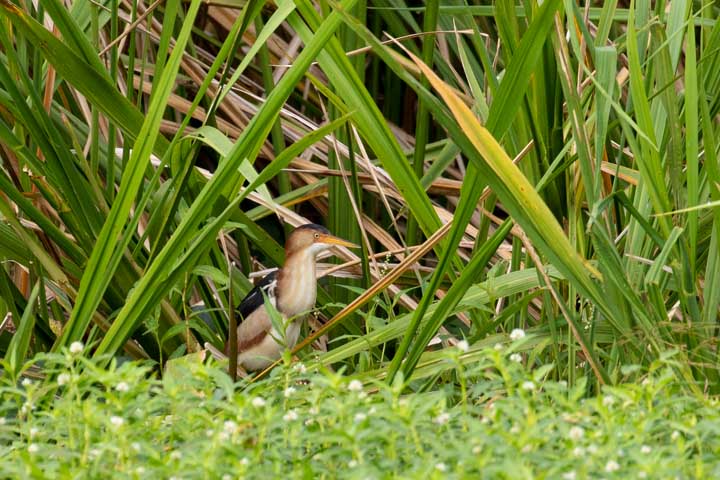
We visited the Gainesville, Florida area for a few days. Early June is the time for bird chicks, and we saw several. The highlight for us occurred during a hike at Sweetwater Wetlands Park in Gainesville. We arrived early, about 7:30 a.m., as the temperature forecast for the day called for 90 degrees with high humidity. As we walked along a boardwalk we saw a fellow birder (assumed because of binoculars and a camera!). He called us over and pointed out the bittern chicks in a clump of grass and reed. He comes daily to observe and told us that the nest had been disturbed by another bird and possibly an alligator but all four chicks still thrived. If you look closely at the photograph above, you can see a lot of fluff, with two beaks at the top and the other two front and center.

We watched the adult Least Bittern fly in directly to the clump, hidden from view. She made her way through to a section, fed a chick and immediately flew away. As we walked along the boardwalk she flew past us and landed further on searching for more food. She kept well hidden, but I did get one photo.

On a hike in Paynes Prairie the next morning we watched the Common Gallinules swimming through the vegetation, then an adult followed by chicks swam over the the pier to find some bugs. They stayed briefly, and swam back. We also spotted chicks in some Osprey nests, and juvenile herons.

St. Mark’s NWR Visit

What took us so long to visit St. Mark’s Wildlife Refuge? Established in 1931 to provide winter habitat for migrating birds along the Florida coast in Wakulla County, we passed by the entrance many times over the years, always heading somewhere else. Every time one of us commented that we needed to stop one day.

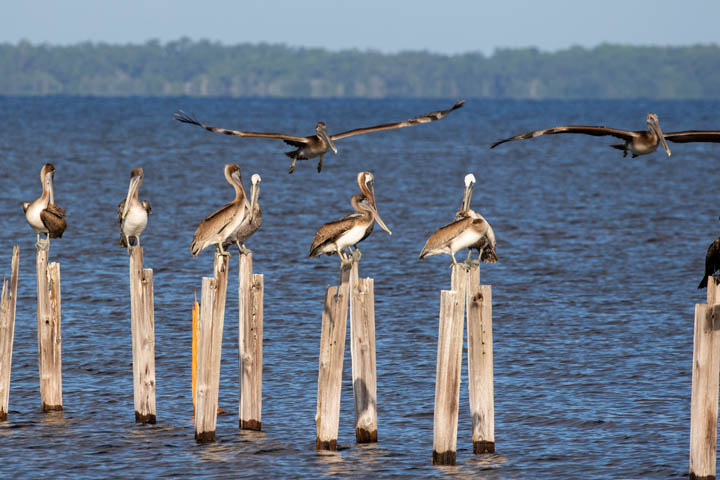
One day came in early May. Our planned 2+ week trip canceled due to me receiving a summons for jury duty scheduled for mid-May (when we would be 9 hours drive from home), we decided to take the first part of the trip and then head home. Looking at the area we realized St. Mark’s would be under an hour drive from our campground. On a sunny, warm morning we arrived and stopped at the visitor’s center. It opens at 8 a.m. and we arrived shortly after that. We picked up a map, and started driving down the road to the lighthouse. I looked at the map for hiking trails as Karl drove, and then we reached Stoney Bayou Pool. Birds waded and flew everywhere. We pulled over and grabbed our binoculars. White Pelicans floated in a group off in the distance, closer we saw birds of all types. Of course, in any area with water in the south always look down and right in front of you. I walked closer to the water, binoculars in hand, observing the pelicans in the distance and came upon this guy, not too close but a good reminder to be aware of my immediate surroundings.

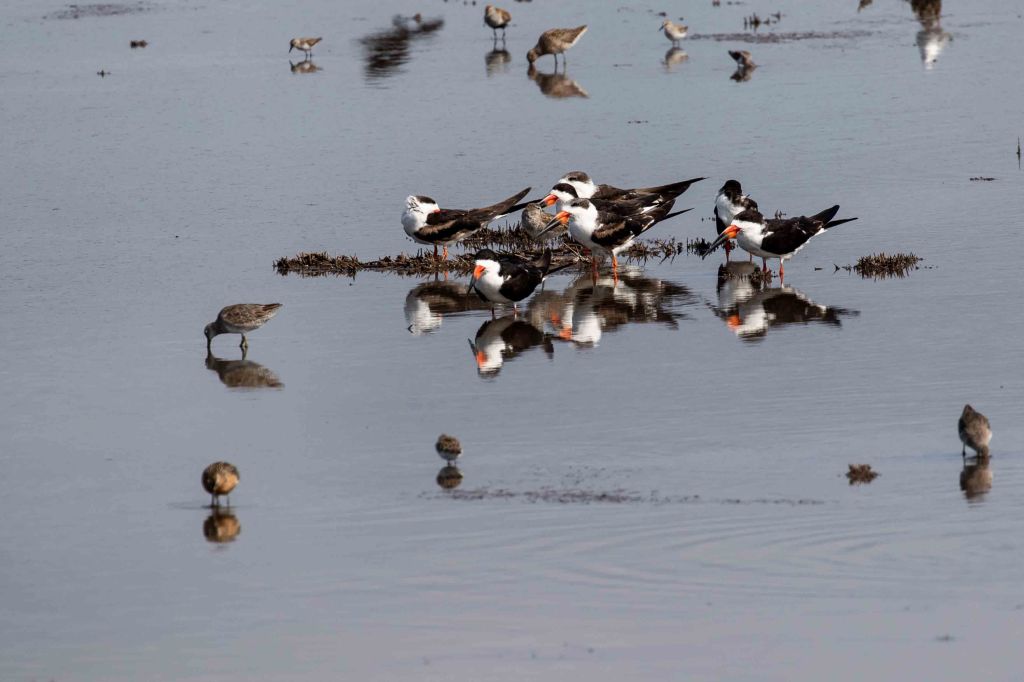
We drove further down, stopping often at the various bodies of water, amazed at the sheer amount of bird life. In one pond we spotted Great egrets, Snowy egrets, Tri-color herons, and Great blue herons among all the shorebirds. We were overwhelmed by the numbers, and leaving about lunch time realized we never did get on that hike. We spent all our time along the road just watching the birds.

We highly recommend it, and yes we will be back. Hopefully next time we will get on some of the hiking trails!

Savannah Sill

We love visiting Georgia and love camping there. Lately our visits last two weeks or more as we explore more of the state. That said, we rarely take a trip there without somehow managing to visit the Okefenokee Swamp for a few days. On our latest trip we stood in the dark outside the camper astounded once again at the incredible view of the stars at this designated “Dark Skies” site. The other place we always try to visit is Savannah Sill, just off the same road that leads to Stephen Foster State Park. On our recent visit, Karl took this photo of the trees with the Spanish moss, and the waterway, as I looked for birds, dragonflies, and other (faster) moving parts of nature.

This Snowy egret in its breeding plumage stood in the water near the dam at the sill, quietly waiting for a fish, which it did eventually catch. The Ruby-crowned Kinglet hailed from Georgia, but outside the swamp area. I included it because he posed so well for me. Immediately after I took the shot he quickly raised his ruby crown and put it back down again. Maybe wanted me to be sure of the identification?

Blakeley Park Visit

E.O. Wilson Boardwalk at Blakely Park

As the site of the last major battle of the Civil War and a deserted boom town from the 1800s, plus a location on the Tensaw River and Mobile-Tensaw delta, Blakely Park in Spanish Fort, AL made our list of places to visit some time ago. We paid our admission fee and received a guide to the area and a wonderful explanation of all to see. The paved road we followed turned into a gravel road through the park. We stopped at several of the battlefield sites along the way, and found out later that there is a self-guided Battlefield Tour as a separate document (we will remember to ask for that next time), and continued on.

The interpretive signage at Old Courthouse site and Jury Oak Pavilion areas provided a concise history of the town, started as a river town which became a boom town, then gradually deserted. The road continued on to the river, where we parked and walked the two short trails, the E. O. Wilson Boardwalk along the river and the Hiding Tree Boardwalk. As we walked along the E. O. Wilson Boardwalk an eagle flew by as if on cue. The Delta Explorer pontoon boat also docks there. We took one of the 1.5 hour tours of the delta area and highly recommend it.

The gravel/dirt road does become narrow at parts, but it just makes you drive slower to really experience your surroundings. With so much here, I suspect we will be back our next visit to the area.

The Hiding Tree