Birding from Shore

We stopped several times on our recent morning drive along the Gulf of Mexico. The sunny but cool weather, which followed cloudy and cold weather, brought out a lot of birds but not much else. We saw groups of gulls crowded along a shore. Laughing gulls predominated, though one or two terns mixed in with the crowd.
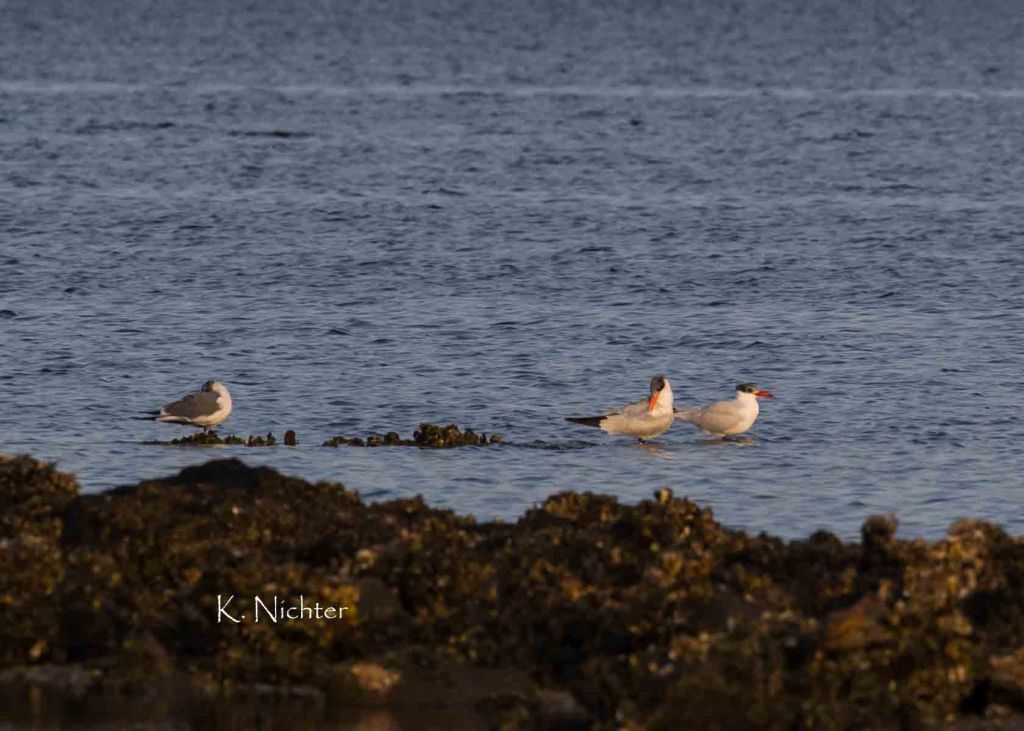
At one stop I noticed some birds on rocks further out. The bills of the birds caught the sun, so I focused on them. I knew that they were either Royal terns or Caspian terns. I checked the guidebook, and based on the black head that extends all the way to the forehead, and the bill color, I identified them as Caspian terns. The bill color did throw me a bit. They sat facing the early morning sun, and the way that light can play with colors fooled me before.
I learned bird identification many years ago using THE field book of nearly everyone at the time, Peterson’s Guide to Eastern Birds. That guide, along with most of the others until recently, focuses on specific field marks such colors, markings, bill length and other similar features to identify the bird. Several years ago I became aware of the GISS method (General Impression of Size and Shape) which focuses on typical behavior, shape, and methods of movement. I had a shorebird guide that used it, so tried that method with shore birds and found it helpful. As most of my birding companions used Peterson’s and the field marks, I didn’t go much further. Karl has been using that method more lately and finding he likes it. Recently I found another book that uses it and decided to learn it more thoroughly to see if I could teach myself to notice these other characteristics first to help my identification.
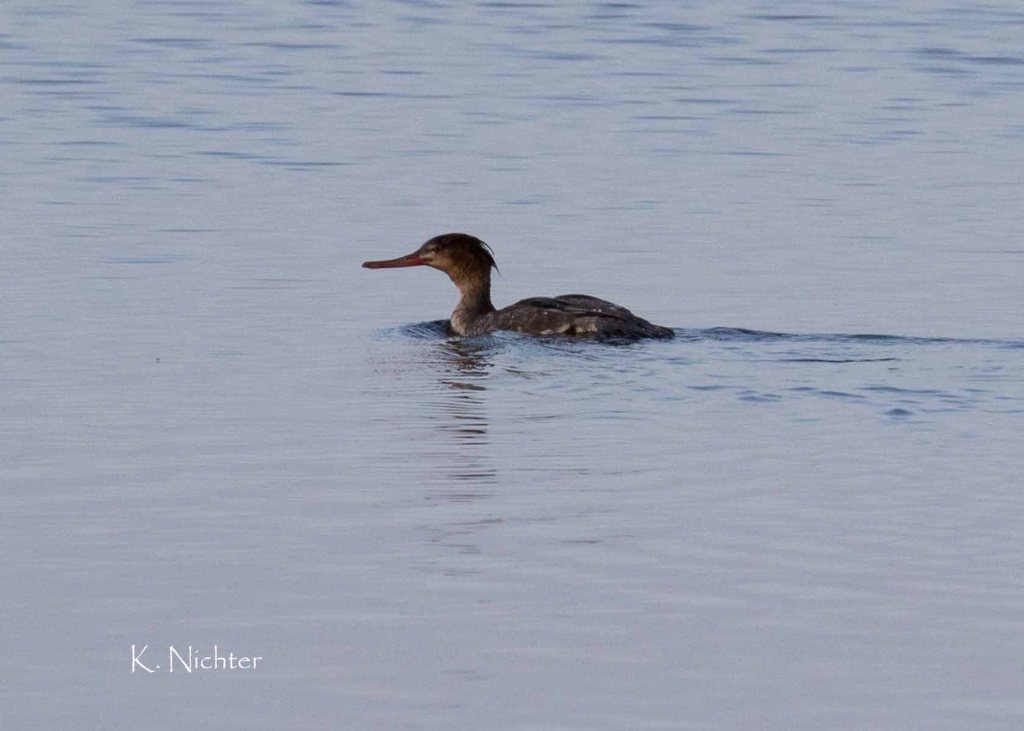
I used that method when I saw some birds swimming further out, and by the overall shape including the bill and the way they swam I narrowed in on a merganser, and identified the Red-breasted merganser.

As I checked one more time before we left, I saw this fin in the distance. I know that one by heart, a dolphin. I watched for a few minutes, but it dove and didn’t resurface within my viewing range.

A Nesting Sandhill Crane

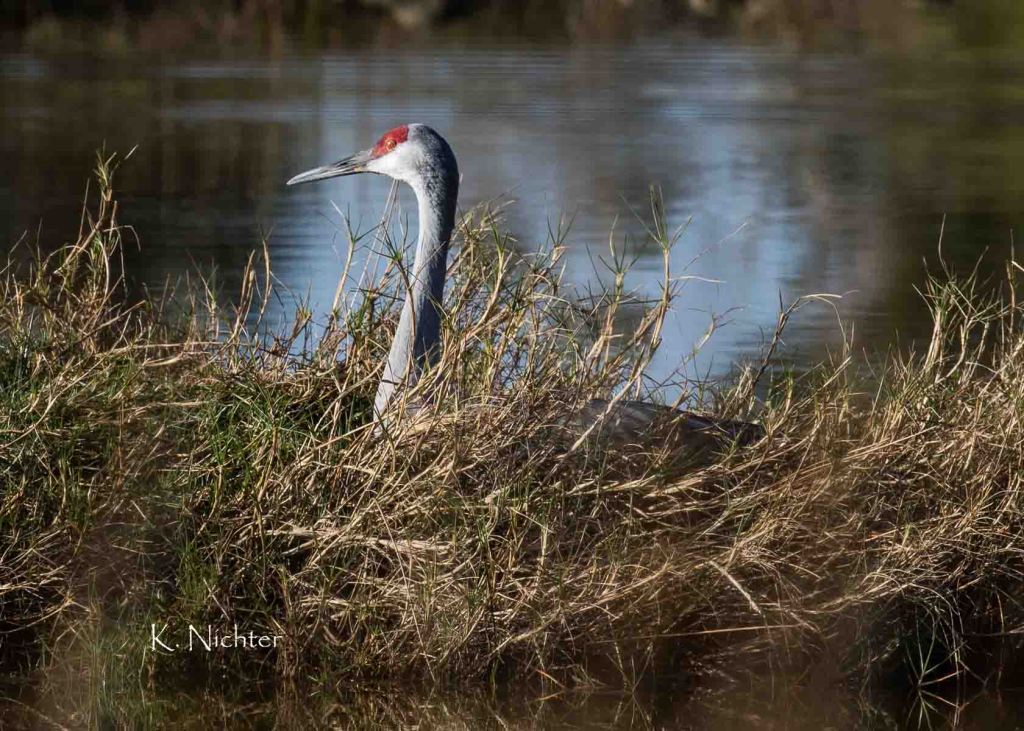
Karl and I took a drive this past week along a scenic area north of here. The drive led to the Gulf and then followed the coast to varying degrees. We remembered that a few years before we took this route with our birding friends and in the middle of a small pond alongside the road saw a Sandhill Crane on a nest. Since they return to the same area to nest year after year we hoped to find them in the area, and did.


Both parents incubate the eggs, and males and females do not have notable visual characteristics which set them apart, so we don’t know if this is Mother or Father. The nest sits in a stand of grasses in the middle of the water, a perfect site for them. The pond is right next to a side road, and both the pond and the nest visible to passing cars. The mate did not show up while we were there, and the nesting bird looked around but never moved. We stayed only a few minutes, and I took the closer shot using the full 400mm zoom. We would have loved to stay and observe further, but we were concerned about disturbing the bird. Incubation for these cranes is 28 – 30 days so we plan to drive by again in a month and maybe see one or two colts.


Our first encounter with Sandhill cranes occurred while house-hunting for our first house in Florida when Karl’s job transferred him here 25 years ago. A pair of them wandered around the neighborhood and we saw them while looking at a house. The realtor working with us told us all about them and we learned more during the time we lived there.

Watching a Pine Warbler

On a recent hike I decided to try to concentrate on one bird, if I could, and observe it for a period of time. The warblers move fast and take off into the cover of bushes or trees at the least sign of unusual movement or shadows, a good defense mechanism for the small birds.
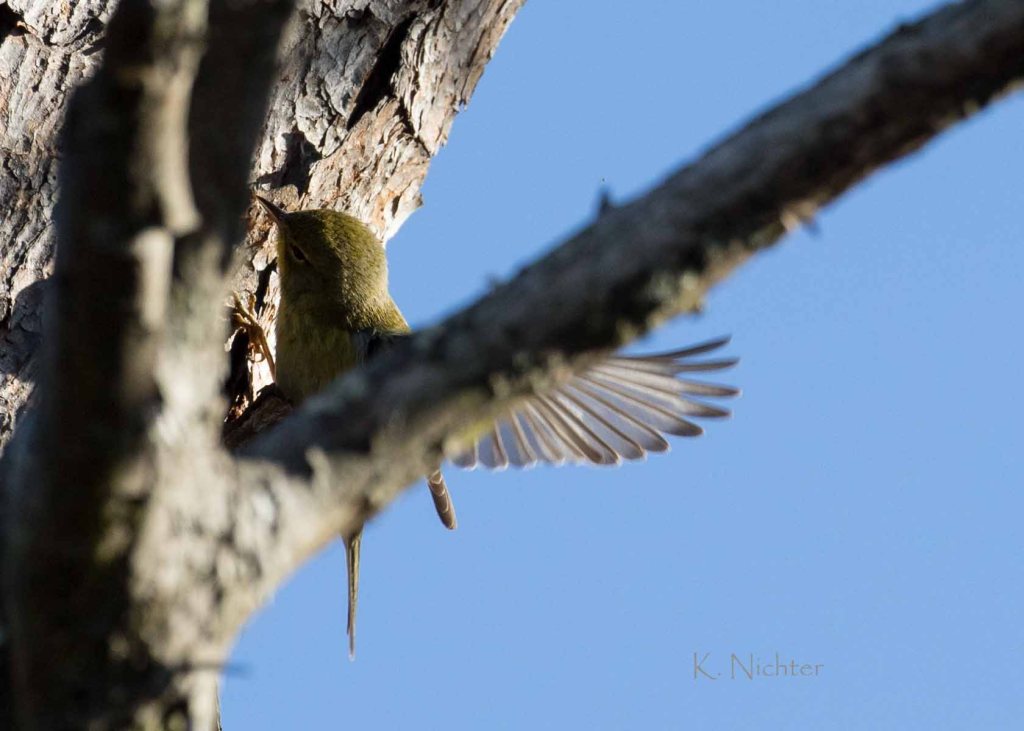
I saw a Pine Warbler in a tree, checking for insect life hiding in the Spanish moss. I took a photograph, and it flew almost immediately. I stood still, then moved a little and stopped again until I spotted the bird up on a branch.

I watched as it looked up at the trunk of the tree, tilting its head back and forth, and then took off after something, dropped back, and flew off. It happened fast, and though I managed a few shots it wasn’t until I got them home and on the computer that I could really study them.

A painter we know who also birds and takes photographs once called his camera and long lens (Canon 100mm – 400mm, the one I use the most for wildlife) his best birding tool along with the binoculars. I agree, I carry binoculars for birding but keep the camera close. When we worked on a long term citizen science based birding project for a research team, the photograph, fuzzy and poorly composed thought it might be, often provided confirmation of some birds, and proof when we saw the occasional rare bird.


In this case it gives me a close-up view of an actual bird in the wild. I often notice details not mentioned in guides. The field guides choose the best example they can find of a species for their books. As with humans, the average bird often varies from that perfection.

Fog and Low Tide

We looked outside and realized that the promised sunny morning started with fog and instead of blue sky we saw an unrelenting gray. We went for our walk at a local park anyway to enjoy the walk, and maybe get creative with the photography. We learned not to wait for good or even near good weather, even here in Florida where many people think the sun shines all the time (not). We wore regular walking shoes, and shortly after starting our hike realized the waterproof hiking boots would have been a better choice. The foggy air saturated everything, and the wet grass soon saturated our shoes.

The flock of robins that arrived last month ago flew over. Karl noticed the depleted supply of berries on the trees and shrubs in the area so we don’t expect them to stay much longer. We walked to the deck that overlooks the place where the creek and the Gulf of Mexico meet guessing that any wading birds took advantage of the low tide for a little fishing.

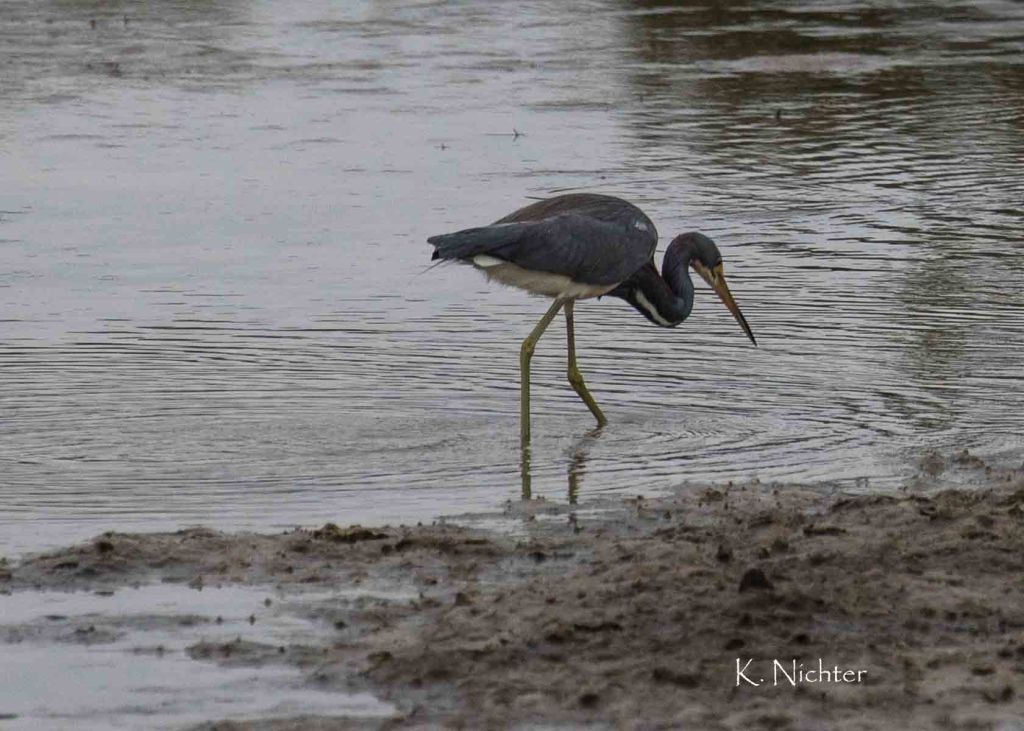
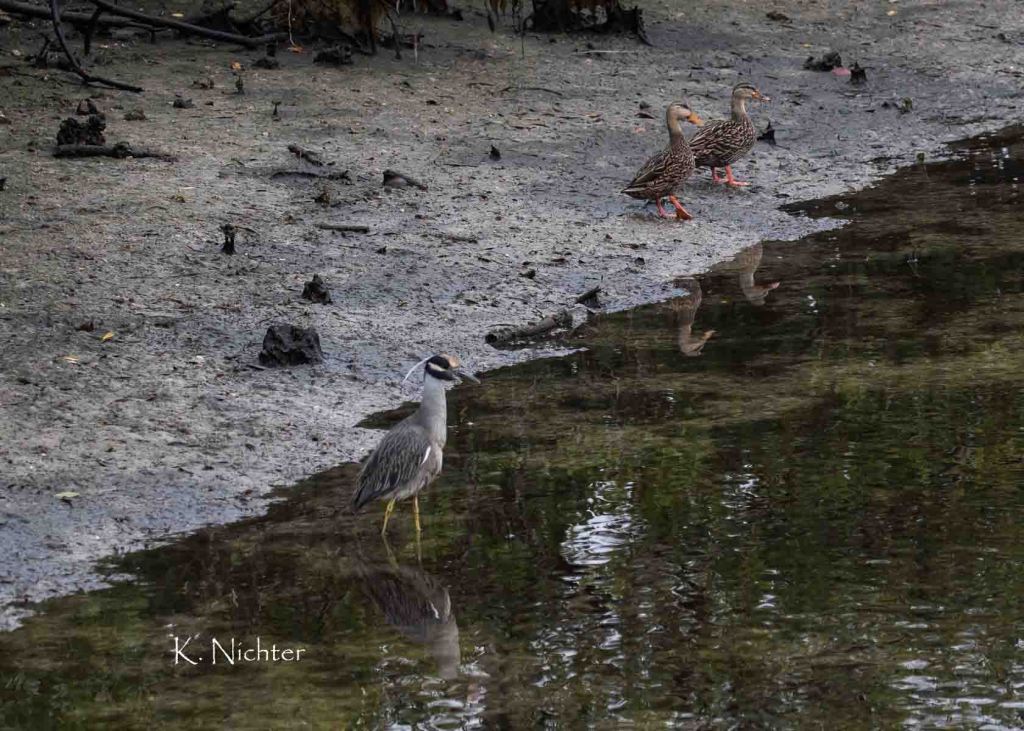
The fog, gray overcast sky, and diffused light with no sign of sun made the entire scene monochromatic. The only points of color came from the white on the Tri-color heron and the crown and head of the Yellow-crowned Night heron. An osprey circled overhead, and then we heard the familiar cry of the Sandhill cranes. I tried to get a shot as they went over, and came out with an acceptable one. My tracking skills with the lens need improvement.
A gray squirrel jumped from branch to branch in one of the trees, several small warblers, mostly Palm warblers flew in and out of the trees near the water, and in the distance we saw several Turkey vultures circling slowly. Once again it ended up more of a birding trip but that is fine with us. Any time quietly walking in the woods is time well spent.