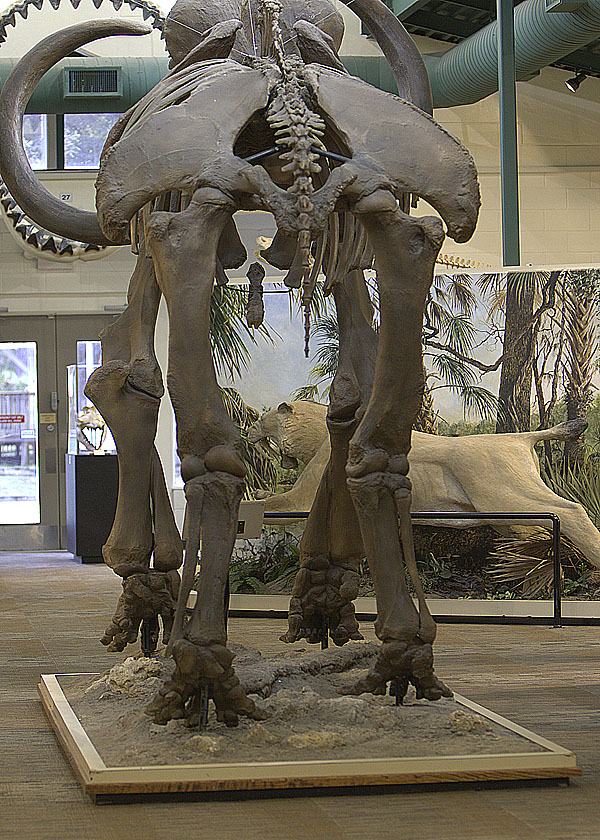
Silver River Museum – New to Us Exhibit

We checked in and set up camp at Silver River State Park on a Sunday, then decided to visit the Silver River Museum, located along with its replica pioneer settlement a short walk from the campground. We paid the very reasonable $2.00 admission charge, and began to wander. We visited this museum before, so started out looking at some of the exhibits when both of us realized an entirely new section existed. A volunteer told us that it opened only two years ago.
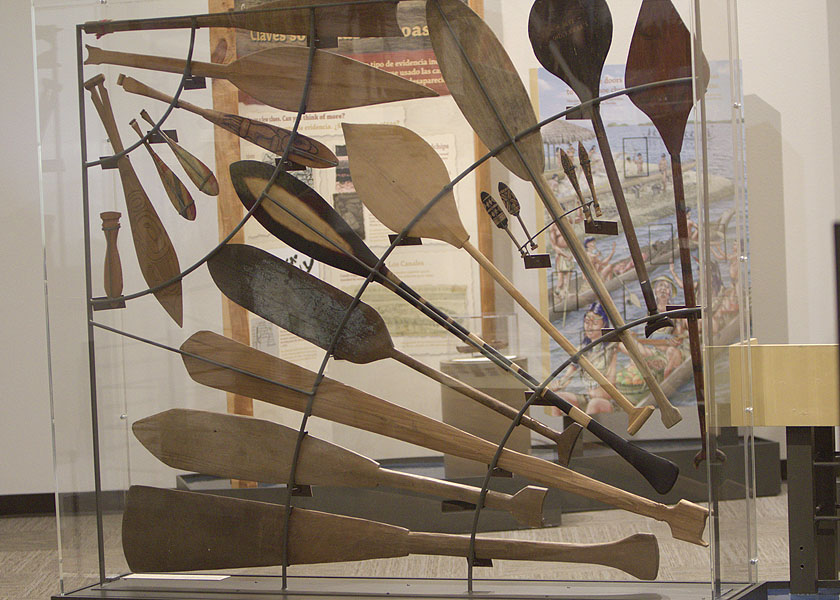
The new dugout canoe exhibits includes everything dugout canoe. It starts with information on the remains of prehistoric dugout canoes from Newnan’s Lake and the archaeology involved, moves on to their use, history, and modern craftspeople making the canoes the old way. The interpretive exhibits are a blend of artifacts, display, signage, hands-on and video and appeal to children and adults. Interesting fact: Florida holds the record for largest number of prehistoric dugout canoes, over 100 from 500 to 5,000 years old!

Replica of dugout canoe you can touch

Located at Silver Springs State Park at the NE 58th Avenue entrance which includes the campground and many hiking trails, the other museum exhibits show the history of north central Florida from fossils, through Native American culture, and into the age of development first for business then as a tourist attraction. It also includes a replica pioneer settlement, and during the week provides field trips for school children. It only opens to the public on weekends, from 10 a.m. to 4 p.m.

We needed more time since we arrived so close to closing time. We will be back.
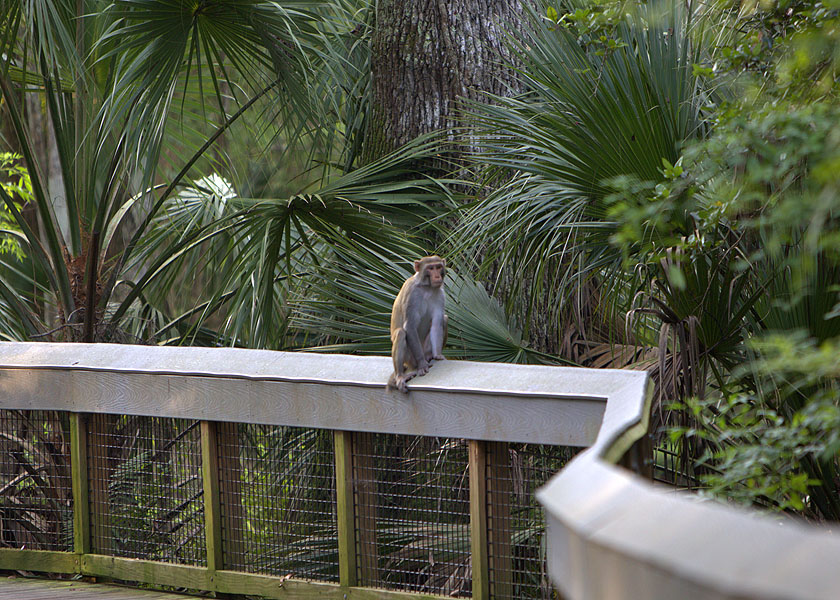
Rhesus Macaques – Another Non-native

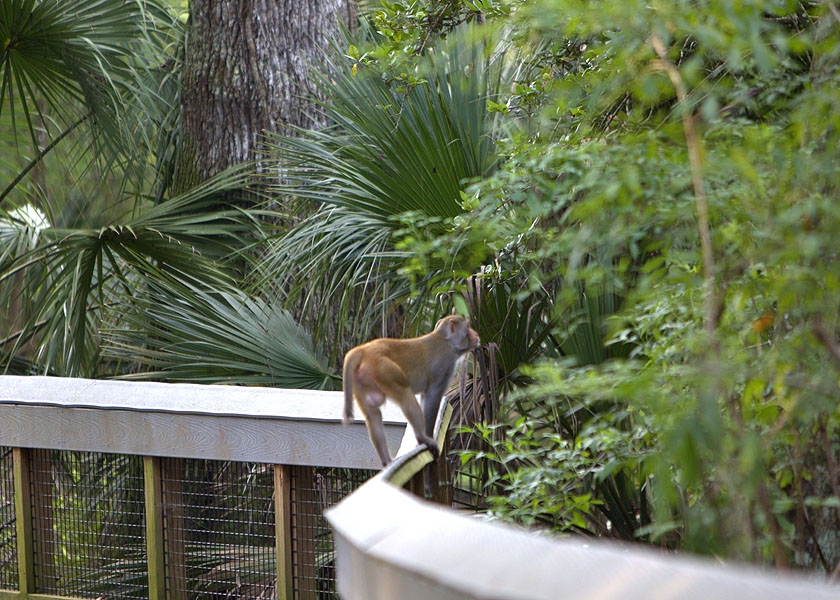
Florida does not have a native monkey species, but, we do have wild monkeys. We visit and hike Silver Springs frequently, but never saw the Rhesus until 2018. After that one sighting, which I photographed and was one of the first posts in this blog, we didn’t see any of them again until last week.

We hear a lot of stories about the origin of these monkeys, the Rhesus macaques, which live wild in Silver Springs Park near Ocala and the surrounding forest areas. Most agree that the original six were imported in the 1930s and released to add to the glass bottomed boat tourist attraction. Put on one of the small islands for the enjoyment of the tourists passing in boats, they instead swam to the main shore and took up residence in the forest. Some say that the filming of the Tarzan movies at Silver Springs spurred the original release, and it likely made good promotional material for the stories promoting the movie, but as the Rhesus never appeared in any of the movies the tourist attraction story is more likely.

These two, we think young males, sat on the railing of the Ross Allen Boardwalk where it crosses the Silver River, watching us approach. We continued to walk but slowed down, and wondered if we needed to turn around. They slowly rose to all fours, and gracefully sauntered along the railing away from us. We continued to walk, and they turned to right as we came to the loop. They walked further down, turned, sat down, and just watched us. We stood and observed them for a few minutes, then went to the left and walked the loop from that direction. By the time we reached the area we last saw them, they were hidden somewhere in the forest.

Signs are everywhere about the Rhesus, with warnings about approaching them or feeding them. They are wild, they have bitten people before who approached and tried to feed them, so like any other wild animal just enjoy them from a distance.

Backyard Wildlife

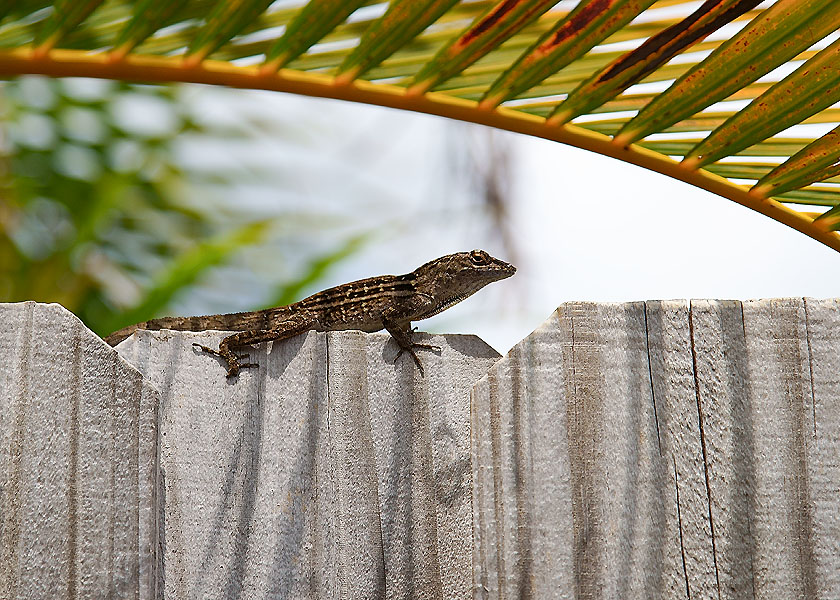
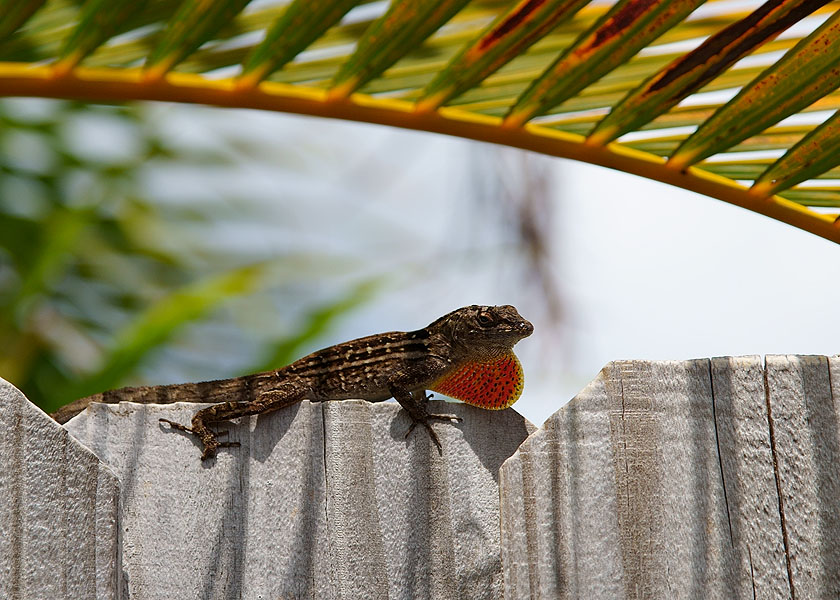
Karl watched this Brown Anole show up on the fence directly across from our kitchen window about the same time each day. He basked in the sun, and scurried around after minuscule insects which he promptly ate. Sometimes he disappeared after that, but on occasion he sat and displayed his dewflap prominently.

Perhaps better known as a Cuban Anole, this lizard did in fact originate in Cuba and migrated to Florida at some point in the 1800s. Finding Florida very much to their liking, the species moved right in and is now regarded as invasive, taking over the territory once dominated by the native Green Anole. We rarely see Green Anoles in our yard, but we see the Cuban Anoles all the time.

When we first moved to this house in the 1990s our young nephew looked forward to the annual family visit to chase after and catch them, and those memories later inspired his sister to write a children’s book called “The Lizard” which she self-published. The anoles easily slip into the screened pool area where the cat then engages in pursuit. They are part of our backyard wildlife and although invasive made their way into family memories.

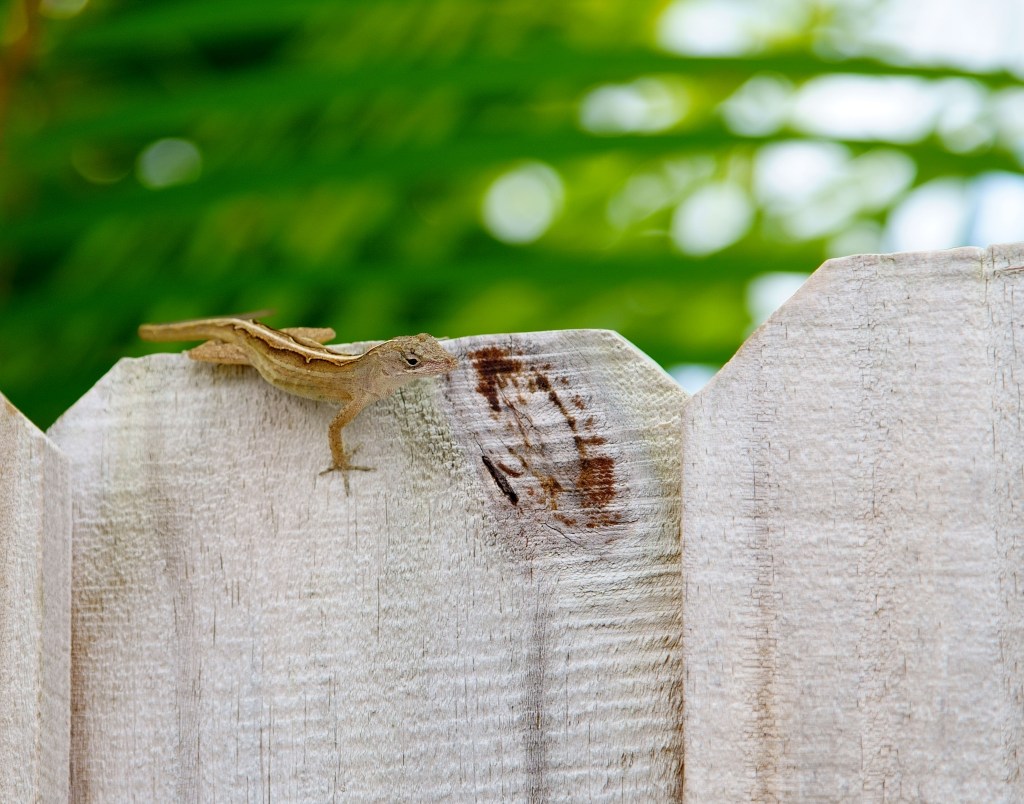
Karl noticed one other thing as he photographed this particular anole. The displaying of the dewlap occurred when another anole showed up. The purpose of the display is generally to challenge a rival male, or impress a local female. Based on size and the white dorsal stripe, the anole below that sat near this male is definitely a female.