Setting the Scene

irish tea

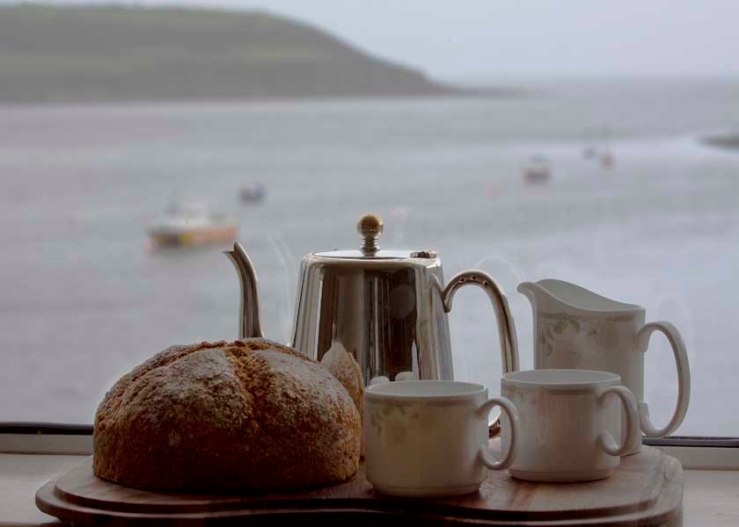
This photograph started with the bread. We visited Ireland several years ago, a place we not only visited before but where we lived for three years in the late 1980s for Karl’s business career. We rented a stunning apartment for one of the weeks, overlooking Youghal harbor. The traditional brown soda bread of Ireland appealed to both of us from first taste all those years ago, and became part of our diet while living there.

I found this bread in a bakery down the street, and had to have it. We followed that purchase with a stop at a local store for Irish butter, the only accompaniment needed and a taste you need to experience. As I made tea in the kitchen that afternoon, I gazed over the harbor scene. I already photographed it, wrote about it, and experienced it, but wanted to imprint it in my brain also. As I picked up the knife to cut the bread, I started formulating this shot in my head. Needless to say, Karl waited for his tea while I went through the kitchen to find what I pictured, set it up, then arranged the camera for the shot. It brings back memories of the trip, the bread, the tea, and all our years there.

A photographer or writer needs to be married to someone similar, or someone very understanding. The urge to create a picture whether with a pen or a camera often supersedes whatever task happened to be in progress when the idea hit. And I waited many times for Karl when the same thing happened to him.

Only Nature Photography?

Irish Boat

We recently presented and judged at a photography club. Before our semi-retirement from the photography business the start of this year, we presented, judged or both  for a variety of clubs and venues all around west central Florida. As we also belong to this club, most members know us. At least, we thought they knew us.

We both noticed the last few times we judged most of the participants leaned toward nature photography. This time, a friend and officer for the club asked the question of us in front of everyone: “Since you are nature photographers, do you choose nature photography over others?”. She noticed that depending upon the judges, people chose photography that they felt reflected the interests or business of the judges in hopes of being selected.

When we hang photographs with this group, we DO NOT hang nature photography. Until we pointed that out, most never realized it. You see, over ten years ago as naturalists we gravitated toward a portfolio heavier in nature photography. Nature photography resulted in us getting “discovered” and of course a lot of business for us, and a lot of opportunities. We found ourselves with little time or opportunity to show the rest of the portfolio since our nature photography kept us so busy. As master naturalists, and volunteers in natural places, nature photography remains an interest, and perhaps a passion, for both of us. But, we do far more.

I actually prefer to judge non-nature photography, as I run into a mental comparison of how I would do, or in many cases have done, the same photograph. Lack of opportunity to hang and publish the rest of our portfolio partially led to our recent decision to semi-retire.

This blog started almost ten years ago, as people taking our classes, joining our hikes, or interested in our photography frequently asked where we went and what we saw. It started as nature, but we added travel and other aspects. We tried to expand beyond just nature photography, and this question and the ensuing discussion led me examine recent posts and realize I need to work harder on showing our other work.


Photo Hike at Brooker Creek Preserve

Swamp Lily

I saw the Fall wildflowers blooming along the trail in in the wetland area, so knew we had some good photo opportunities for this hike. A good crowd of photographers came along, some who hiked with us before, some for the first time, and some for the first time at Brooker Creek Preserve.

The hike starts at 8:30, and even then we felt the heat and sun. One of our hikers mentioned that the temperatures might hit a record high for the day. It felt like it already. We thought of cutting the hike short, but with photographers along and plenty of photographic subjects, that just doesn’t happen. Thank you to everyone. We love the company and learn from you, and always hope you learned something about photography or Brooker Creek Preserve from us, or just had a great time.

We lead one more hike at Brooker Creek Preserve this year, on October 27. We finish that one just as the Owl-O-Ween event starts, so plenty of opportunities not only for nature photography, but maybe to get a shot or two of the event. Hope to see you there!


Walking without a Camera

After ten years in the photography business, and decades before that as a casual and sometimes semi-professional photographer, I don’t leave the house without a camera. My daily purse/bag/pocketbook always contains a camera, and before I purchase them they must pass the camera test: will it fit? I occasionally use a smaller point-and-shoot, or the camera on my mobile, but usually I carry a Canon 7D with Canon 24 – 70 mm lens. This configuration is my go-to when I am not sure what subjects or type of photography I may find.

Through the years I advised beginning photographers and even more experienced to occasionally take a walk or hike without a camera, and just observe. I followed my own advice occasionally, but realized not lately.

During a recent trip we left for a morning hike, and I deliberately did not take my camera. My first observations of several chickadees calling out and posing on branches made me regret my decision, and I entertained the thought of going back for it. I calmly (maybe not so calmly) decided to continue. The second part of my advice to other photographers always included taking a notebook and pen to record the images they would take. This exercise strengthens observational skills and helps with composition variations.

My observations:

  • Four or five Carolina Chickadees flying in and out of two trees.
  • Further on, some warblers. The lighting and lack of a telephoto lens or binoculars made identification challenging. As I watched, I started catching the yellow flashes, the markings on the face and breast, and the general behavior.
  • A large Golden Silk Orb Weaver in a near perfect web, the golden thread shining nicely in the early light
  • The mist-like air near the tops of the trees from the very high humidity as the sun rose
  • Two Pileated Woodpeckers calling and flying back and forth, chasing a Red bellied Woodpecker from one of “their” trees.
  • Other campers out for an early morning stroll, most of them walking dogs

The results: it works, but I did not take the detailed notes I always encouraged my students to take. Obviously it is time for the teacher to start following her own advice again.

Salt Springs Rec Area, Ocala Nat. Forest

Shore of Spring

We decided to visit this area on the advice of a friend who camped there many times. Our first surprise came with the entrance fee. We thought Karl’s Golden Age/Senior access pass gave us free entrance, but Karl received only a small discount. I paid full price. I questioned the person at the gate, who gave evasive answers at first. Finally, she said that a concession manages this location and several others in the national forest, and that determines whether they take the pass or give any discount. We also learned that the prices increased on August 1, 2018 but the national forest website which I had consulted did not yet reflect the new prices.

We drove around the campground, and even the higher price now charged seemed reasonable for a full hook up sites. The campground consists of the large field concept with over 100 sites with room between the sites but no foliage or privacy, and only occasional shade. Some appeared quite level, others clearly not level. Sizes varied. The overall reviews online tended towards positive.

Otter

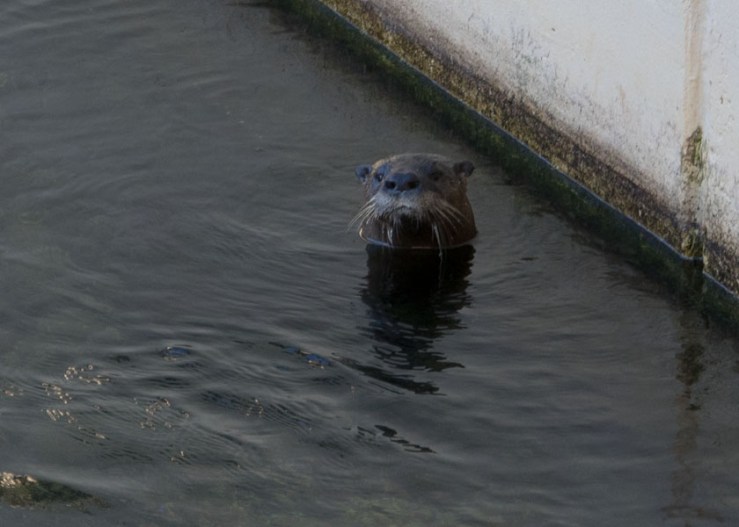
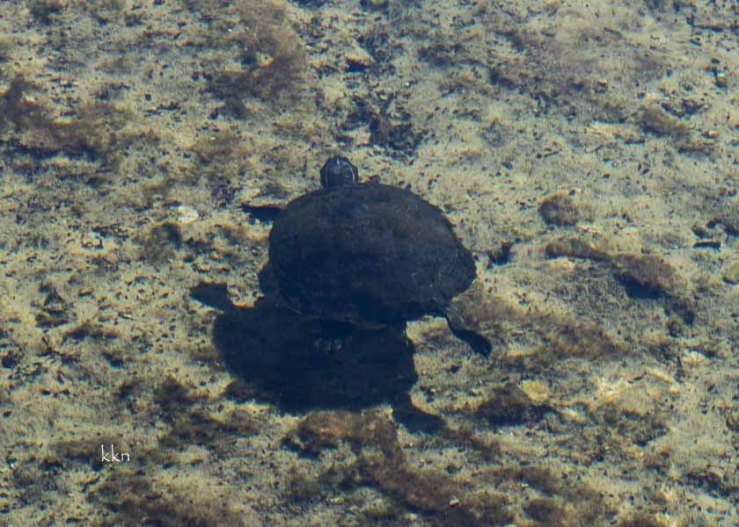
Then, we took a walk in the spring area. Butterflies of various types fed on the flowers totally ignoring us, fish swam by in the very clear water, and an otter popped up, studied us briefly, and swam away.

turtle

We found the visit pleasant, and might return to camp if an event takes us to the area. We knew that private companies managing state and national parks and forests occurred in several places, but did learn that it is more prevalent than we knew. These private businesses do pay the government and according to a sign at the location 100% of what they pay stays at the site at which they collected it.


Zebra Longwing

Zebra Longwing

This close-up of a Zebra Longwing is a close-up in the truest sense. The butterfly was so busy probing the flower and enjoying the very warm morning sun I was able to come up right to it. I came a little too close, as the left side of the wing is a bit out of focus, but I preferred this shot to another I took from further away.

Fun with a Sign

Swim at your own risk

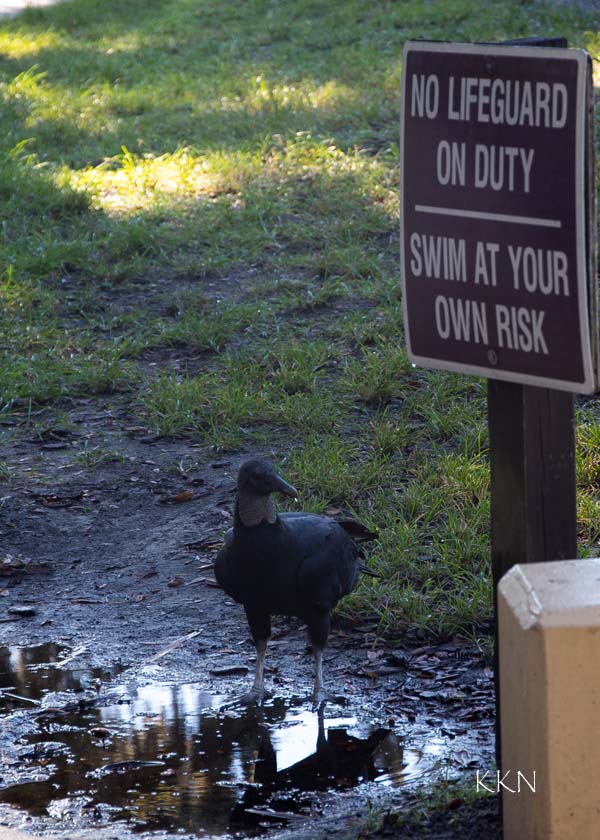
On a recent trip we came across this Black Vulture drinking from a puddle. Since he (or she) didn’t mind being photographed, I took a few shots. The sign right next to a puddle did look funny at first glance. It referred to the swimming area behind him, but by framing the shot and then cropping a bit I came up with the image I wanted.

Walking the Well Known Path

Swamp scene

Exploring new and different places excites the mind, makes connections between old and new knowledge, and forms better stories in the telling for friends. But, in everyday life we most often visit places and walk paths we already know.

Usually located closer to home, we walk the familiar path frequently. Sometimes we walk it with a goal in mind, other times we need to get outside and think and walk, and we head there almost instinctively. Sometimes several paths vie for the title. Some days only a walk along a deserted or near deserted beach will do, other times we crave the green, lush vegetation of a forest.

Even in the hot and steamy weather of August in central Florida, we walk a known path over a creek and through a swampy hardwood. The air seemed heavy, almost as though you could see it holding all the moisture. I knew we were the first along it that morning, I had the spider webbing on me to prove it. I nearly stepped on a coral snake, usually a rare sighting here, in the middle of the path while I looked up at a bird. This snake, unlike some of its venomous cousins here, would rather avoid humans and thankfully made off for a nearby bush to hide from me. I glimpsed it under the bush just long enough to recite the rhyme: “Red touch yellow-kills a fellow” and confirmed that the red indeed touched the yellow. I wanted a photograph, but not enough to disturb him and risk a trip to the ER and a stay in the hospital.

We walked quickly for the last quarter mile or so. The mosquitoes found us and any hesitation on our part to observe anything lead to the swatting fest. By the end of August we find ourselves ready for the rain which we welcomed in June and July to stop its daily or twice daily appearance, things to dry up just a little bit, and the humidity to fall to a level that makes the high 80s or even 90 degree temperatures feel just fine.

A Study of A Spider Web

Study of web 3
The Close Up

A summer morning sun after a night of rain and a large Golden Silk Orb Weaver spider web reflecting both, what more could a photographer ask?

I first saw it from a distance, and moved around it finding the best angle. Since the web hung over the bank of a creek and I stood on the bridge over the creek, it limited my movements.

Study of web 1

The Golden silk orb weaver at home. The vegetation glistening and gleaming behind the web adds color where none exists.

Study of web 2

The close-up, with the body of the spider taking on color due to the angle of the sun and shadow, and the golden silk strand for which is is named on the left side.