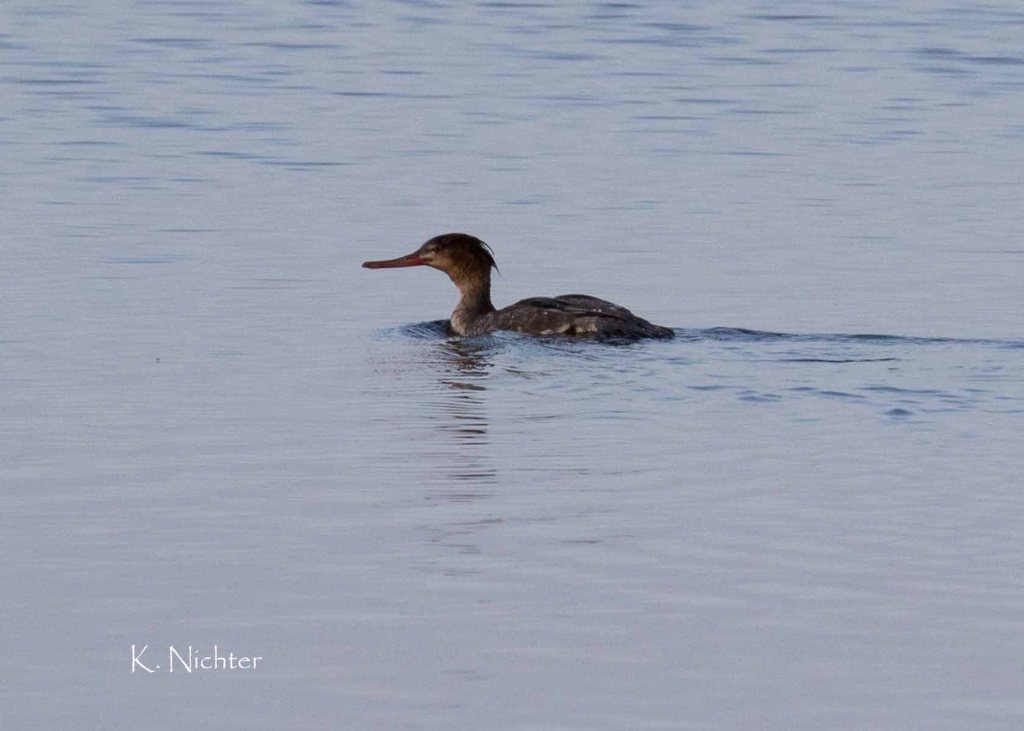
Watching a Pine Warbler

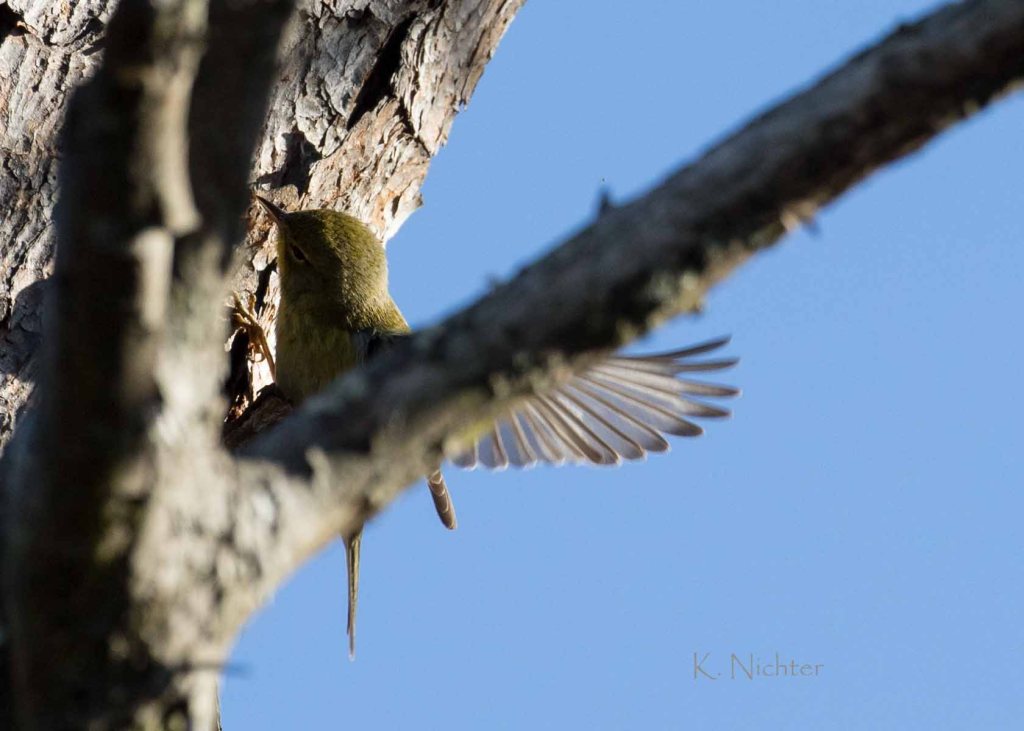
On a recent hike I decided to try to concentrate on one bird, if I could, and observe it for a period of time. The warblers move fast and take off into the cover of bushes or trees at the least sign of unusual movement or shadows, a good defense mechanism for the small birds.
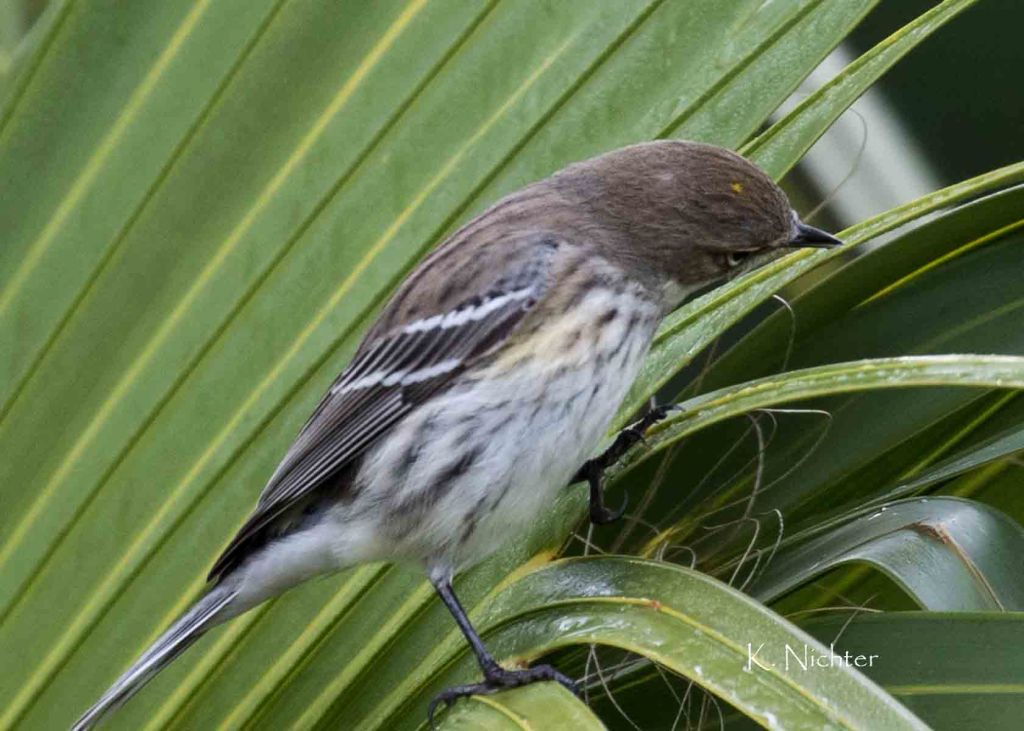
I saw a Pine Warbler in a tree, checking for insect life hiding in the Spanish moss. I took a photograph, and it flew almost immediately. I stood still, then moved a little and stopped again until I spotted the bird up on a branch.

I watched as it looked up at the trunk of the tree, tilting its head back and forth, and then took off after something, dropped back, and flew off. It happened fast, and though I managed a few shots it wasn’t until I got them home and on the computer that I could really study them.

A painter we know who also birds and takes photographs once called his camera and long lens (Canon 100mm – 400mm, the one I use the most for wildlife) his best birding tool along with the binoculars. I agree, I carry binoculars for birding but keep the camera close. When we worked on a long term citizen science based birding project for a research team, the photograph, fuzzy and poorly composed thought it might be, often provided confirmation of some birds, and proof when we saw the occasional rare bird.


In this case it gives me a close-up view of an actual bird in the wild. I often notice details not mentioned in guides. The field guides choose the best example they can find of a species for their books. As with humans, the average bird often varies from that perfection.

Fog and Low Tide

We looked outside and realized that the promised sunny morning started with fog and instead of blue sky we saw an unrelenting gray. We went for our walk at a local park anyway to enjoy the walk, and maybe get creative with the photography. We learned not to wait for good or even near good weather, even here in Florida where many people think the sun shines all the time (not). We wore regular walking shoes, and shortly after starting our hike realized the waterproof hiking boots would have been a better choice. The foggy air saturated everything, and the wet grass soon saturated our shoes.

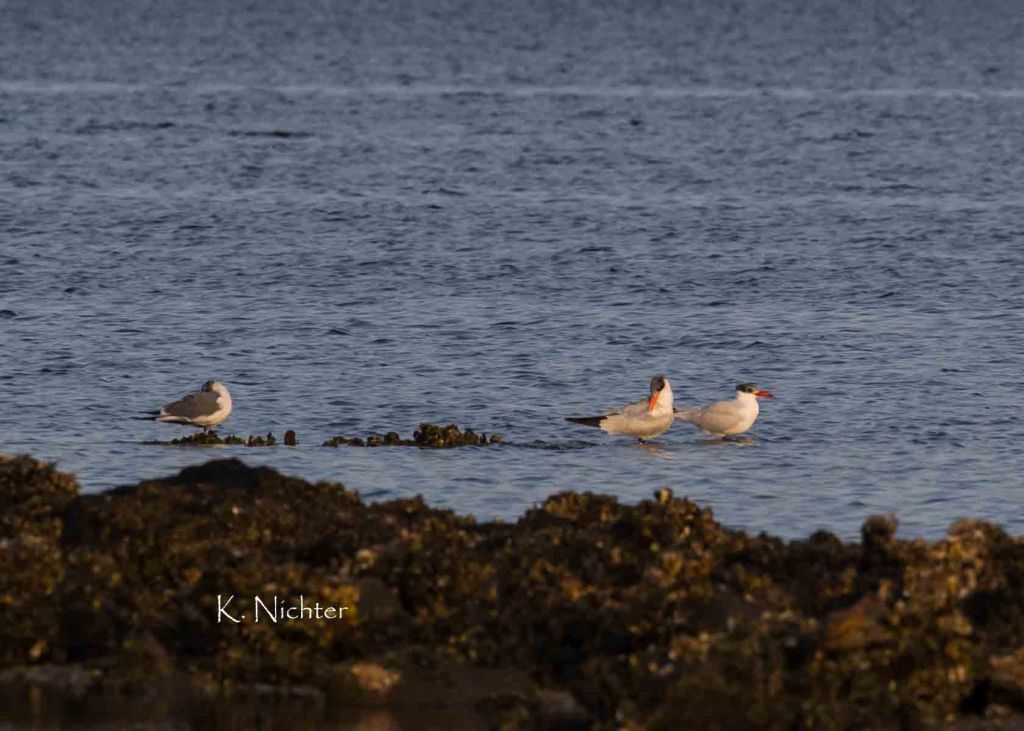
The flock of robins that arrived last month ago flew over. Karl noticed the depleted supply of berries on the trees and shrubs in the area so we don’t expect them to stay much longer. We walked to the deck that overlooks the place where the creek and the Gulf of Mexico meet guessing that any wading birds took advantage of the low tide for a little fishing.

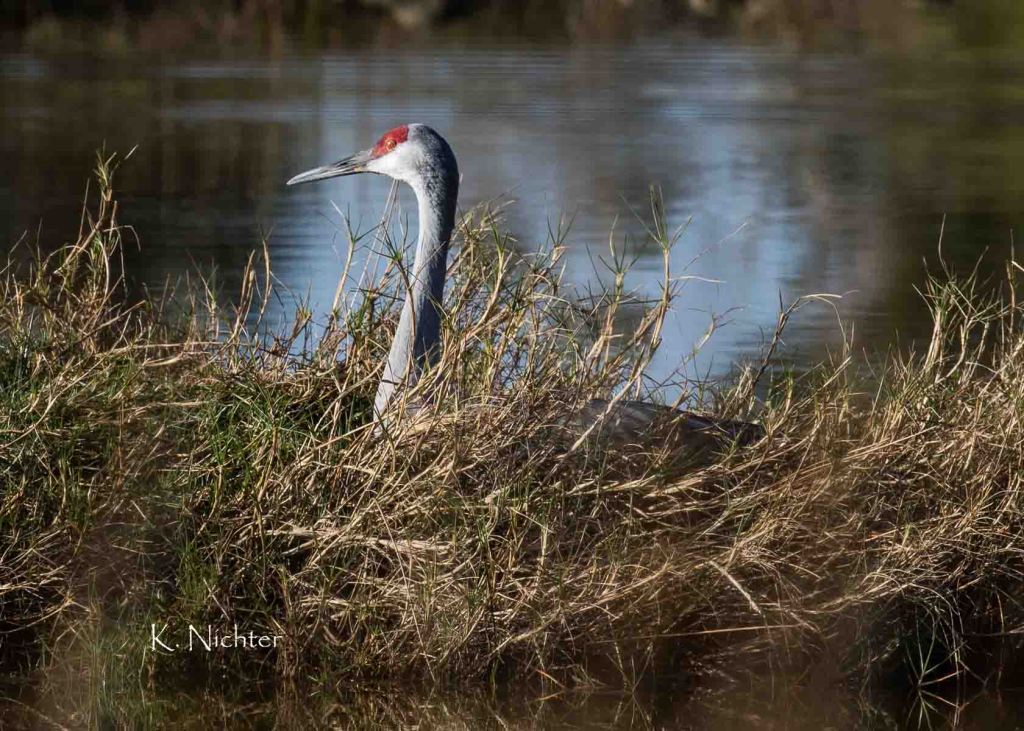
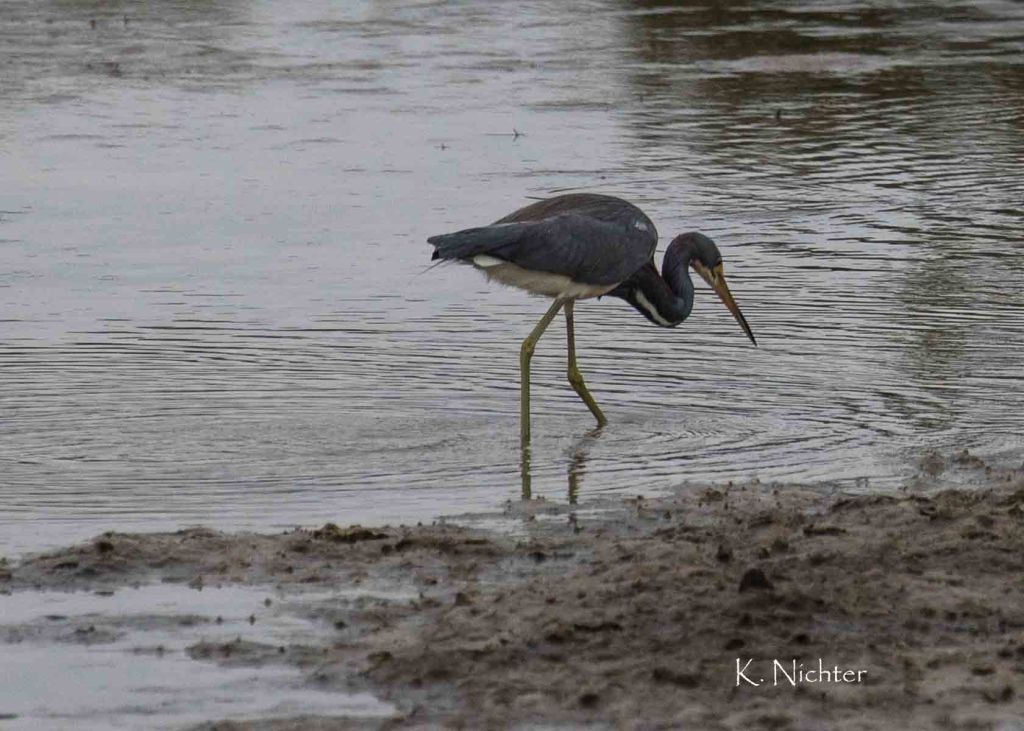
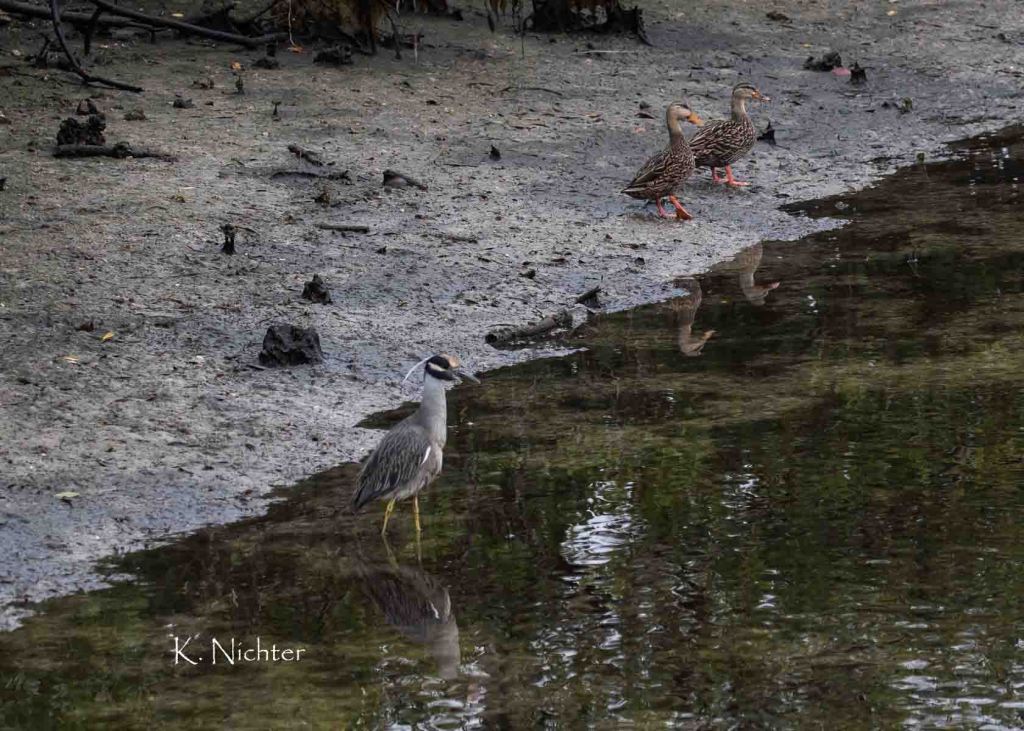
The fog, gray overcast sky, and diffused light with no sign of sun made the entire scene monochromatic. The only points of color came from the white on the Tri-color heron and the crown and head of the Yellow-crowned Night heron. An osprey circled overhead, and then we heard the familiar cry of the Sandhill cranes. I tried to get a shot as they went over, and came out with an acceptable one. My tracking skills with the lens need improvement.
A gray squirrel jumped from branch to branch in one of the trees, several small warblers, mostly Palm warblers flew in and out of the trees near the water, and in the distance we saw several Turkey vultures circling slowly. Once again it ended up more of a birding trip but that is fine with us. Any time quietly walking in the woods is time well spent.

Hike at Key Vista Park

We woke up to a break in the chilly, cloudy weather this week and hurried to take advantage. While still a bit cool the beautiful blue and cloudless (for a change) sky, and the bright sun sent us outdoors to hike at a local park.
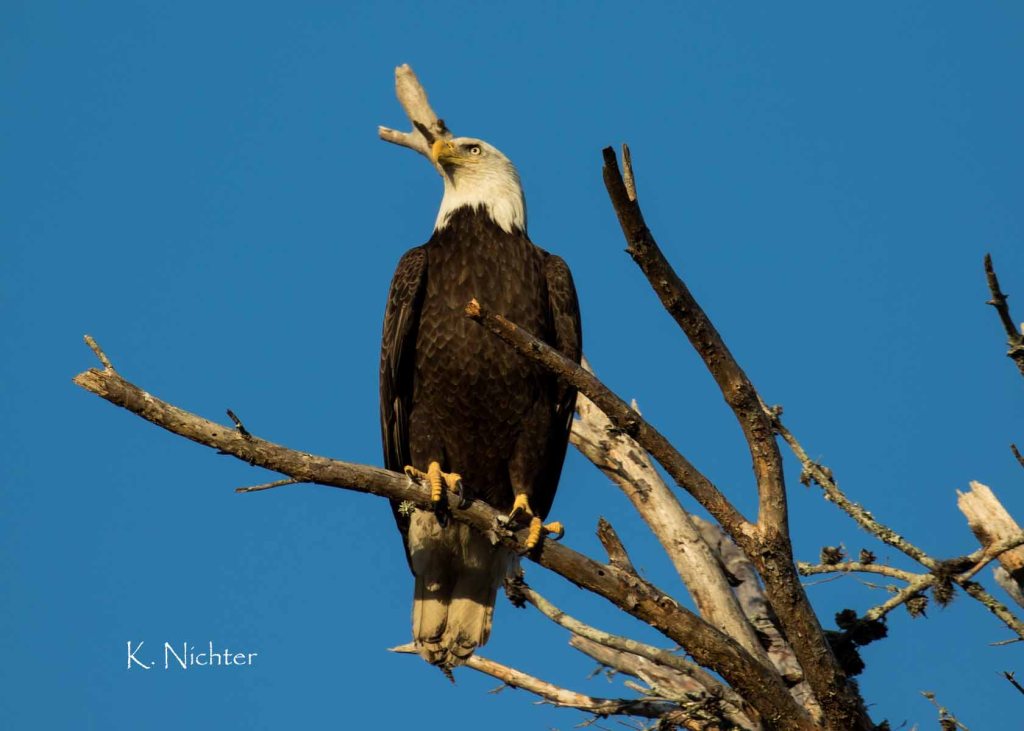
We used to visit this local park, Key Vista Park, frequently. Over the years we visited it so much we felt we ‘knew’ it and went on to other discoveries, stopping by only occasionally. Recently the county opened a multi-use trail with this park as one of the stops so we decided to walk that trail. We pulled into a parking spot, got out of the car and looked up to see an American eagle directly over us in the tree. Several osprey flew back and forth, one with nesting material, and we saw a juvenile eagle fly over the adult in the tree. So much for the new trail, we decided to hike into the park itself and save that for another day.
We walked the trails we knew, pointing out to each other the changes. Birds sang, chirped, and flew everywhere. An eagle zoomed overhead, being chased by an osprey. The eagle perhaps ventured too close to a nest. Two fellow hikers near us watched the chase and asked about the birds. Karl explained what they were, and what was likely happening. We told them we have watched eagles chase osprey that just caught fish and harass them attempting to get the osprey to drop the fish.

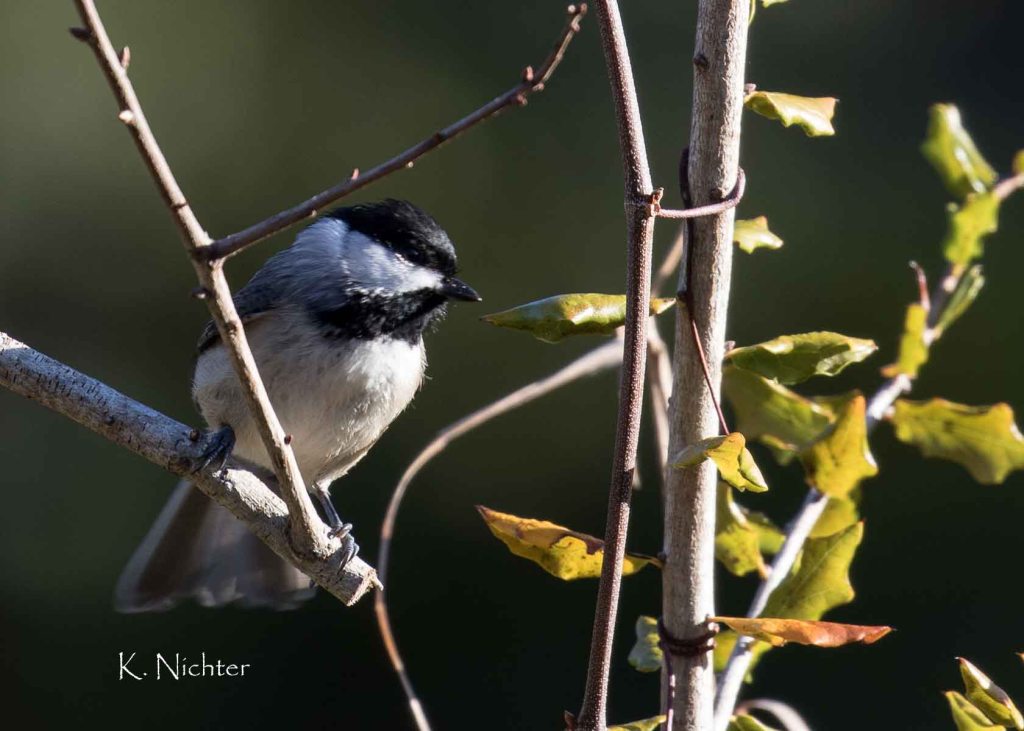
We walked into one section full of small, fast darting birds mostly hiding in the foliage. Most flew too fast across the trails from one tree to another, so we walked slowly stopping frequently to watch the activity. This Carolina chickadee finally landed in view so we could see it.
As we left, we heard the cat-like cries of one of my favorite birds, the Gray Catbird. It came out briefly, looked around, and flew away. The Gray catbird arrives in our area sometime in autumn and stays through the winter, leaving again in spring. I listed 20 birds for the day, not all we saw but I am just starting to get back in the habit of taking field notes so I consider it a good start.

Long Winter’s Nap

Things started just before Christmas, when for the first time in at least 15 years Karl developed back problems causing constant pain. We knew the drill, and he started taking it easy, standing, or lying down flat on a hard surface resting for a couple of weeks. Walking helped so we took a few short hikes at first when the weather cooperated. Then the weather turned, and with the exception of a couple of warm days near the start of January the days turned mostly chilly, cloudy, and windy.

Midnight the cat spent less time in her outside area of the enclosed deck and more time indoors on a nice, warm fleece, either sleeping or in that in-between relaxation mode that cats do so well. Our version of a long winter’s nap seemed in order for a couple of weeks, so we stayed at home with books, DVDs, online games, offline games and crosswords, and working on long term projects, all accompanied by warm comfort food.

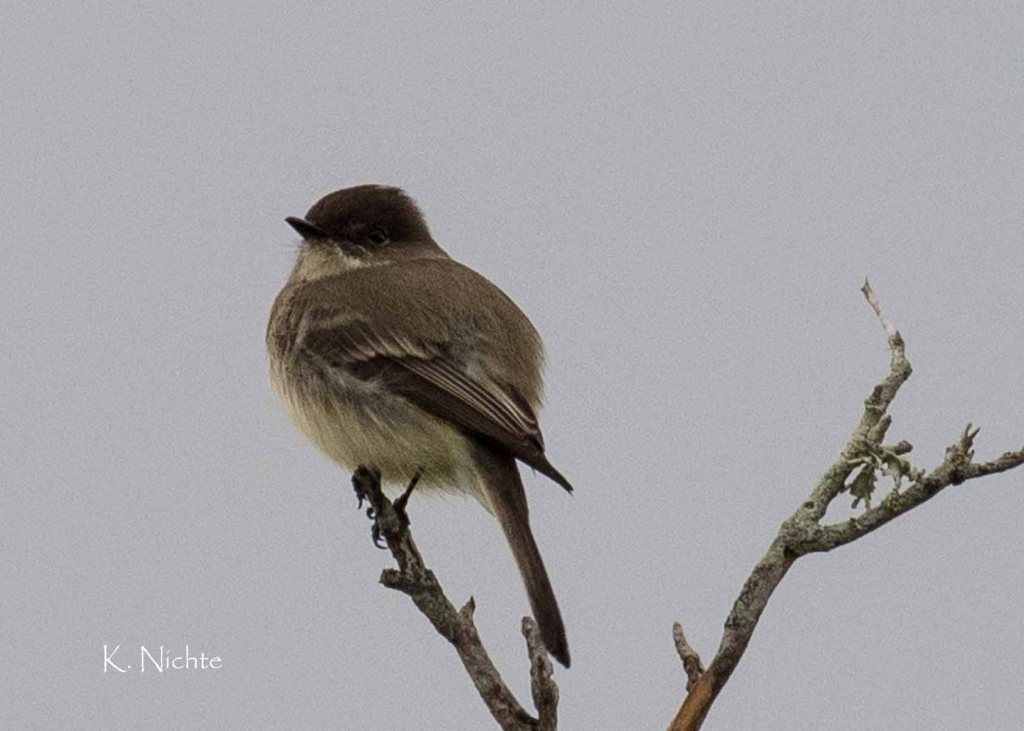
Karl’s back took well to the treatment, and he is comfortably up and around again. The weather still remains chilly, as this puffed up Eastern Phoebe against the gray sky demonstrates, but we are rested and ready to take advantage of any of the warmer days that suddenly appear this time of year.
Midnight, on the other hand, knows that winter is not over, even here in central Florida where it tends to be short and occasional, and can be found in one of her fleece lined favorites spots most days.

Sometimes… Stand Still

We hiked through a local park on a cloudy, overcast day with a north wind (again!). The birds in the area flew back and forth, rarely staying visible. Instead, not surprisingly, they preferred the shelter of the foliage. The bugs they foraged probably did too.

After several attempts to take a few photographs, I finally walked down a small, overgrown path surrounded by foliage where I saw a lot of movement. I stood still for several minutes, just watching, and eventually got these three shots of a warbler observing, looking, and stretching out its neck.

I know birders who stand absolutely still and quiet with binoculars in hand and at the ready, for five or ten minutes at a time when they see movement and hope to sight the bird. I admire their patience and focus. That kind of patience is definitely a skill I need to develop.

Usually in my first blog post of a new year I talk about our photography/interpretive naturalist plans for the year. This year we will remain flexible, and hope with vaccines being administered we can go back to leading hikes and conducting photography classes by mid to end of year. In the meantime we continue to work on our personal projects. One of those projects is to start birding more often, and I plan to keep my naturalist journal again. Since our citizen science projects ended a few years ago we find ourselves doing both less and less, and miss it. It is time to work on our personal lists and field journals, and perhaps start entering our data on some of the websites like eBird where the data can be accessed and used by others.  

Is that a House Finch?

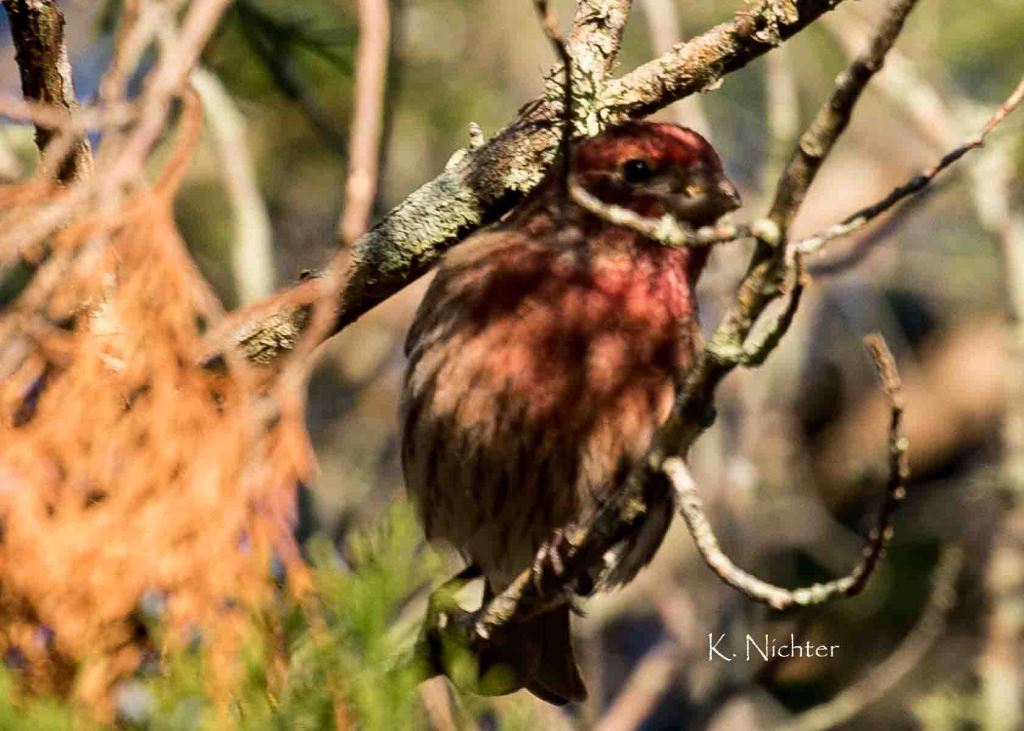
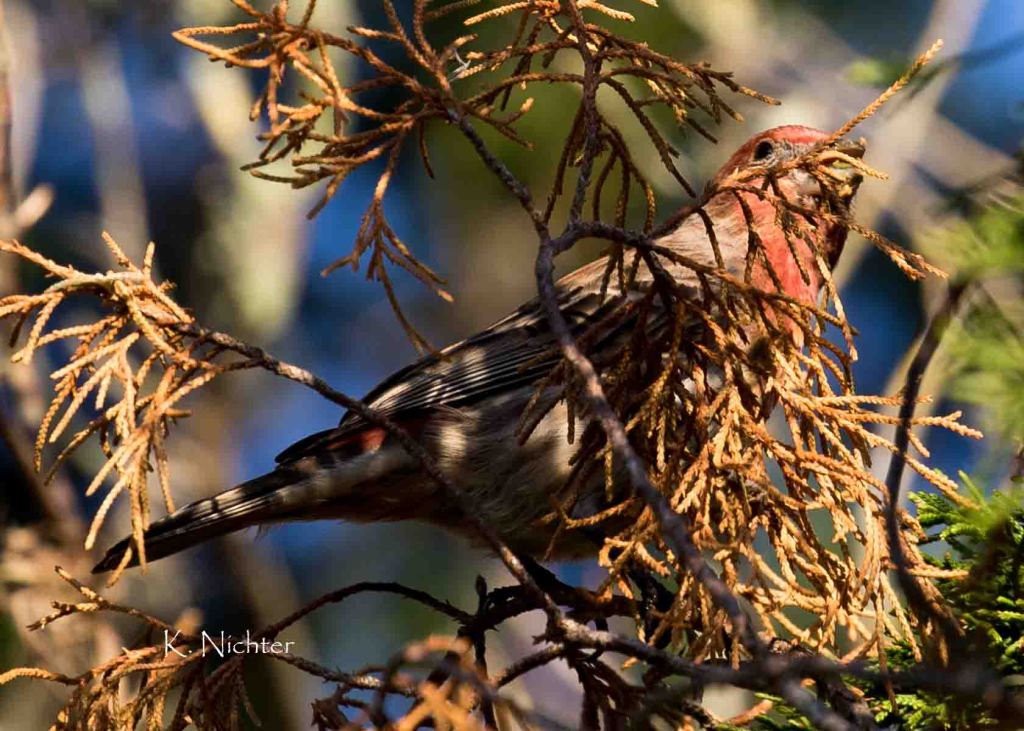
While photographing birds on a recent hike, I noticed a flash of red. I put my zoom on the bird, not sure if I had time to get my binoculars out. I watched and two birds flew around the trees, one stopping long enough to peer in my direction.

My immediate thought was “house finch”. The problem is that all the birding references show this bird as year around all across the United States, except the Florida peninsula. I remembered hearing that people with bird feeders north of us had House Finch as regular feeders. After many years of birding on citizen science projects I knew that in Florida depending upon the time of year and weather, a lot of birds are seen that are not supposed to be here.

I checked further, and found that birders had already recorded seeing two house finch at this park just two months ago. Several commenters believe that they are extending their range. While this is not a new bird to me, it is a new one to my list of those seen locally. As you can see from the two photographs, they were not exactly eager to make getting a photograph of them easy.

Robin-Our First Winter Bird

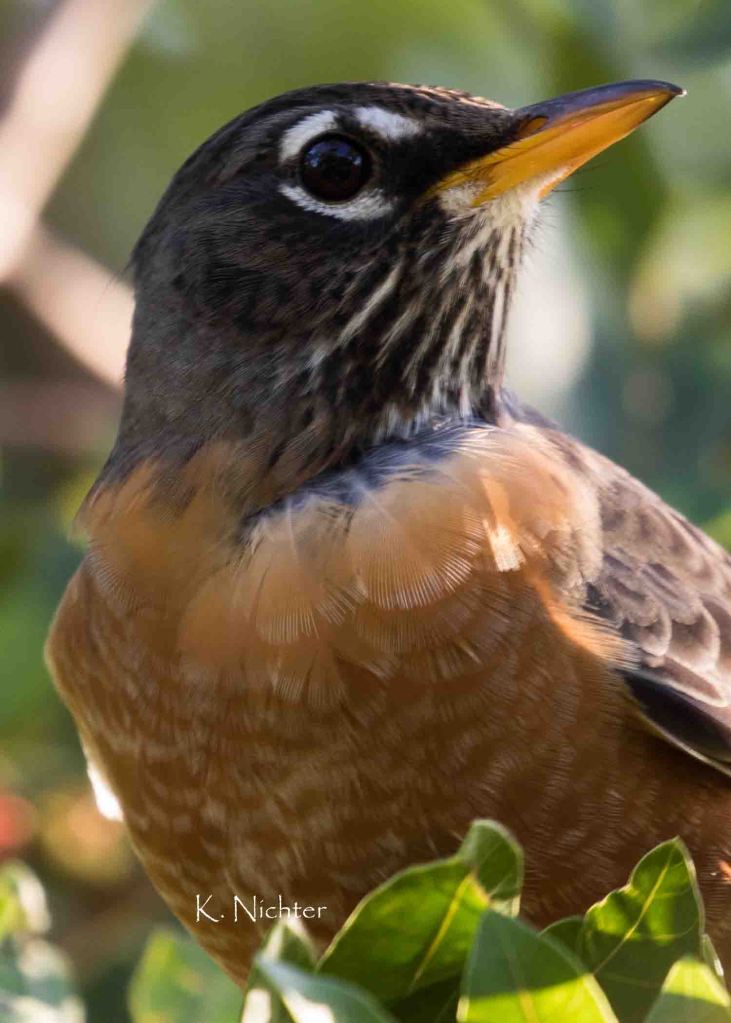
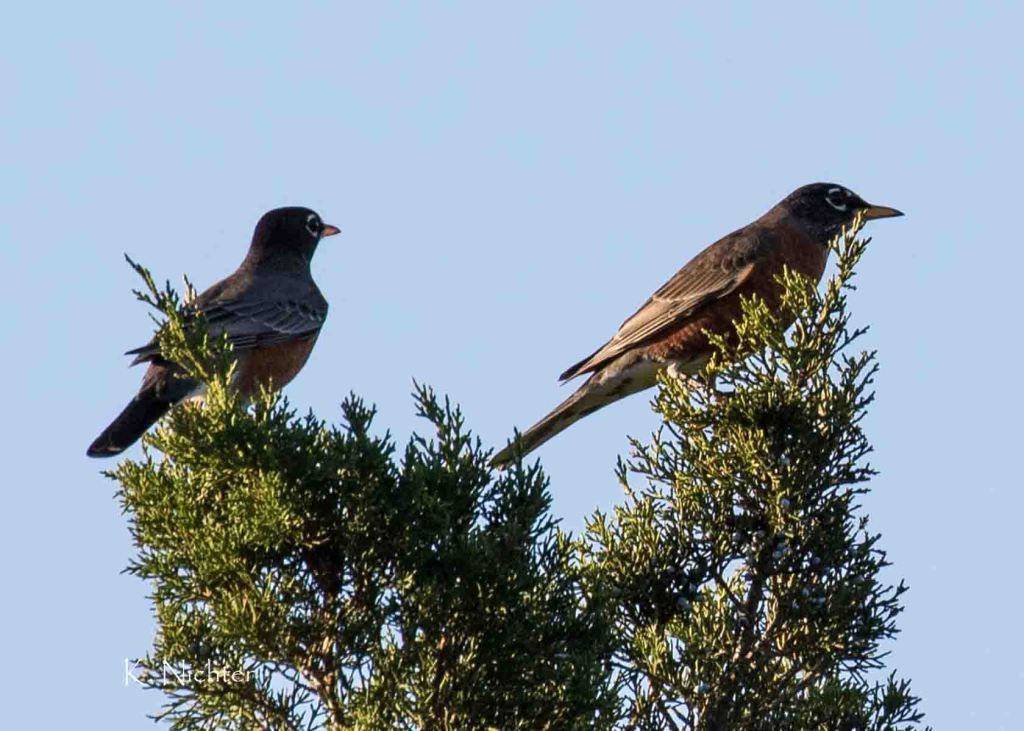
We walked at a small local park on the first day of winter. An American robin, actually a flock of robins, immediately became our first of winter species. Karl and I both grew up in the snowy part of New York State. In our childhood, the sighting of a robin meant spring arrived. Here in central Florida, it means winter arrived.

The birds loudly called to each other, flying from tree to tree and eating the berries from the red cedar and the berries of the invasive Brazilian pepper trees. The wind came from the north and gusted occasionally, so they needed a lot of food to maintain their body temperature. In the photograph above, you can see the wind ruffling the robin’s breast feathers.

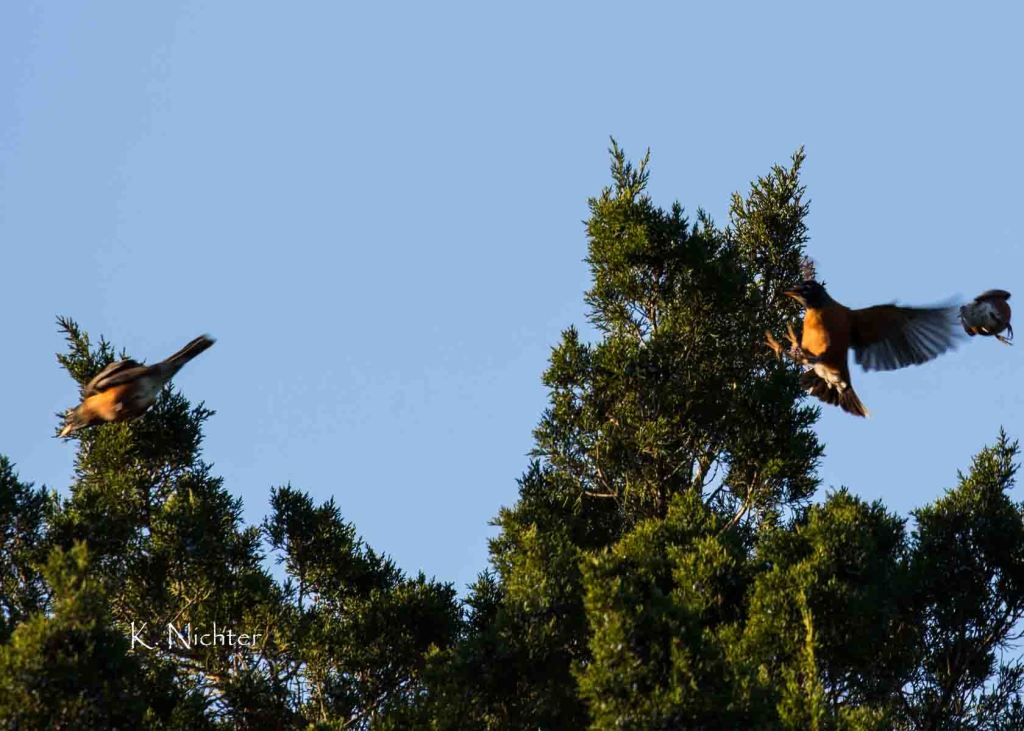
The entire time we walked the flock moved here and there. A few would settle in a tree, as above, then another came in for a landing causing them all to scatter, which I captured in the second photograph.

The winter solstice turned out eventful this year. First our walk and our first sighting of robins for the year, then seeing the Jupiter-Saturn conjunction in the southwest sky just after sunset, and finally seeing a shooting star with a tail, bright enough to actually startle me during my early morning run.

Festival of Lights

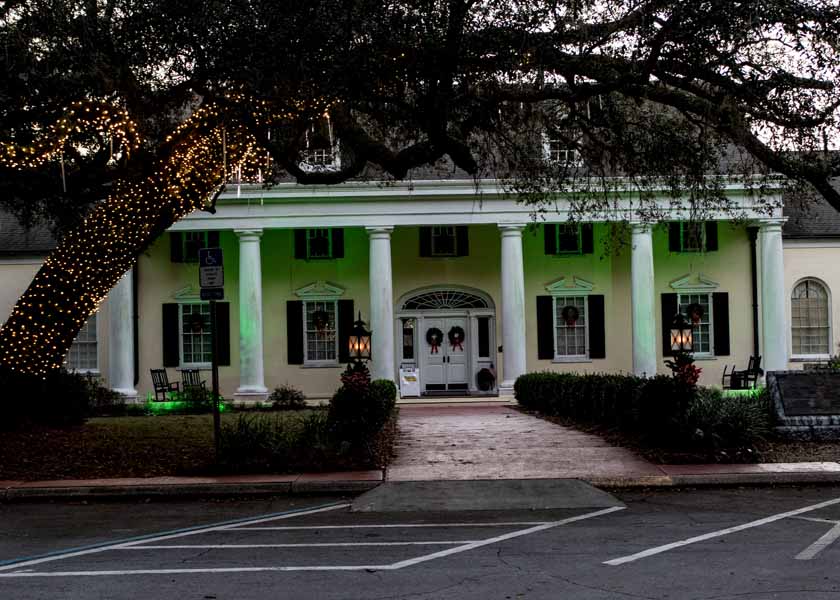
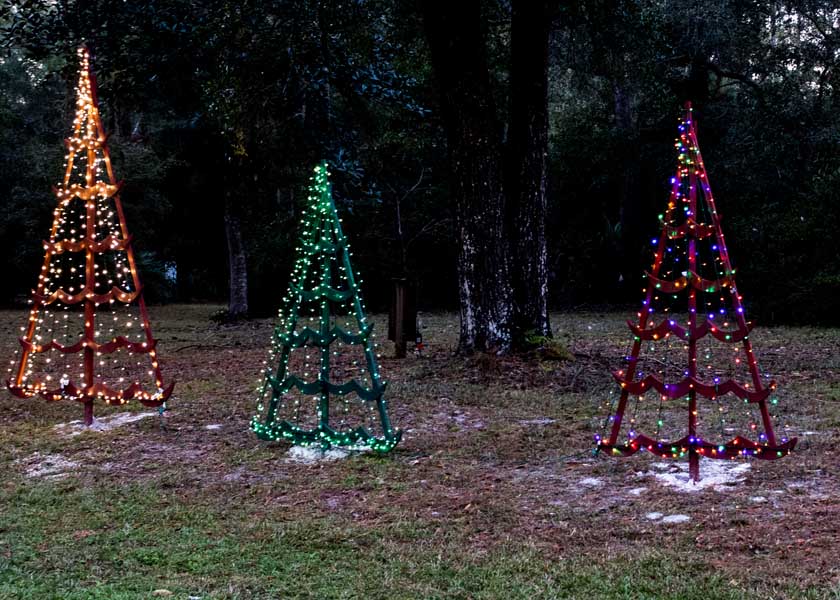
Nearly every December we pack our camper and head to Stephen Foster Folk Culture Center State Park in White Springs, FL for their Festival of Lights. We learned of it on our first camping trip to the Florida parks ten years ago. The park volunteers told us not to miss it, and fortunately we secured a campsite due to a cancellation.

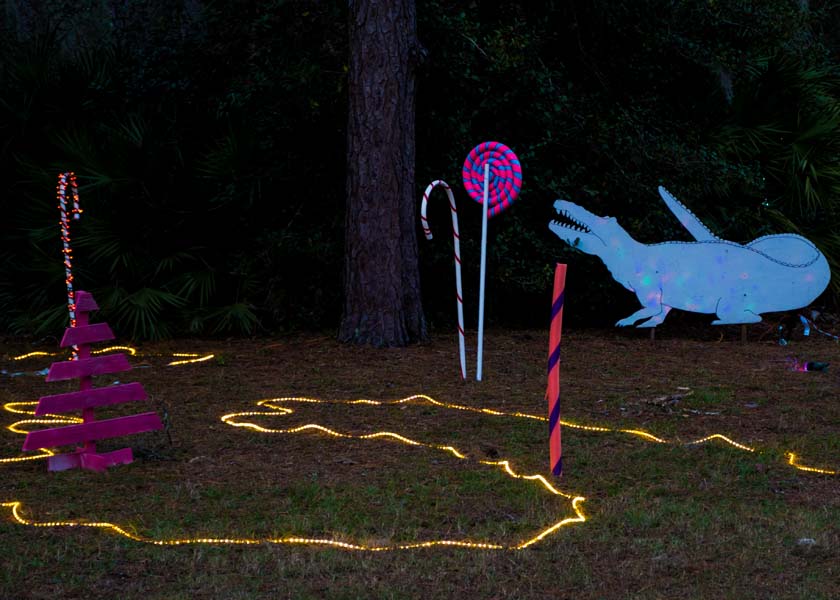
Through the years it grew. In addition to the drive to see all the lights in their holiday and woodland scenes you could park and visit the country store and adjacent craft cabins. The area filled with bustling with shoppers checking out merchandise and many craftspeople demonstrating how they make their creations, everyone encouraged on by free hot chocolate and free popcorn. Last year the center portion between the museums turned into a holiday wonderland for walking, with lighted paths and light exhibits along the way, vendors, a snow machine, a large model rail set up, and last but certainly not least Santa Claus.

This year of course Covid-19 affected the plans. All of the walk through areas, the beautifully decorated museum buildings, the country store, and craft cabin activities were cancelled. But, the drive went on. From the campground we drove around two evenings, taking photos and enjoying the festive lights.

Thank you to the staff of the park, and all the many volunteers who kept this holiday tradition alive.

Red-headed Woodpecker

We hiked further north in Florida recently and got to see a bird we rarely (actually never in 20-some years) see in our area, the Red-headed woodpecker. Most bird maps show its range extending to Tampa Bay, but while we frequently saw Red-bellied, Downy, Pileated, and even Hairy during our many years of citizen science projects and official and unofficial counts, we always traveled north to see this one.

The day turned out absolutely beautiful. Warm, with lower humidity, and as seen in the photographs, a gorgeous blue cloudless sky. We also spotted other woodpeckers, the Eastern Phoebe, one of our winter residents, and some fast flying warblers. We stood and watched this bird for a while as it searched for and successfully found, a meal.

Invasive Trees and Wildlife

Brazilian Pepper Trees are an exotic invasive in Florida. They grow incredibly fast and displace the native trees, in this case, the mangroves. The area behind our fence is a creek border of about two feet and a tidal creek bed and creek, none of which we own. For many years we did our best to control the invasion of these trees from our side, but every year it required extensive work and the grove on the other side grew thicker. This year the owner of the area surrounding the creek took action and the trees were cleared.

As much as we wanted the trees gone, the decision for us was mixed. The trees provided habitat for wildlife and privacy for us. Several neighbors had cleared them out earlier in the season, and this year the Gray Catbirds and flocks of migrating warblers did not come. We realized their habitat had already changed too much, so felt a little better about our part in the necessary change. The area is clear now behind the fence, but about 15 feet behind the it is a grove of native black mangrove trees which will eventually take over the area again.

We discovered that wildlife still flourished there, though a few individuals became temporarily displaced during the work. This frog, who we believe is a Southern Leopard Frog, managed to get into the pool area for a swim. We netted him out, and put him near the fence where he hopped toward the creek.

A couple of mangrove crabs took refuge on a tree in our yard. Shortly after I took this photo they too headed back home.