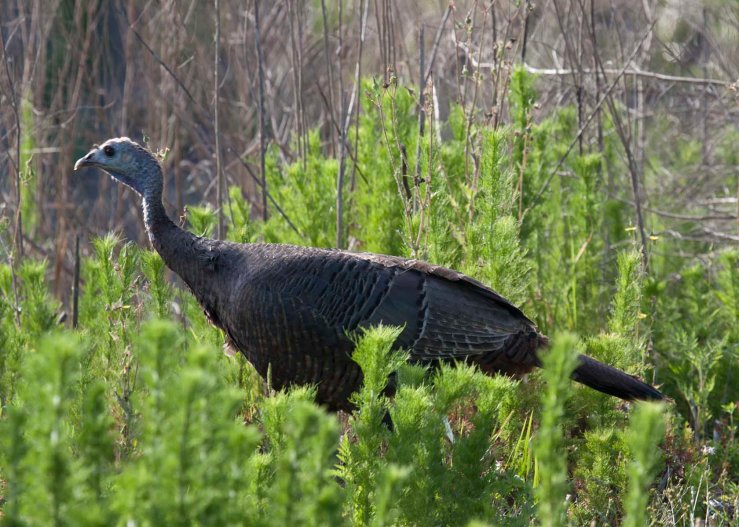
Happy Thanksgiving!
This particular turkey resides in a nature preserve, so will not end up on anyone’s dinner table as the traditional main course for the day.
Photographers, Master Naturalists, Interpretive Naturalists
Happy Thanksgiving!
This particular turkey resides in a nature preserve, so will not end up on anyone’s dinner table as the traditional main course for the day.

We spent nearly a week on St. George Island, FL camping. We love falling asleep to the sound of the waves on the beach, and waking to walk to the beach and watch the sunrise. Since we drove the entire day before, we woke later than we planned the first day and really walked fast to get to the beach for the main event. As we crossed the road and walked the path, I stopped for this shot of the beginnings of sunrise behind the dune.
We spent time walking around and watching as the colors in the sky changed, and the top crescent made its way into view. Usually by that time on other trips several people join us. This time another couple came just as the sun rose, took a quick photo, and left. No one else made their way down to enjoy the daily spectacle. 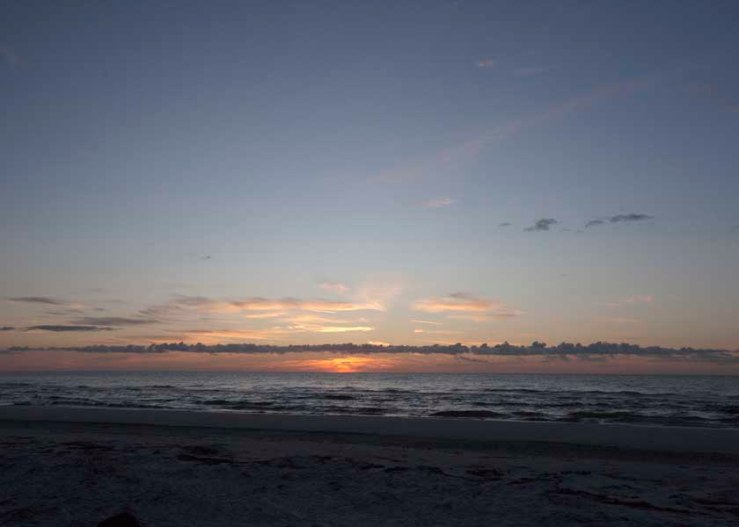 Karl took this shot as the sun came up.
We walked back slowly, anticipating another cup of coffee at the RV. As we walked down the entrance road to the campsite, I noticed that the still golden light of the sun illuminated this downed and dying tree making the colors look almost surreal.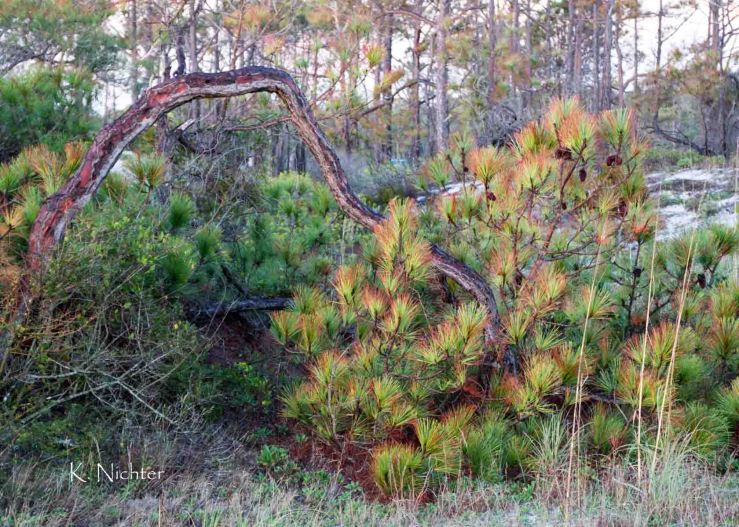
We were glad we made the extra effort to see that first sunrise. We woke to very cold weather and rain the following morning, and clouds the next morning.
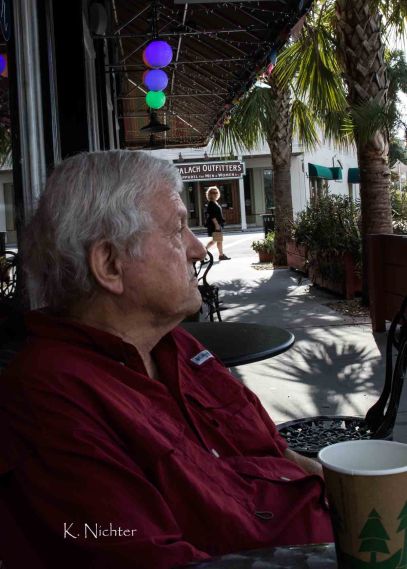
A few weeks ago we attended a talk given by a photographer from NYC on street photography. We knew him by reputation as he creates a variety of images, has photographs in a local museum, and published two books.
This photographer inspired me to try again. He started saying that people recognize two types of street photography, those images which contain people and those that don’t. He presented on street photography with people. I rarely photograph people directly. I prefer silhouettes, distance, faces turned, etc. The stems part from my preferred “could be anyone” vision of the photograph, and part because if in the future I wanted to use the photograph in an exhibition or publication I need a model release which I may not get at the time. He shoots those type of shots in addition to full face shots so I felt somewhat vindicated in my preference.
We visited a small city right after the talk, so I planned to try a few shots. At an outdoor cafe I managed to get Karl un-posed with an out-of-focus woman in the background. A person sat reading nearby, so I tried a discreet partial shot, using the potted plant next to me. OK, but not great. Maybe I’ll try cropping it to take out more of the table at the bottom. The bike had just been left by another patron. The last shot didn’t work at all. I tried a glass reflection with the image of a man working on a balcony across the street. I can see him because I know where to look. This kind of shot definitely needs some work.
 I used the Canon 7D Mark II with the Canon 24 – 70mm lens. I carry a big enough bag/handbag that it fits and the top zippered opening is wide enough to remove the camera and replace it quickly. The bag looks like and is a standard handbag with the straps over my shoulder but are not too long so I can hold it close and it is always available. Most of the shots were aperture set at 11, ISO at 100. I also played around with setting the shutter speed at 1/60th with the ISO at 100.
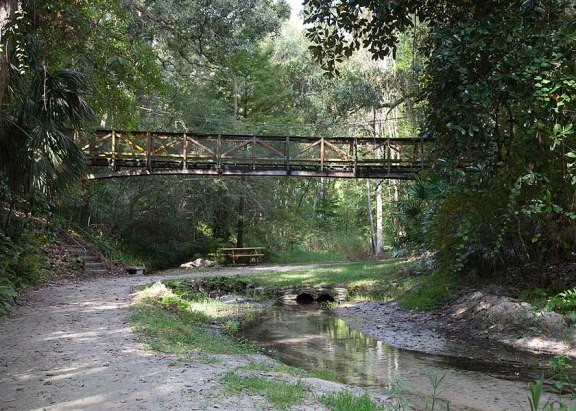
We visited Ravine Gardens state park during a trip to Palatka, FL. We found the Loop Drive, which we did on a prior visit many years ago this year closed due to hurricane damage and erosion. No problem, we took a nice hike to the ravine and spent a couple of hours taking photographs and enjoying the damp, cool air.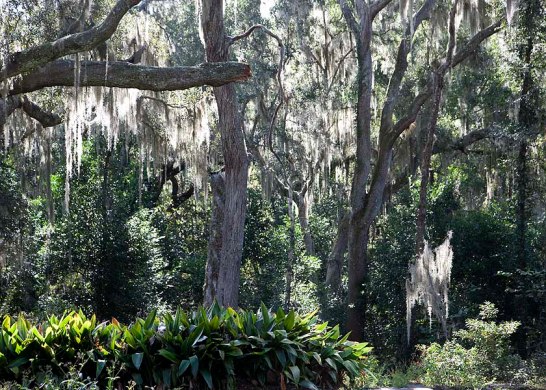
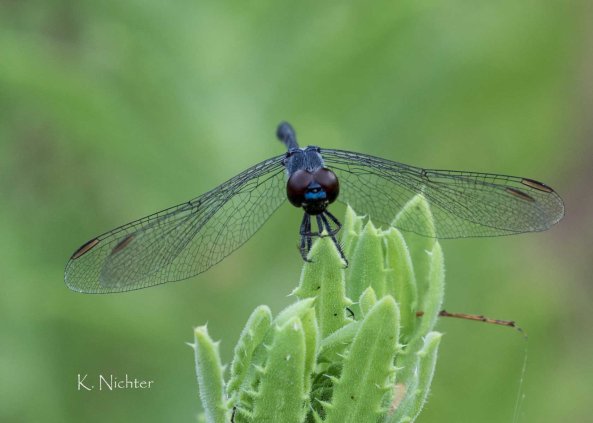
With the 100mm – 400mm lens on my camera I had to leave the scenic shots to Karl. He captured the Spanish moss through the trees, and the bridge over the ravine. I chased damselflies around and stalked but rarely saw the birds I heard in the surrounding dense vegetation.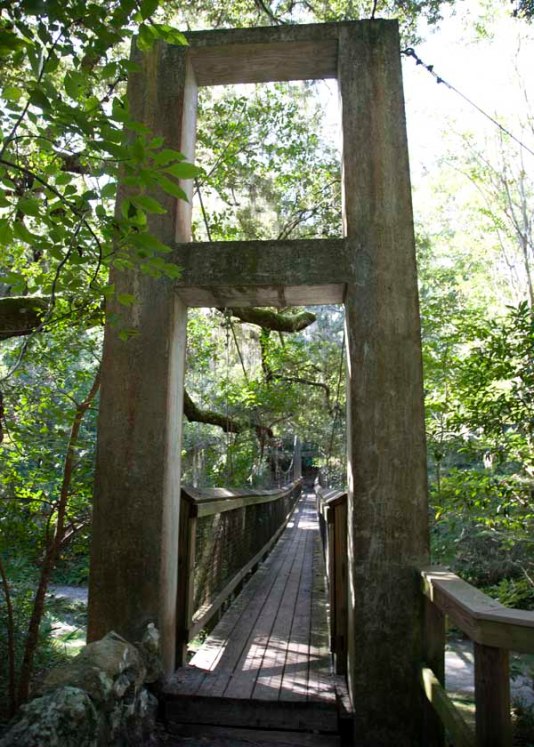
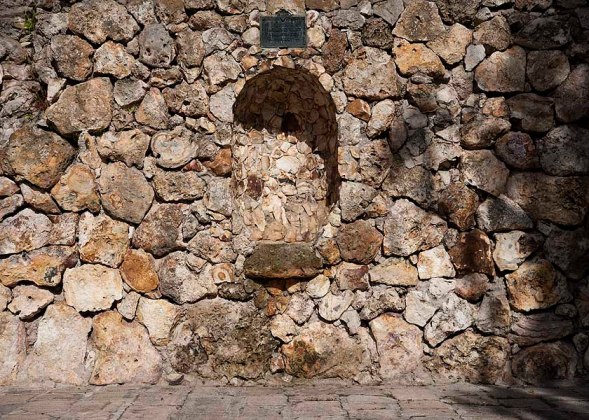
Plenty of picnic benches dotted the area, making me wish we brought a picnic. Instead, we visited a local restaurant called Corky Bell’s. I highly recommend it. The excellent food, service, and prices explained the big crowds!
We discovered Sweetwater Wetlands park earlier this year, and I wrote a post on our birding there. We decided to return while camping not too far from Gainesville, and arrived late morning due to early rain. The park has wide, flat trails and plenty of boardwalks, which makes it the perfect park for even a casual nature walk or hike.
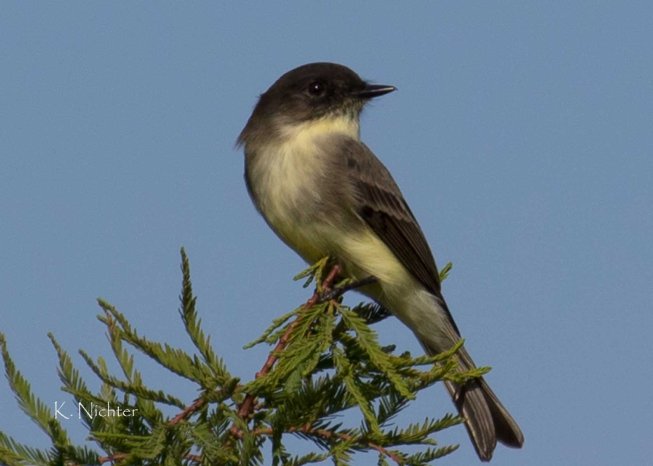
The birding, probably due to the late arrival, remained slow. I really came to practice with my lens, so I didn’t mind. This Eastern Phoebe was my first of this season. Plenty of wading birds and ducks crossed our path, plus the sudden arrival of an American Bittern. A Glossy Ibis flew overhead and landed just behind a rise in front of me. As I approached the area for a better look, I discovered him standing in the shallows of a pond, surrounded by Black bellied whistling ducks, just hanging out with them. I tried for a shot but the distance and lighting worked against me.

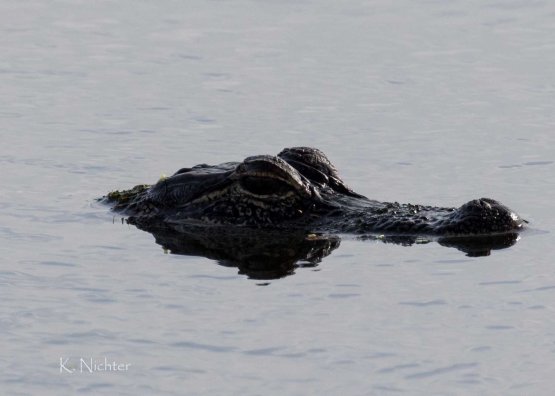
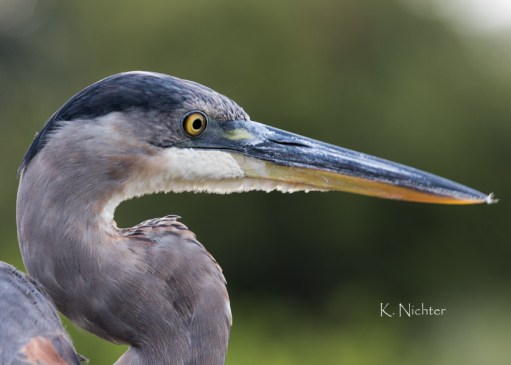
Trails and the boardwalks here encourage stopping and observing. I watched this heron fish for quite some time. Unsuccessfully, at least while I watched. Naturally, a lake or pond or any fairly still fresh water in Florida seems to require at least one alligator. I only saw this one during our time there, floating nearly unseen.
We did not bring any bird guides with us, and saw a soaring bird we could not identify. A helpful birder told us it was a Mississippi Kite, explained why, and I noted it to check and add to my list. When I compared the not very good photographs I took of the soaring bird with the field guide later that day, I just could not see it. Karl helped, we consulted another guide, but still felt the identification off. I don’t add a bird unless I can definitely identify it, even on a personal list. I spent over a decade on a twice monthly citizen science birding project, and that training stays with me. Some time later the mystery was solved, we confirmed it as a Snail Kite. I suspect the birder simply misspoke.
Our late morning arrival in sunshine turned to rain before we left. The clouds began to build but neither one of us paid it much attention at first. Naturally we were about as far from the car as we could be when Karl suggested we head back. We just started back when the rain started pouring down. We both tucked our cameras in our bags, and made our way toward the car. It poured the entire way, and stopped when we reached the car, naturally.

We spend several days camping at the Mike Roess Gold Branch State Park. Located north-east of Gainesville, somehow we missed this park all these years. As happens too often lately, the pleasant weather forecast turned out wrong and naturally in the direction of hotter and more humid weather. Still, mornings and evenings remained pleasant so we hiked and explored as planned.
We found our campsite situated perfectly in a pine flatwoods, with bursts of color from the fall wildflowers everywhere we looked. We walked the trail leading to the swimming area every evening. The flowers along the trail attracted a lot of pollinators, and gave me needed close-up practice with my camera-lens configuration.
We hiked the Ravine trail the first morning, taking advantage of slightly less heat and humidity. We saw deer, usually the back end as they fled from our approach, at several points during the hike. This doe started to run, then turned. We saw she had not run far, so stopped and then walked very slowly. Gradually she peeked around the bush, then came out a bit further, then decided caution ruled and ran into the brush. This shot caught my eye due to lighting. The light illuminates her reddish-pink ear, and whiskers, and provides a catch light in the one eye.
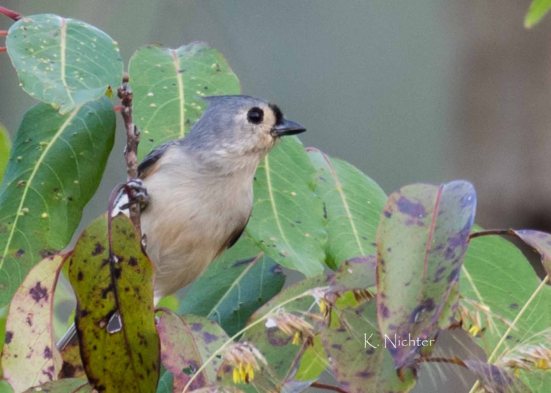
We heard rather than saw a wide variety of birds. This Tufted titmouse flew back and forth feeding. I stood for several minutes trying to follow with my lens for a good shot. 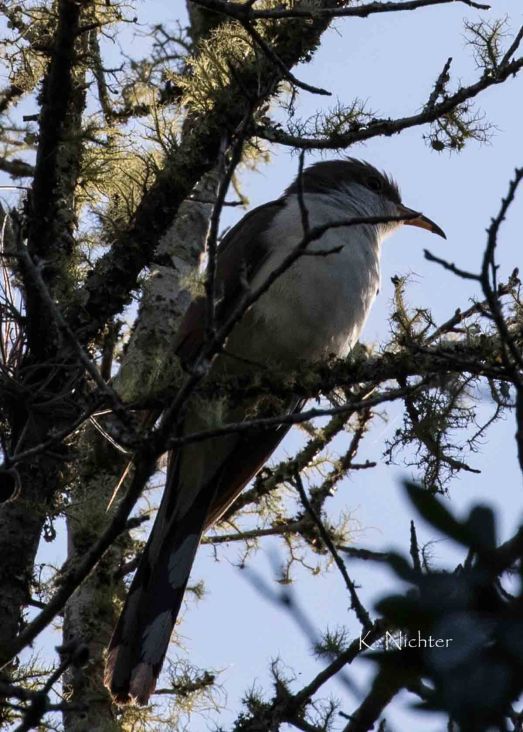 As we finished our hike, I noticed a larger bird in the tree. Guidebooks show the Yellow-billed Cuckoo as a summer resident, but this one still hung around in mid-October. The light and the angle prevented a good shot, this I classify as an identification shot. Or, if I am called to task on the rare occasion I enter my lists in eBird, a shot proving I saw what I claim.
We found the park lovely, quiet, and out of the way. We definitely plan a return visit.
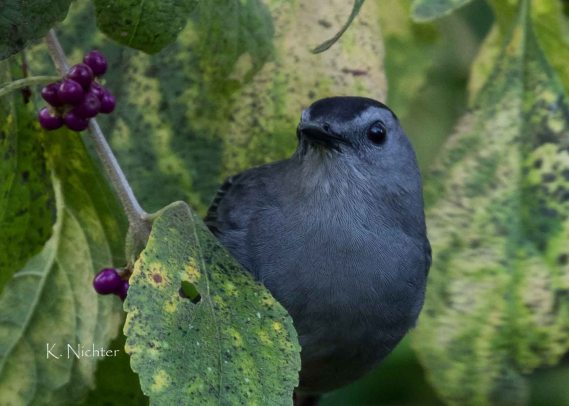
Two weeks after our first fall hike at Brooker Creek Preserve, the Gray Catbirds came back, and came back in force. A few days earlier I commented upon their absence, then suddenly they flew everywhere making their cat-like call. Naturally they target the Beautyberry bush berries, which coincidentally our hiking photographers also targeted with their cameras during the first hike. I watched this one dart in and out of the bushes eating his fill of the purple berries. He finally noticed me, stopped briefly to pose, and then dived back into the bush to eat. At least, that is how it felt to me. A few hours after seeing and hearing the catbirds we came across several Palm Warblers, another species we missed.
The wildflowers just showing their blooms on our last hike not only came forth in full flower, but the pollinators followed. This Cloudless Sulphur moved back and forth between the flowers.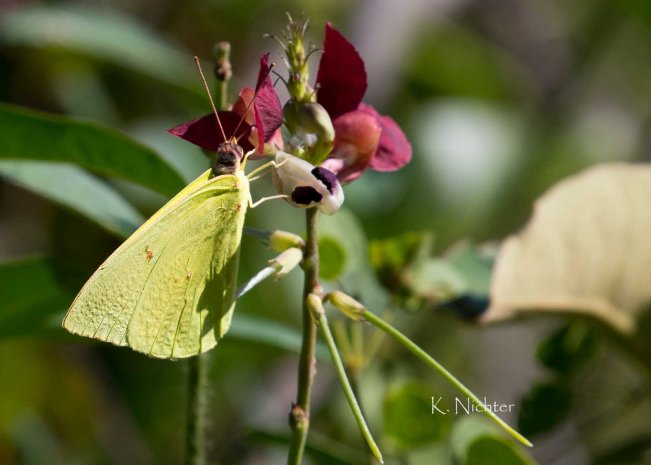
Plants even bloomed in the creek. I saw this one in the midst of the almost black trees and could not resist the shot. I took it from the bridge, and it took several shots because as we warn everyone: people crossing the bridge cause a slight vibration. I shot this at 400mm hand held, and could feel the bridge vibration as people walked behind me. Image stabilization, called VR in some cameras, can correct for some of that. Not taking a chance, I waited until they crossed, and shot one last time.
This Saturday October 26 is our second and final hike of the series. We hold our Spring series the last Saturdays of March and April.
A bonus to attending this Saturday’s hike: Owl-O-Ween! The Friends of Brooker Creek Preserve along with the Clearwater Audubon Society hold this even each year. Of all the activities, the highlight naturally is the owls. Plan on staying afterward for the festivities.
The Canon 100mm – 400mm lens on a Canon 20D helped build most of our initial bird portfolio as we started the business. I received the camera for my birthday 14 years ago, followed a few months later by the lens. The 20D gave way to a 50D, which after many years of service ceased working and a 7D Mark II replaced it. About a year ago I began having occasional problems with focus and sometimes sharpness, but attributed it to everything but the lens. I used a variety of lens at that time for the type of work I did so didn’t notice it as much.
A recent shoot, and a comparison test with another lens finally convinced me that the lens at nearly 14 years old, and looking it with some chipped paint and wear marks, reached the end of its life. Karl surprised me with the new model of the lens for my birthday. This model came out around 2014 so is only new to me. 
This morning we took a brief hike to try out the lens. I immediately noticed the difference in the auto focus and lighting. It worked like my first one did when it was new, but with improvements. The ability to focus at a closer range appeals to my new interest in insect photography. I also decided a few months ago to add to the bird and butterfly portfolio again, so now I am equipped.
The old lens gave 14 years of excellent service, and was used several times a week for many years, and I don’t know how many tens of thousands of shots. It survived a drop on the ground when a shoulder strap gave way, being packed in any number of backpacks, bags, and purses over the years, and until recently I could always count on getting the shot if I did my part right.
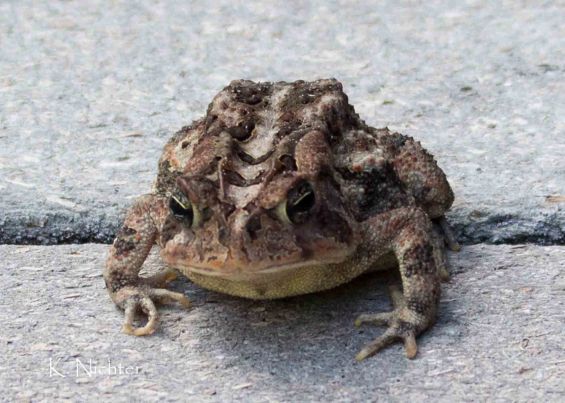
Sometimes a walk on the boardwalk provides subjects that I don’t always find on the trails.
This Southern Toad camped out on a boardwalk recently, waiting for his next meal to come by. It is a true toad, native to this area. The high cranial crests are one of the things to look for in identifying this guy. He sat still, not really intimidated at all by the three or four humans standing around looking at him and photographing him.
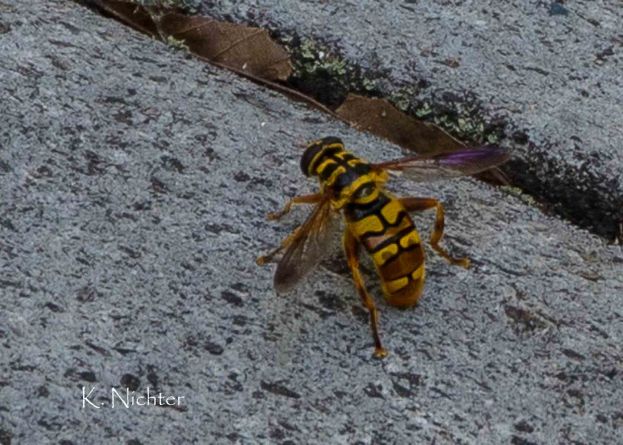
This bee looking insect is actually a Hoverfly. I identified this one as a Yellowjacket Hoverfly after comparing this photograph to dozens in books and on various sites including iNaturalist. The coloring of this fly mimics a Yellowjacket, discouraging predators and fooling me. Our hike guide pointed it out, I took a photograph, and then spent a very interesting several hours at home researching and reading about hoverflies.
The rewards of nature photography go beyond the art and science of the photograph itself. It introduces you to the natural world in a very intimate way, providing a gateway for learning more about the things you see and photograph. And, as Karl always says, even if you don’t end up with a photograph you like, you have just had a very nice walk in the woods.
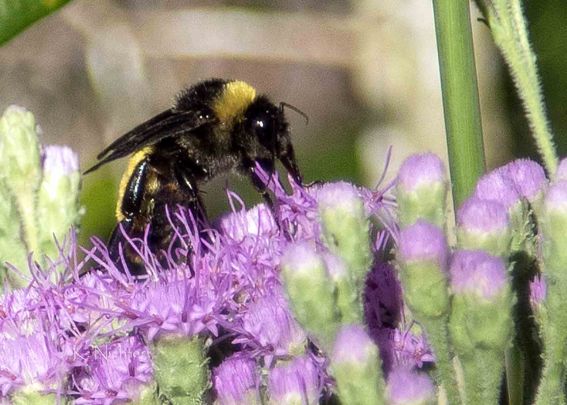
Wildflowers naturally remain the predominate theme of our end of September hike at Brooker Creek Preserve, and often the theme of the end of October hike too. The Fall wildflowers start blooming in September, reaching a peak as October comes along. Many stay with us through the winter months.
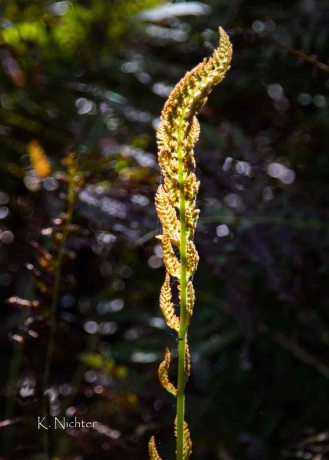
Blue Curls came out in force this year. We also saw Paintbrush in various stages of bloom, including this one, already discovered by a bee. As we walked through the wetlands we saw Pickerelweed, Cardinal Flower, and the start of new ferns including some Cinnamon fern already unfurled.
Twelve people joined us for this first hike of the season. The Beautyberry bushes all sported large clusters of the berries, not yet picked over by the birds, and quite the sight in the sunlight. I photograph them every year, and tried a different angle this time.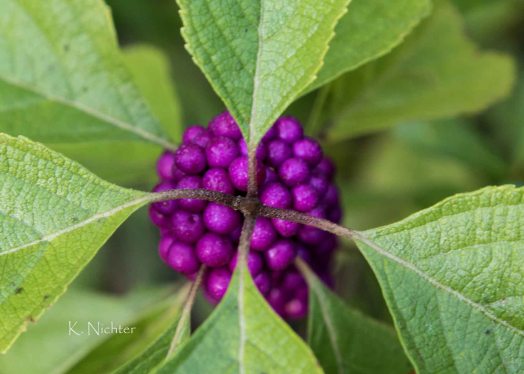
Just before the Education Center, one of our sharp eyed hikers looked down from the boardwalk and saw this small Pygmy Rattlesnake, asleep on a log and perfect for a safe shot.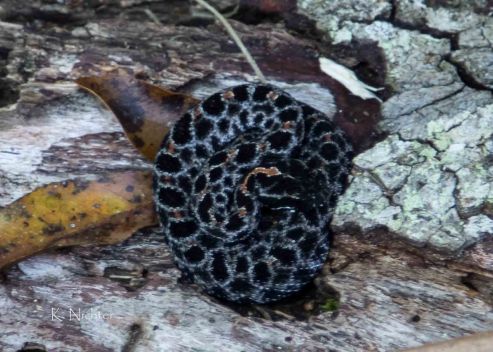 If you can, please join us for one of our hikes. We have another the last Saturday of October.

