A New Lens

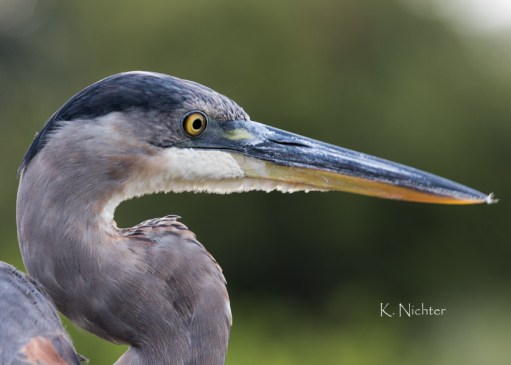
20191007 GBH

The Canon 100mm – 400mm lens on a Canon 20D helped build most of our initial bird portfolio as we started the business. I received the camera for my birthday 14 years ago, followed a few months later by the lens. The 20D gave way to a 50D, which after many years of service ceased working and a 7D Mark II replaced it. About a year ago I began having occasional problems with focus and sometimes sharpness, but attributed it to everything but the lens. I used a variety of lens at that time for the type of work I did so didn’t notice it as much.

A recent shoot, and a comparison test with another lens finally convinced me that the lens at nearly 14 years old, and looking it with some chipped paint and wear marks, reached the end of its life. Karl surprised me with the new model of the lens for my birthday. This model came out around 2014 so is only new to me. 20191007 gbh standing

This morning we took a brief hike to try out the lens. I immediately noticed the difference in the auto focus and lighting. It worked like my first one did when it was new, but with improvements. The ability to focus at a closer range appeals to my new interest in insect photography. I also decided a few months ago to add to the bird and butterfly portfolio again, so now I am equipped.

The old lens gave 14 years of excellent service, and was used several times a week for many years, and I don’t know how many tens of thousands of shots. It survived a drop on the ground when a shoulder strap gave way, being packed in any number of backpacks, bags, and purses over the years, and until recently I could always count on getting the shot if I did my part right.

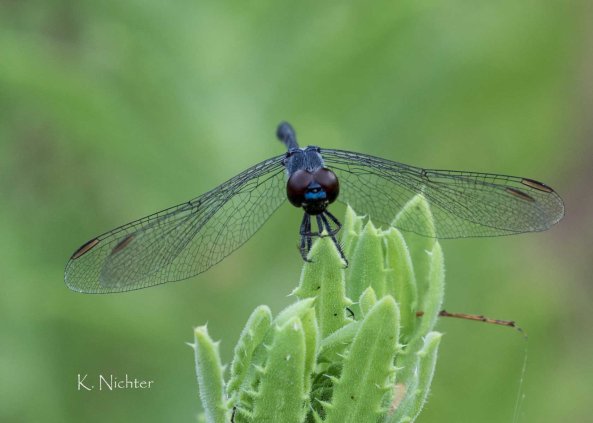
20191007 dragonfly
I am eager to experiment with the ability to get better close-ups with this lens, and this dragonfly landed briefly. Most of the other insects on this hike were mosquitoes unfortunately!


From the Boardwalk

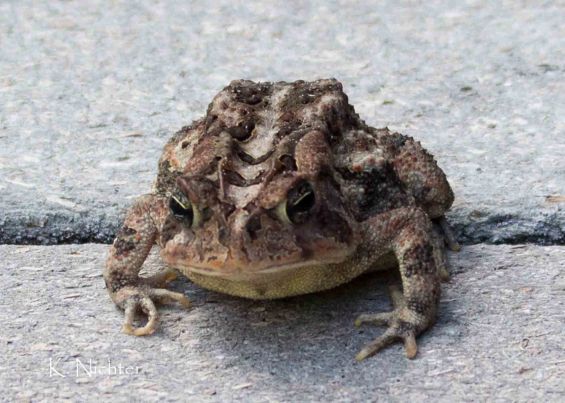
BCP Southern Toad

Sometimes a walk on the boardwalk provides subjects that I don’t always find on the trails.

This Southern Toad camped out on a boardwalk recently, waiting for his next meal to come by. It is a true toad, native to this area. The high cranial crests are one of the things to look for in identifying this guy. He sat still, not really intimidated at all by the three or four humans standing around looking at him and photographing him.

Fly or bee

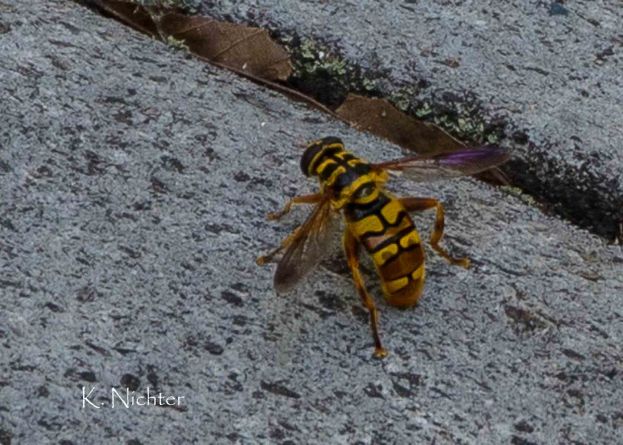
This bee looking insect is actually a Hoverfly. I identified this one as a Yellowjacket Hoverfly after comparing this photograph to dozens in books and on various sites including iNaturalist. The coloring of this fly mimics a Yellowjacket, discouraging predators and fooling me. Our hike guide pointed it out, I took a photograph, and then spent a very interesting several hours at home researching and reading about hoverflies.

The rewards of nature photography go beyond the art and science of the photograph itself. It introduces you to the natural world in a very intimate way, providing a gateway for learning more about the things you see and photograph. And, as Karl always says, even if you don’t end up with a photograph you like, you have just had a very nice walk in the woods.

Fall Hike at Brooker Creek Preserve

BCP Hike Bee

Wildflowers naturally remain the predominate theme of our end of September hike at Brooker Creek Preserve, and often the theme of the end of October hike too. The Fall wildflowers start blooming in September, reaching a peak as October comes along. Many stay with us through the winter months.

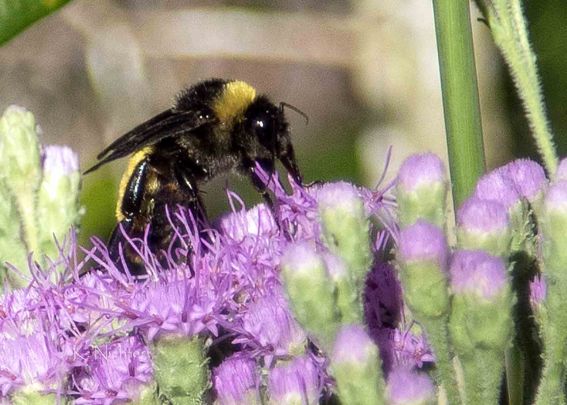
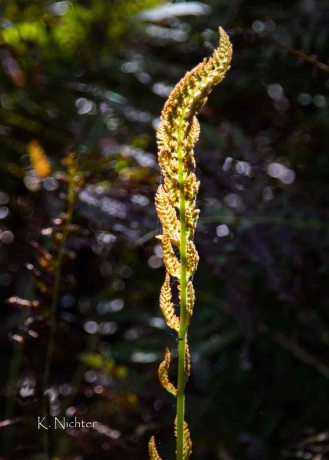
Blue Curls came out in force this year. We also saw Paintbrush in various stages of bloom, including this one, already discovered by a bee. As we walked through the wetlands we saw Pickerelweed, Cardinal Flower, and the start of new ferns including some Cinnamon fern already unfurled.

BCP Hike Fern

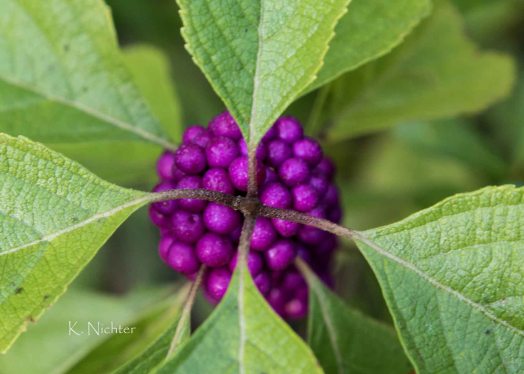
Twelve people joined us for this first hike of the season. The Beautyberry bushes all sported large clusters of the berries, not yet picked over by the birds, and quite the sight in the sunlight. I photograph them every year, and tried a different angle this time.BCP Hike Beautyberry

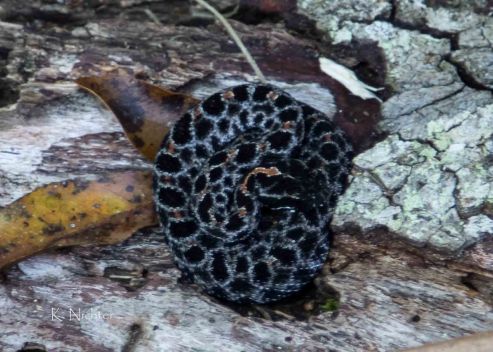
Just before the Education Center, one of our sharp eyed hikers looked down from the boardwalk and saw this small Pygmy Rattlesnake, asleep on a log and perfect for a safe shot.BCP Hike Pygmy RattlesnakeIf you can, please join us for one of our hikes. We have another the last Saturday of October.
A Path Lined with Spanish Needle

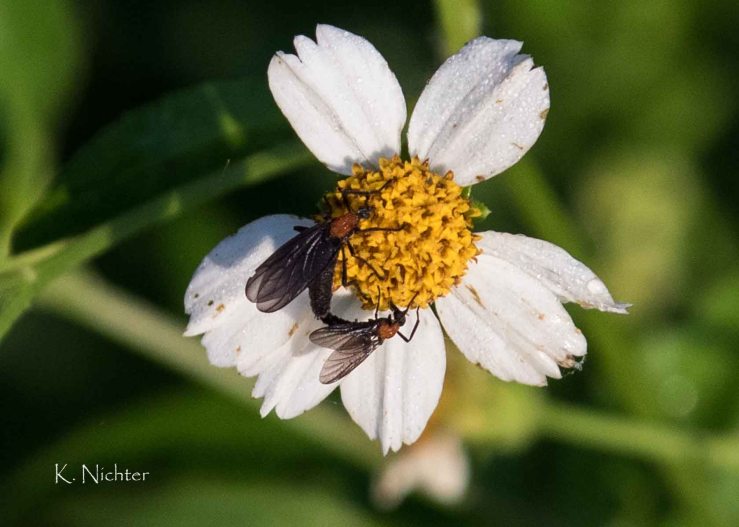
RSSP Love Bugs
Did you ever wonder where all the love bugs went at night? The Spanish needle was covered with them.

Spanish needle (Bidens alba) flourishes in subtropical climates. One of our native wildflowers, many people consider it a weed. I once let a garden go and Spanish Needle took over. I tried to pass it off as a planned wildflower garden, but no one believed it. Biden means two-toothed, and describe the way this plant disperses its seeds. We call them hitchhikers because the small brown balls of needles stick to your clothes, you, and your fingers as you try to remove them. In spite of our feelings about these flowers, they are pretty and an abundant source of nectar in the area for many of our state’s pollinators.

On a recent camping trip part of the roadside contained a large field of Spanish Needle. At first I bypassed it, looking for other things to photograph. The second day I really looked as I passed and saw all kinds of activity. For the next few days, every morning I made a point of slowly walking along this area as the sun rose to illuminate it, checking for the best lighting and activity among the flowers and leaves. Here are the top results from that trip.

RSSP Frog
The last morning the frogs were everywhere in the patch. We saw some older ones and we think these are juvenile Green Tree Frogs.
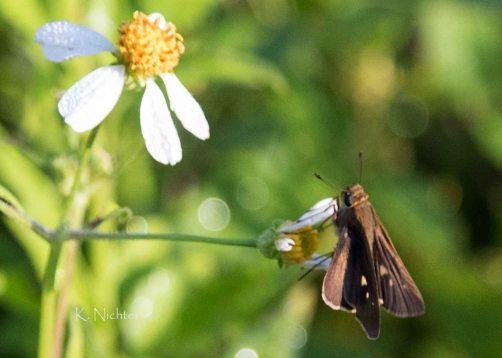
RSSP Skipper
Skipper
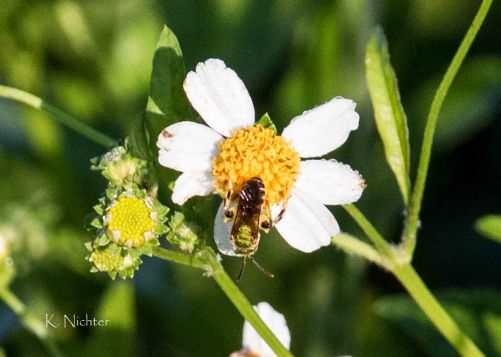
RSSP wasp
Striped Sweat Bee
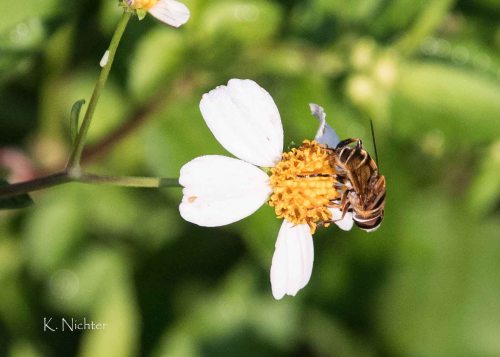
RSSP bee
Honeybee

UPDATE: Why in the world am I suddenly so interested in insects? My portfolio always included butterflies and a certain number of dragonflies, and maybe a bee as it hovered near a button bush. The reason: I am taking an on-line entomology course. As a naturalist and certified interpretive guide, I require a certain amount of continuing education each year to keep my certifications. Once I started the course, I started noticing the small creatures more and realized I opened an entirely new area of nature photography for myself.

Swallowtail Butterfly Caterpillars

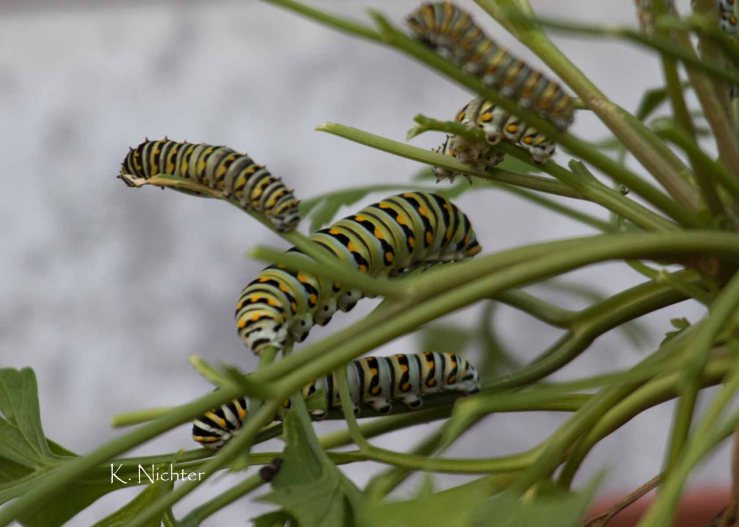
20190830 BSTA catapillers

I saw a Black Swallowtail butterfly near my garden parsley plant a few weeks ago. It landed briefly, and then took off. Apparently that was enough.

A week or so later I went out to cut some parsley for dinner, and found the scene above. At first I questioned if they were the Black Swallowtail because of their color. I learned that at that size the caterpillars are a black color with the white saddle.  This shot shows three or four different sizes, all slightly different but none looking like the caterpillar in most field guides.

A few days later I checked again and found the caterpillar I recognize. They covered the parsley stems, the leaves completely gone. Not too long after this shot, they left one by one to find greener pastures. I haven’t replaced the parsley plant yet, but I think I will replace it with several plants. A few years ago I kept several parsley plants at any given time since the Black Swallowtails loved to lay their eggs there. They disappeared for a few years, and I downsized to one large plant. It appears they are back.20190902 BSTA caterpillars 4 days later

My Canon G16 Experiment

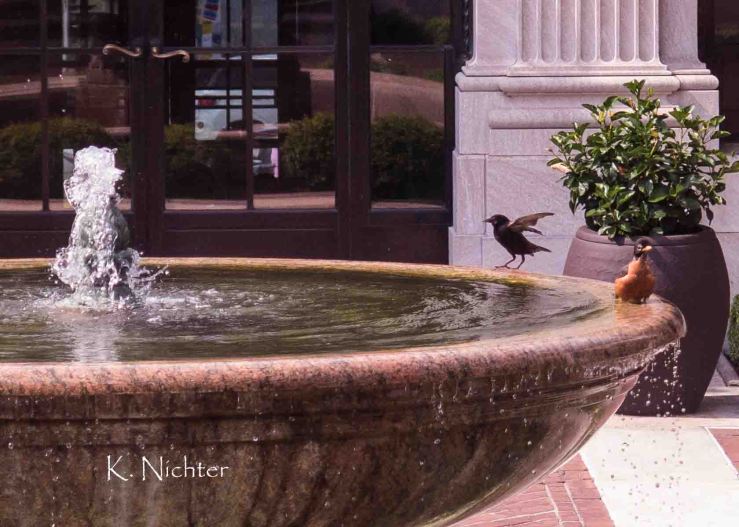
g16 fountain birdbath
Taken through a museum window on a hot day in Washington DC with Canon G16

Several months ago I decided to find out exactly what I could do with a point and shoot camera, in this case my Canon G16, as my primary camera.

I usually carry a SLR, currently the Canon 7D Mark II, with either the Canon 24mm-105mm or Canon 24mm – 70mm in my bag for everyday, and the Canon 100mm – 400mm for nature and wildlife. For the summer, I left it home and carried the G16. The experiment ended the beginning of September after three months.

The results: The Canon G16 worked beautifully for street photography, and a lot of travel photography. For me it did not work as well for nature photography, but my nature photography is usually of things that move (birds, etc.) not necessarily things that stand still (landscapes). Most of my blog photographs for the past few months were taken with the G16 and I was pleased with the quality.

I am used to working in RAW, so I set it for RAW. I suspect the same results could be had with large JPEG but I wanted to use the format with which I am familiar. I did miss shots I might have had with the SLR, but manged better shots in crowds or on the street, as everyone has a phone camera or point and shoot and they do not attract the notice that the SLR does. As I became more familiar with the camera, I learned to adjust the settings, shooting modes, etc. more accurately. I also learned to move and adjust me, getting closer or another angle to work with the camera and lens. Knowing your camera with its strengths and limitations is one of the most important photographic skills you can have. I loved it for travel. It worked well and since most of my travel this year involved cities and events rather than nature destinations this camera’s strengths worked for me.

In conclusion, my SLR goes with me for most of my work, but the G16 will be my workhorse for future travel photography.


180th Erie County Fair

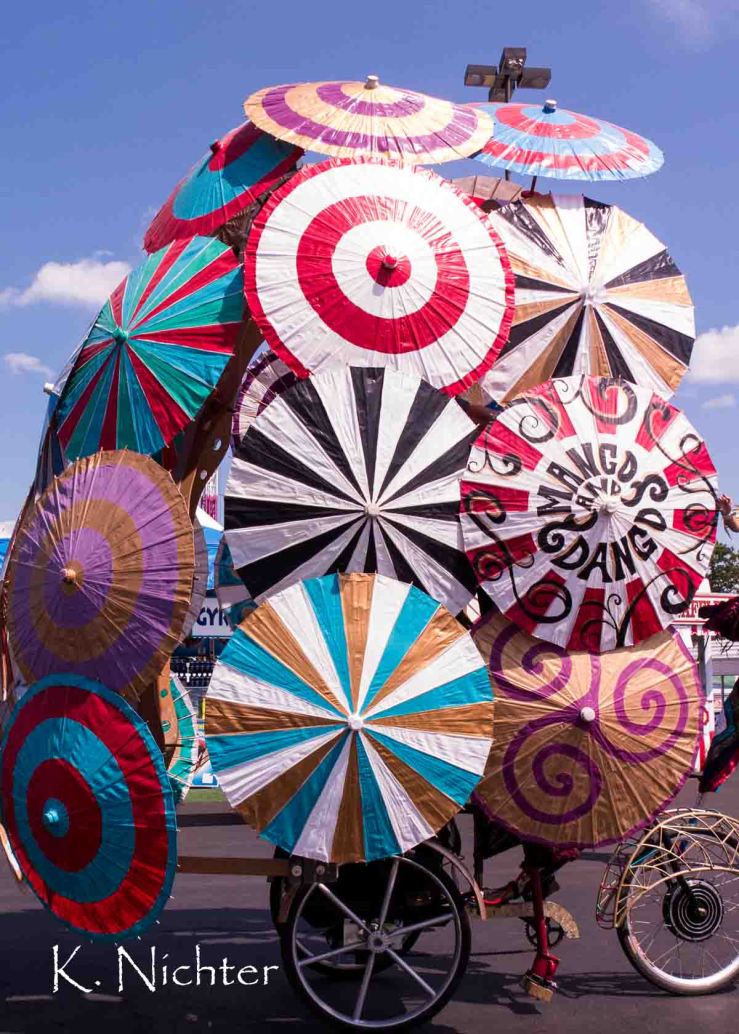
Erie County Fair entertainers

Keeping with family tradition, we attended the 180th Erie County Fair in Hamburg, NY with three generations of our family. We actually went twice, once with my sister and brother-in-law, their children, and their grandchildren, and once with my sister and brother-in-law only. The purpose of the second visit: see the exhibits we missed with the grandchildren along, and eat the food we didn’t necessarily want them to see us eating!

Growing up one town away, we always attended the Fair as a family at least one day during the twelve days it runs. As we became older, we also attended other days with our friends, concentrating on the Midway rides and games, the Fair food, and the evening concerts.

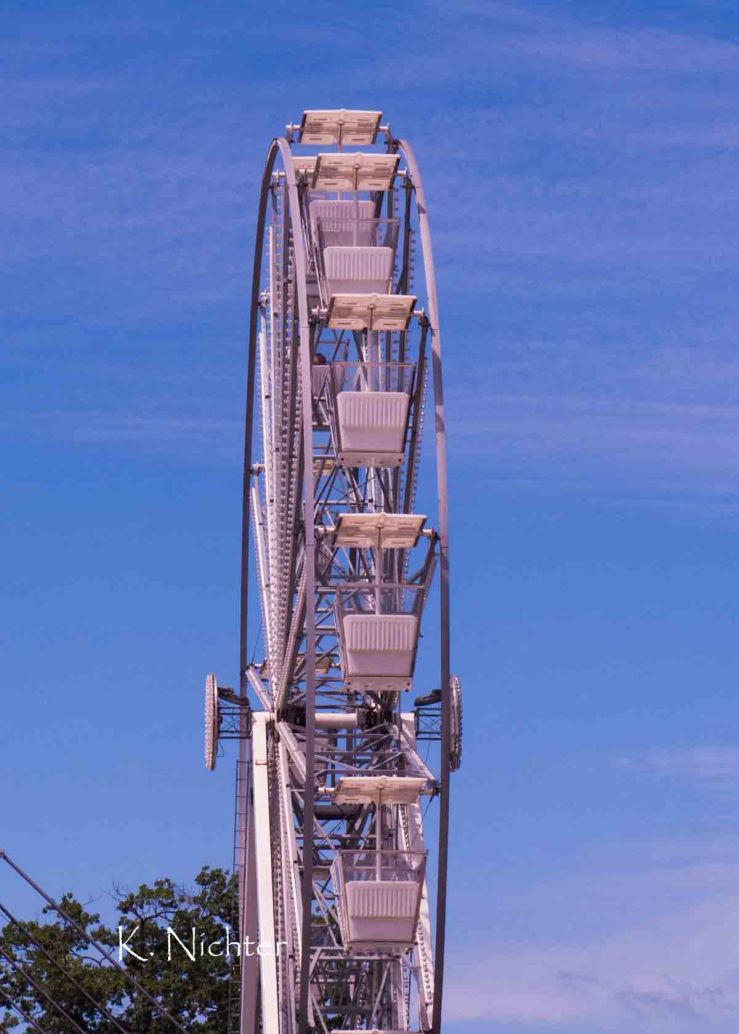
ECF Ferris Wheel
What is a Fair without a Ferris wheel

The Fair keeps true to its agricultural origins. The old barns, old even when I attended as a child, have been rebuilt to reflect modern agriculture and farming advances. 4H remains active here, the prize winning animals on display with ribbons decorating their stalls. This year I learned that goats have rectangular pupils, giving them 320 – 340 degrees of vision. As herbivores, they need all the help they can get to graze and watch out for predators, and this large field of vision aids with that. This knowledge led to me going from stall to stall, attempting to get a good photograph of an eye. Naturally, most goats looked away. Finally, one cooperated.

ECF Goat Eye
Look at that eye!

The displays in the Agriculture Building improve each year. My parents maintained a large vegetable garden in our ½ acre suburban-bordering-on-country yard, so they purposefully walked this building eyeing produce and comparing to their garden yield. Unfortunately, though I try, I must confess I did not inherit the green thumb. The artfully displayed tomatoes, nestled in dry corn, caught my eye this year.ECF AgricultureA few games of “I Got It” followed. At 50₵ a game, the ball toss attempting to get five in a row appeals to adults and children, and the price remains reasonable. Playing seated on a stool in a large open tent also provides a bit of rest and relaxation for the younger kids, and let’s face it, the older ones too. My mother used that game to get a rest while attending the Fair with her children and grandchildren. Now her grandchildren do the same with their children.
This Fair keeps up with the present while keeping a presence in the still relevant past. It is the longest continuous running county fair in the country for that reason.

On the second visit I helped my sister eat some Fried Dough, had my own helping of Buffalo Trio Pierogies, and topped it off with a Walk Away Sundae. Karl stayed with tradition and had Italian Sausage smothered in green peppers and onions. The Walk away Sundae is a square-topped cone containing a square of vanilla ice cream, dipped in chocolate and then in nuts. According to the vendor, they are one of the originals, and the Walk Away Sundae celebrates 90 years next year. That alone is worth a trip in 2020.

Niagara Falls…Still Amazing

Horseshoe Falls
Horseshoe Falls

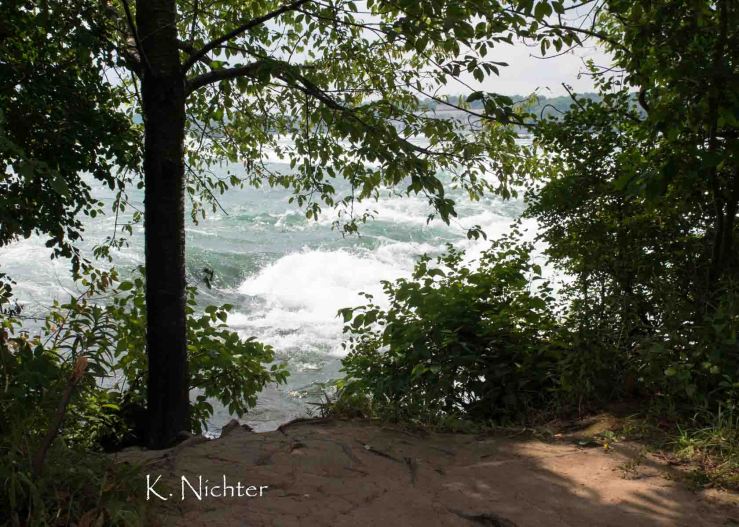
The absolute power of the water rushing along the Niagara River and over the various Falls inspires awe even after all these years. I forgot how incredible it feels to walk along the river path, seeing the water rush by through the breaks in the trees along the banks. Starting on Goat Island at Niagara Falls State Park, we walked the paths and bridges to visit the Three Sisters Islands, and then back to walk along the river path for a better look at Horseshoe Falls and to see Bridal Veil Falls and the American Falls.

Niagara River View from Trail
View from the hiking path

The beautiful, sunny day with the occasional cloud and low (for us) temperatures in the high 70s with humidity about average contributed to the enjoyment of the walk. A big part of the overall experience is the excitement of getting close enough to get a full view of the Falls and feel the mist on face and arms, watching it dot sunglasses and camera lens. Nothing except being there can convey that feeling.

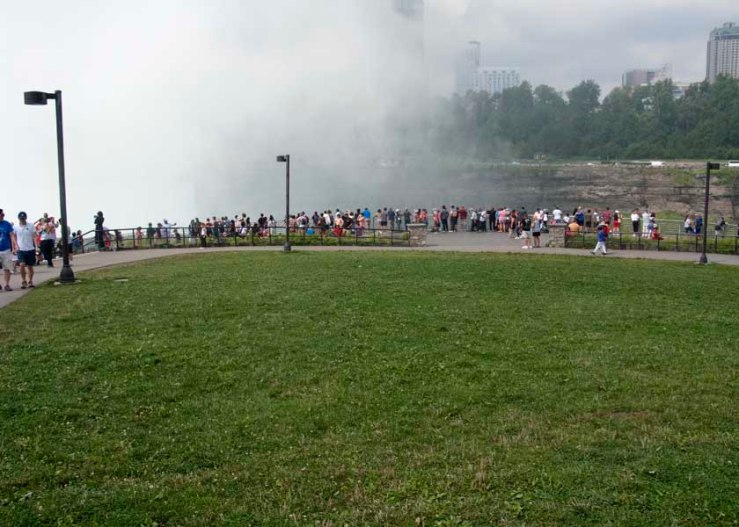
The closer we got to the main views of the Falls, the more crowds we encountered. Walking became an exercise in avoiding people and avoiding ruining their photographs in some parts. But, due to the large area, the crowds remained spread out and not at all overwhelming. Getting close enough for a really good look and photograph proved not at all difficult.

crowd

We grew up not too far from Niagara Falls. We took it for granted as children, learning about it as one of the natural wonders of the world but, in that accepting childhood way, figured everyone must have a natural wonder of the world close by. Karl and I visited the Falls while dating, doing all the usual tourist things including Maid of the Mist boat ride and Cave of the winds hikes. We left the area forty years ago, and just visited the Falls area again this summer.

The long absence, and our role now as photographers and travelers, led us to see this area with new eyes. It changed considerably from our childhood. Once everyone went to the Canadian side of the Falls, avoiding the American side. Now, Niagara Fall State Park provides the perfect view and venue to enjoy this natural wonder.


Dr. Victor Reinstein Woods Nature Preserve (Depew, NY)

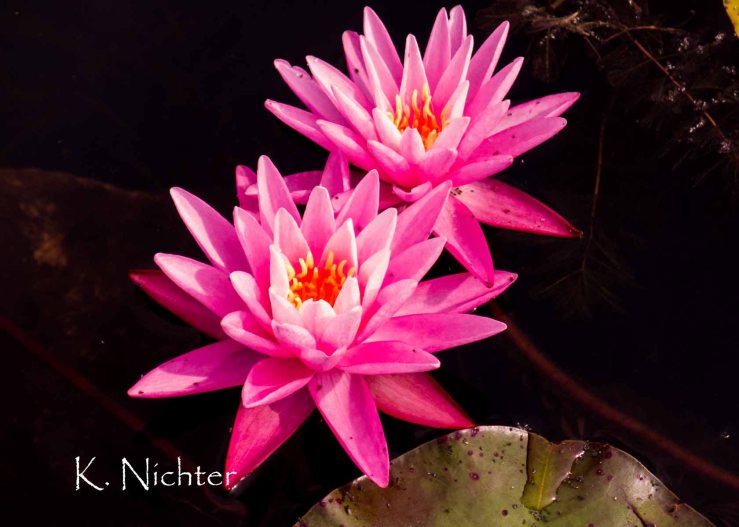
Twin Water Lillies
Twin Water Lilies

For several years we always hiked Reinstein Woods (https://reinsteinwoods.org/) when visiting family. For the past few years, weather (record heat one year, torrential rain another, a mix another year) during our visit put Reinstein Woods on the back burner. The perfect weather this visit prompted a quick visit, which turned into an entire morning of hiking, observing, and photographing.

Upon arrival, I noticed again the absolute beauty and peace of the place in spite of the suburbs and development which surround it. The 292 acre complex contains five interpretive trails of less than one mile each, and three other trails also under one mile, totaling 2.8 miles. They make picking your level of activity easy. The trails meander through forests and wetlands, and around ponds.

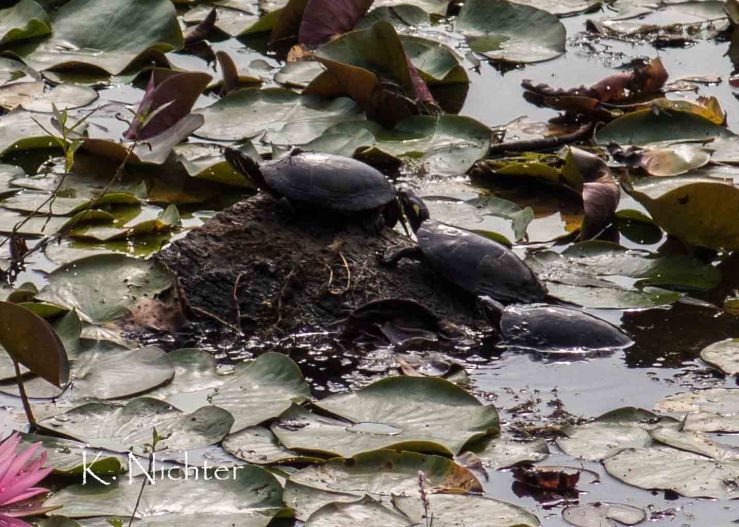
Painted Turtles
Painted Turtles

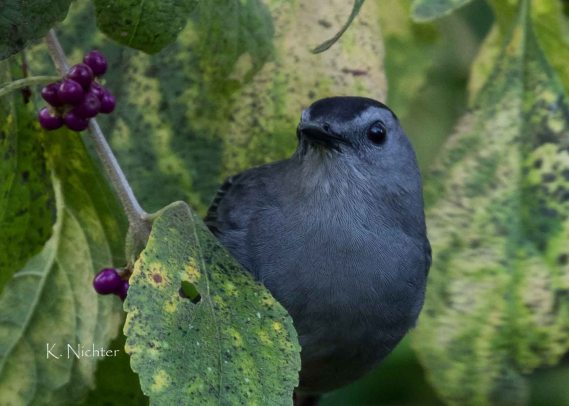
We started along the Lily Pond Loop, always my favorite. Purple/dark pink lily pads cover the pond. According to the history we heard, originally several different colors shared the pond, but eventually the purple took over. I heard and saw several Gray Catbirds, one of my favorite winter birds at home, enjoying their summer residence before heading back to us. The buck (photo last week) sat for a while watching us until slowly rising and casually wandering off. Several White-breasted Nuthatches played around the trees, a treat for me since the range of this bird does not extent to Florida. Painted Turtles basked on the logs, and frogs jumped into the water, often before we saw them. We did not see a beaver, but saw footprints and definite signs of building.

Frog
Surrounded by green algae on the water surface, this frog looks a bit surreal

Before leaving we visited the Education Center. An education program was in progress, so we browsed the compact main room, full of information. The Friends of Reinstein Woods sell t-shirts and other items, all profits going to the center, so Karl and I both left with new t-shirts. I picked up a pamphlet on their volunteer program to peruse on the drive home. It is impressive! In addition to the usual positions of greeter, nature guide, special events, etc. they run several citizen science projects and train Research Stewards to work on them. During our hike, a man pointed out several monarch butterflies and told us where to find a caterpillar, so perhaps he worked on the Monarch Watch! We have little going on near us with citizen science anymore. If I lived in that area, I would be volunteering there frequently.

August Travels

Buck Reinstien

We just returned from a nearly two week trip to visit family so I don’t have a regular posting for this week. We hiked, visited a county fair, and visited Niagara Falls for the first time in a long time.

In my continuing experiment to determine what I can do with a non-SLR camera, I traveled with the Canon G16. The 7D with zoom lens was already packed when I realized I needed to do the ultimate test: a series of shoots with only the G16 without the 7D in my pack for back-up. So, I unpacked the 7D.

The shot above at a nature preserve was tricky. We ventured on a less popular trail, and our reward was this buck relaxing. He stayed for several minutes, quite a distance off the trail, so yes, the 7D was missed. I did get several shots however.

Next week posting will be back to normal.