​Seminole Trail at Fort Cooper State Park

We first visited Fort Cooper State Park many years ago for a short visit, intending to return. We talked of visiting again every time we passed the sign, or saw it on a map as we planned a different trip. Finally we did it. We found it even better than we remembered, and lingered a while this time. They have wonderful hiking trails, good birding, and we found the Seminole Trail.

This four kiosk trail tells the story of the Seminole tribe of Native Peoples, relocated to this area by the government in 1823 from their north Florida homes. As they adapted to the new area, with lakes and swamps unlike their upland homeland, decisions made by the government once again called for their removal. The Second Seminole War started in 1835.

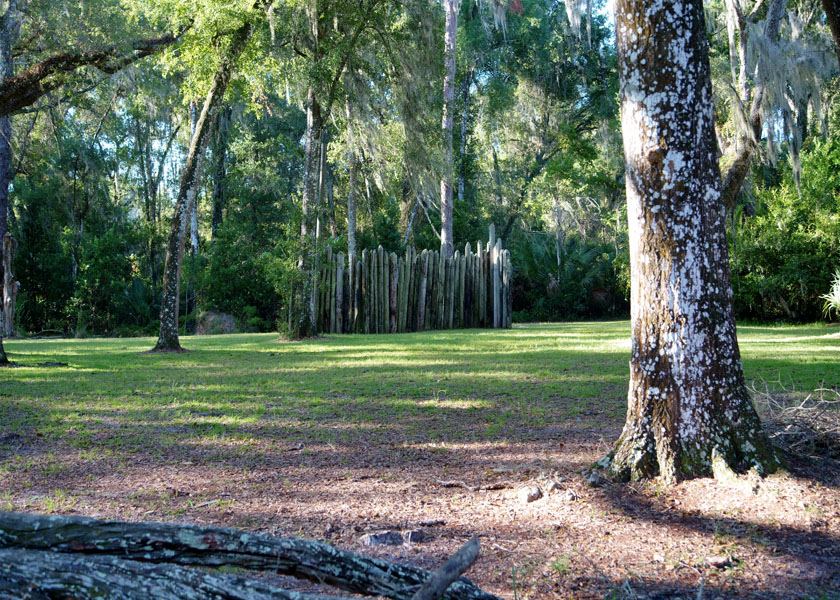
A campaign in 1836 led by General Scott marched forward. At a lake now called Lake Holathlikaha he left the wounded and sick soldiers under the command of Major Cooper, who built a fort on the lake’s edge to protect his men until reinforcements arrived. The Seminole attacked the fort, now called Fort Cooper. They laid seige for 16 days, the fort holding until the relief column arrived.

The park brochure and website contain more of the history, and the Seminole Trail kiosks start with the relocation and adaptation to this area, along with descriptions of how they lived and what they ate, through the war years. I looked further and found a free book called “Florida Seminole Wars Heritage Trail” at this link: https://files.floridados.gov/media/695430/seminole_war_heritage_trail.pdf.

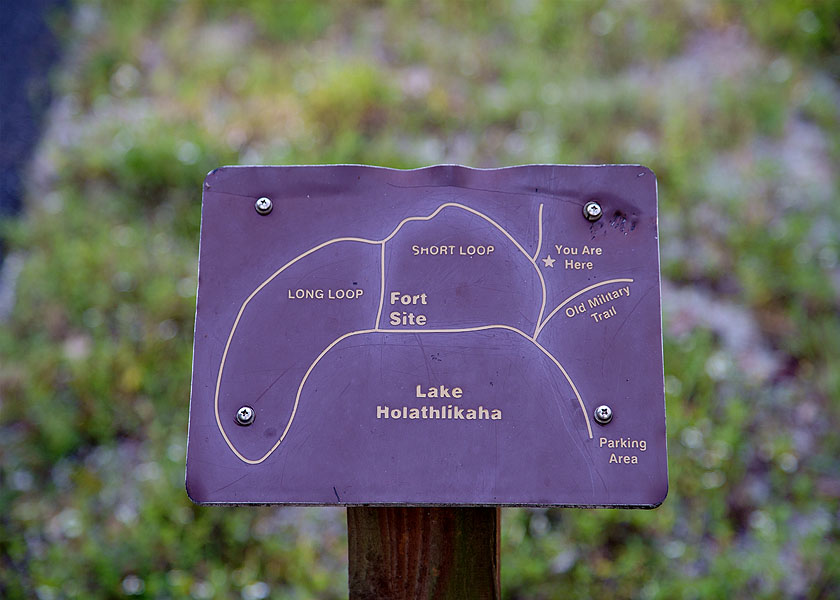
The trail starts with the first kiosk located near the park Rec Center. The easy to follow trail continues near the lake, and then goes to the right to the location of Fort Cooper, part of it the paved Withlacoochee trail. Spaced along the trails we found stakes with maps showing your location, a wonderful idea and easy to follow.

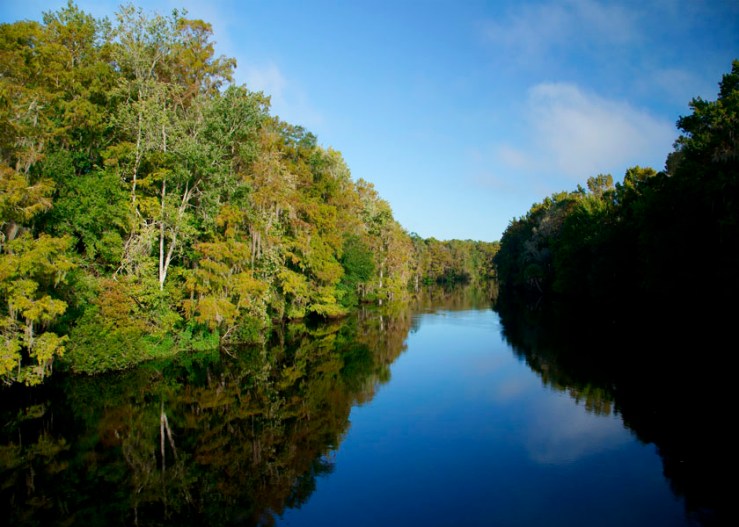
We found the birding very good in the area of the lake, not surprising as it is part of the Florida Great Birding Trail. Private boats are not allowed on the lake, but canoe and kayak rentals are available. We saw three more trails in addition to the Seminole Trail and the Withlacoochee Trail.

​Blue Run in Dunnellon, FL

Reviews on this city park varied so we decided to discover it for ourselves. We drove by the first day when we saw the full parking lot with cars waiting for another to pull out. We later learned that there is overflow parking on another road. We returned at 8 a.m. on a weekday expecting fewer cars but finding the parking lot nearly full already. We squeezed into an available space and began our walk.

The paved, multi-use trail lived up to the multi-use. Walkers, runners, bicyclists, and many people walking dogs meandered, ran, trotted or whizzed by. The small town feel of Dunnellon became apparent with so many of the people calling out hellos or quick comments to others, or gathering in groups for longer conversations. Of course modernization showed its face even in this remote looking area as several people walked by themselves, eyes straight ahead and carrying on a normal voice conversation on their Bluetooth (as far as we know). Nearly everyone greeted us with a nod or hello as we passed them, making it the friendliest park we know.

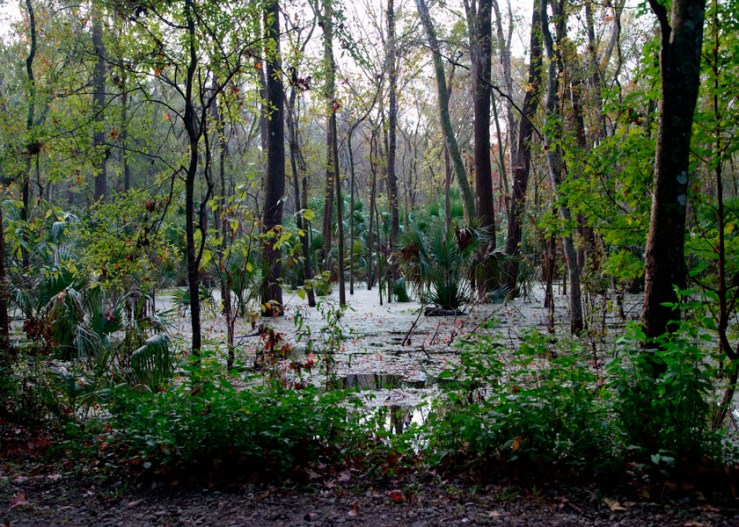
In those moments when we found ourselves alone on the trail the surrounding trees and swamp made us feel miles away from civilization. The park is beautiful, remote feeling, and well used by those living nearby. A park cannot get a higher recommendation than that.

Osceola’s Garden

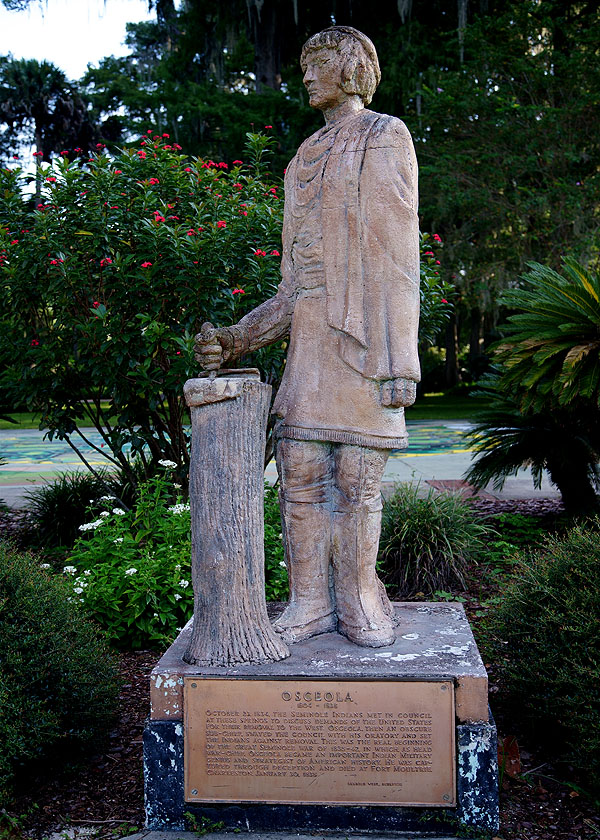
I found numerous photographs of this statue of Chief Osceola on the internet, the earliest labeled circa 1950s. The statue, by Bernice West, stands in Osceola’s Garden at Silver Springs State Park, one of several garden areas along the walkway along the spring. The plaque tells the story of October 23, 1834 when the Seminole met in council at the Springs to discuss the demands of the United States government that they move to the west. Osceola’s oratory and arguments against the removal carried the day and The Great Seminole War started not long afterwards.

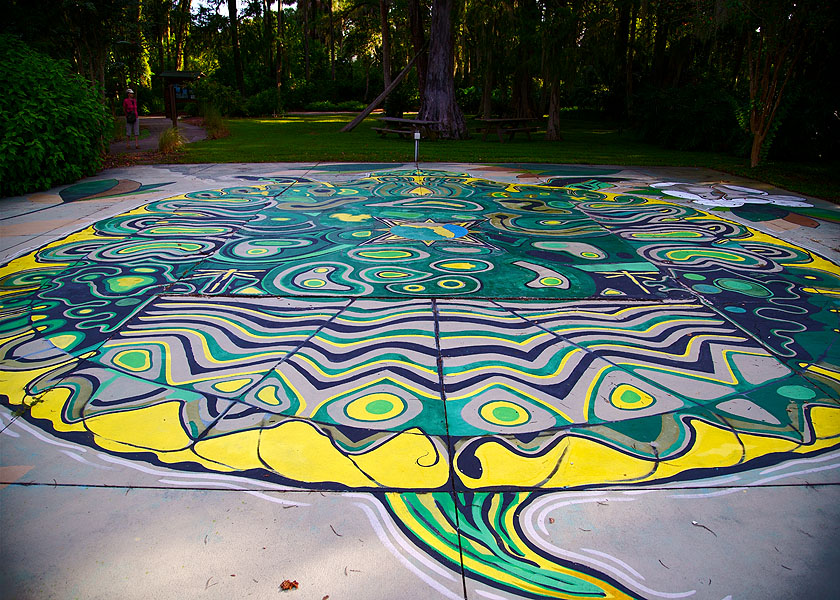
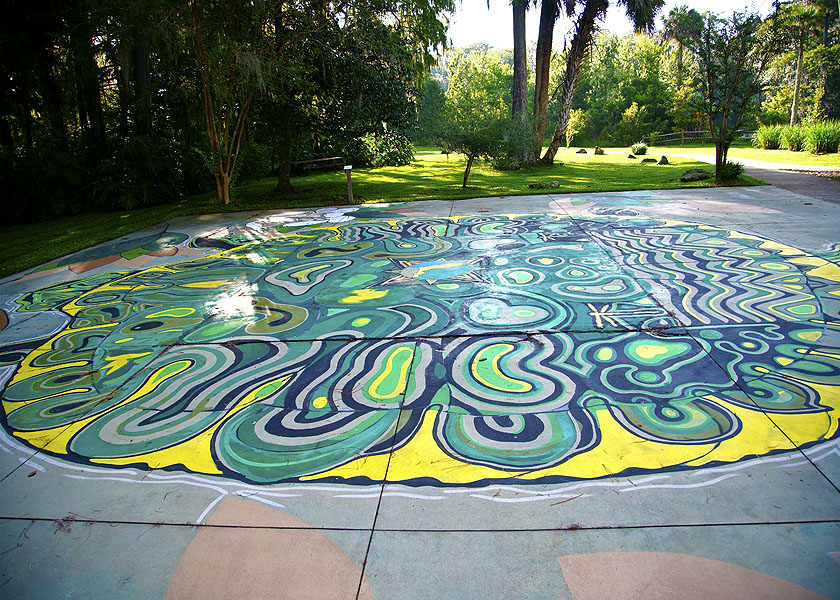
As I searched for information on the sculptor and the gardens, I studied many of the photographs taken through the years. The backgrounds caught my interest, they of course vary as the park changed. The colorful background you see in this photograph is a large, beautiful painting on a concrete pad behind the statue. As Karl took these photographs, I did a quick search of the perimeter but did not see an artist attribution or any interpretation. It may be in the painting, but if so I did not see it. If anyone knows the artist name, please let me know so I can include it. Note in the photo below that the state of Florida directly in the middle.

We love visiting new places, but also re-visiting places we explored before. On each visit we find something that had not caught our attention previously.

Silver River Museum – New to Us Exhibit

We checked in and set up camp at Silver River State Park on a Sunday, then decided to visit the Silver River Museum, located along with its replica pioneer settlement a short walk from the campground. We paid the very reasonable $2.00 admission charge, and began to wander. We visited this museum before, so started out looking at some of the exhibits when both of us realized an entirely new section existed. A volunteer told us that it opened only two years ago.

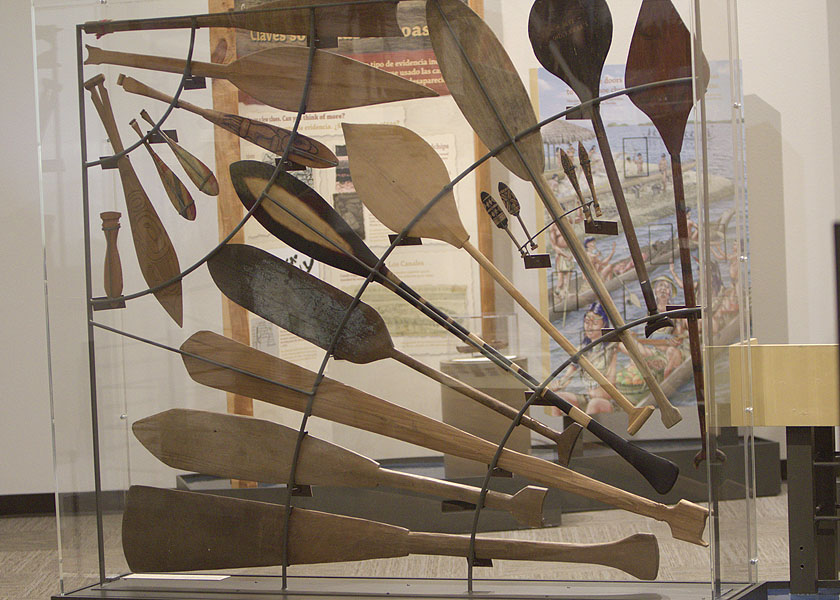
The new dugout canoe exhibits includes everything dugout canoe. It starts with information on the remains of prehistoric dugout canoes from Newnan’s Lake and the archaeology involved, moves on to their use, history, and modern craftspeople making the canoes the old way. The interpretive exhibits are a blend of artifacts, display, signage, hands-on and video and appeal to children and adults. Interesting fact: Florida holds the record for largest number of prehistoric dugout canoes, over 100 from 500 to 5,000 years old!

Replica of dugout canoe you can touch

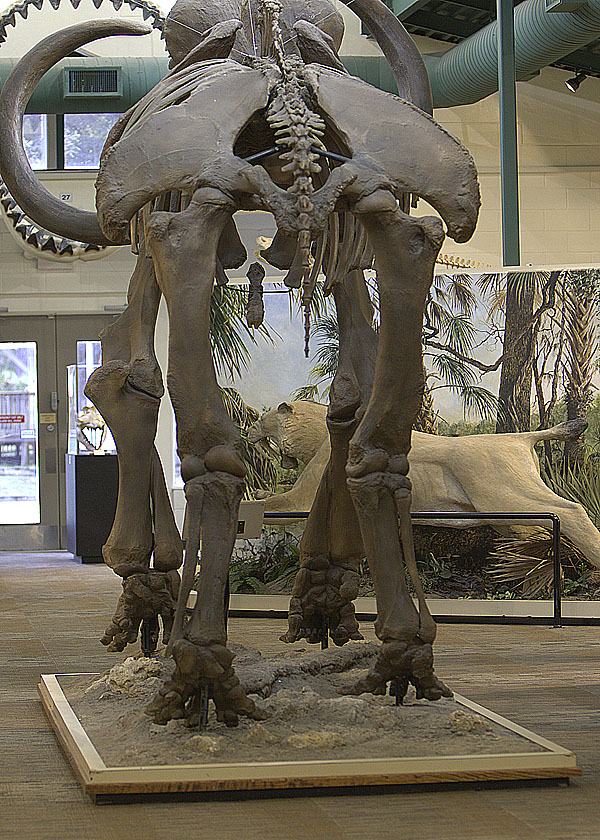
Located at Silver Springs State Park at the NE 58th Avenue entrance which includes the campground and many hiking trails, the other museum exhibits show the history of north central Florida from fossils, through Native American culture, and into the age of development first for business then as a tourist attraction. It also includes a replica pioneer settlement, and during the week provides field trips for school children. It only opens to the public on weekends, from 10 a.m. to 4 p.m.

We needed more time since we arrived so close to closing time. We will be back.

Rhesus Macaques – Another Non-native

Florida does not have a native monkey species, but, we do have wild monkeys. We visit and hike Silver Springs frequently, but never saw the Rhesus until 2018. After that one sighting, which I photographed and was one of the first posts in this blog, we didn’t see any of them again until last week.

We hear a lot of stories about the origin of these monkeys, the Rhesus macaques, which live wild in Silver Springs Park near Ocala and the surrounding forest areas. Most agree that the original six were imported in the 1930s and released to add to the glass bottomed boat tourist attraction. Put on one of the small islands for the enjoyment of the tourists passing in boats, they instead swam to the main shore and took up residence in the forest. Some say that the filming of the Tarzan movies at Silver Springs spurred the original release, and it likely made good promotional material for the stories promoting the movie, but as the Rhesus never appeared in any of the movies the tourist attraction story is more likely.

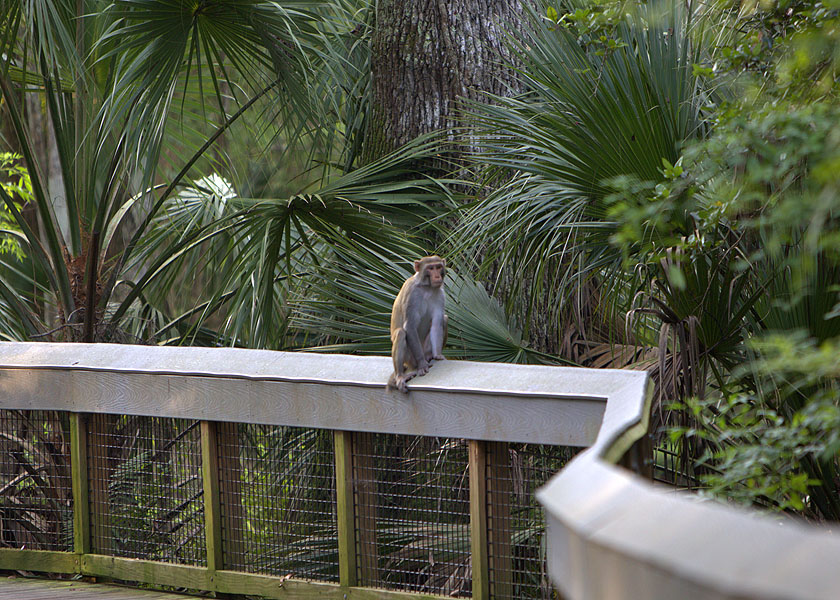
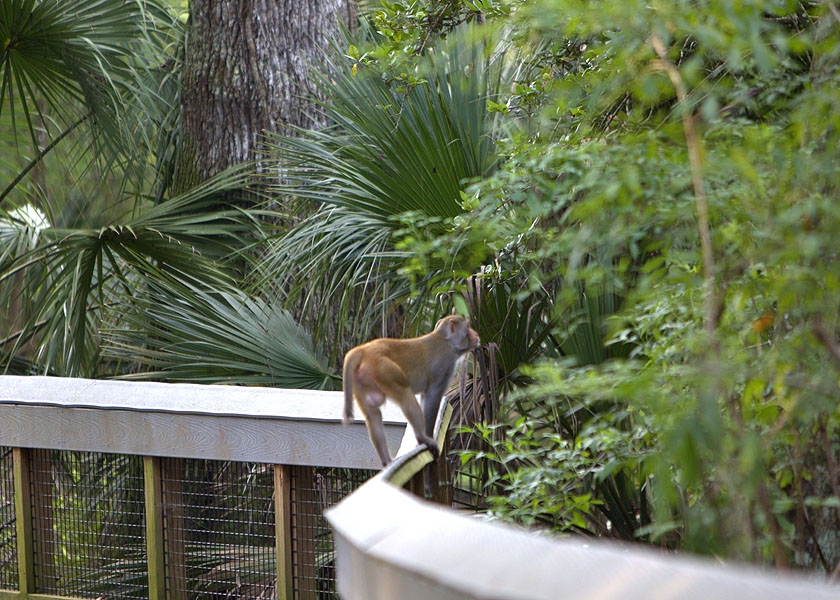
These two, we think young males, sat on the railing of the Ross Allen Boardwalk where it crosses the Silver River, watching us approach. We continued to walk but slowed down, and wondered if we needed to turn around. They slowly rose to all fours, and gracefully sauntered along the railing away from us. We continued to walk, and they turned to right as we came to the loop. They walked further down, turned, sat down, and just watched us. We stood and observed them for a few minutes, then went to the left and walked the loop from that direction. By the time we reached the area we last saw them, they were hidden somewhere in the forest.

Signs are everywhere about the Rhesus, with warnings about approaching them or feeding them. They are wild, they have bitten people before who approached and tried to feed them, so like any other wild animal just enjoy them from a distance.

Backyard Wildlife

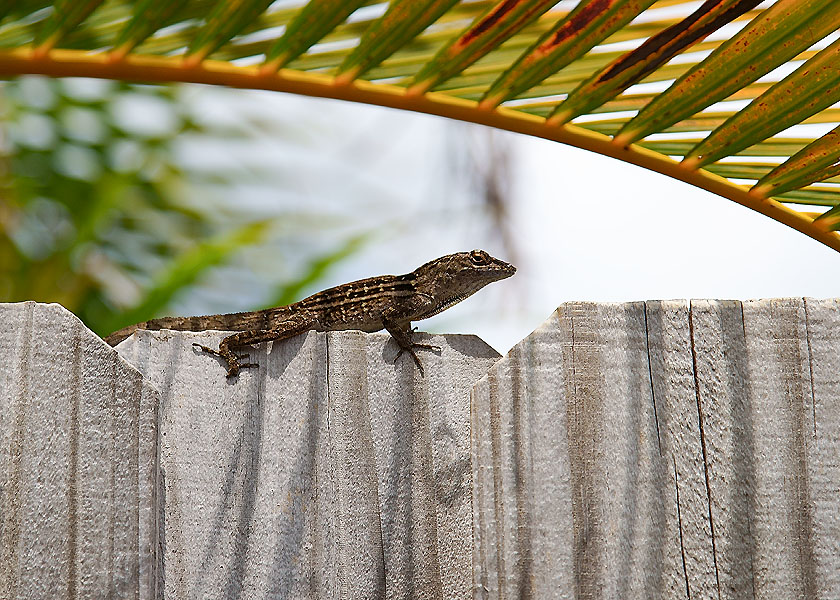
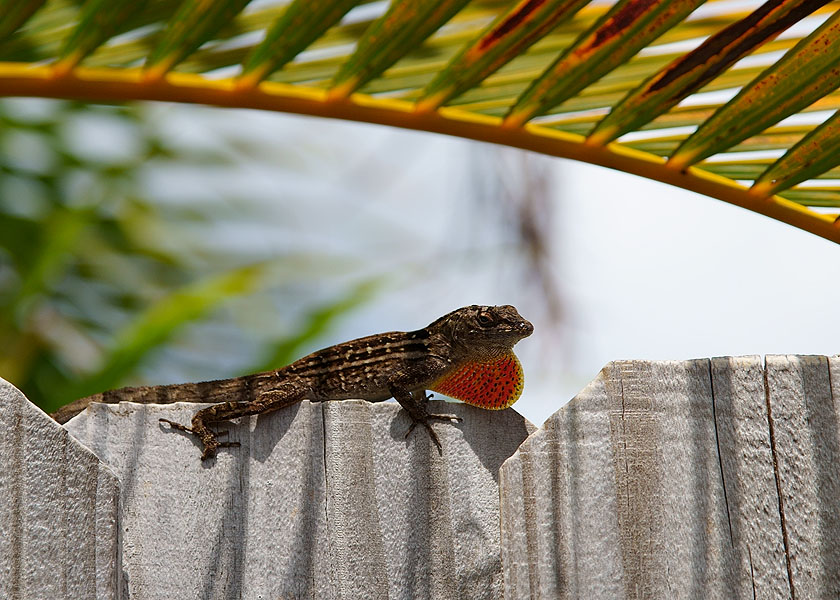
Karl watched this Brown Anole show up on the fence directly across from our kitchen window about the same time each day. He basked in the sun, and scurried around after minuscule insects which he promptly ate. Sometimes he disappeared after that, but on occasion he sat and displayed his dewflap prominently.

Perhaps better known as a Cuban Anole, this lizard did in fact originate in Cuba and migrated to Florida at some point in the 1800s. Finding Florida very much to their liking, the species moved right in and is now regarded as invasive, taking over the territory once dominated by the native Green Anole. We rarely see Green Anoles in our yard, but we see the Cuban Anoles all the time.

When we first moved to this house in the 1990s our young nephew looked forward to the annual family visit to chase after and catch them, and those memories later inspired his sister to write a children’s book called “The Lizard” which she self-published. The anoles easily slip into the screened pool area where the cat then engages in pursuit. They are part of our backyard wildlife and although invasive made their way into family memories.

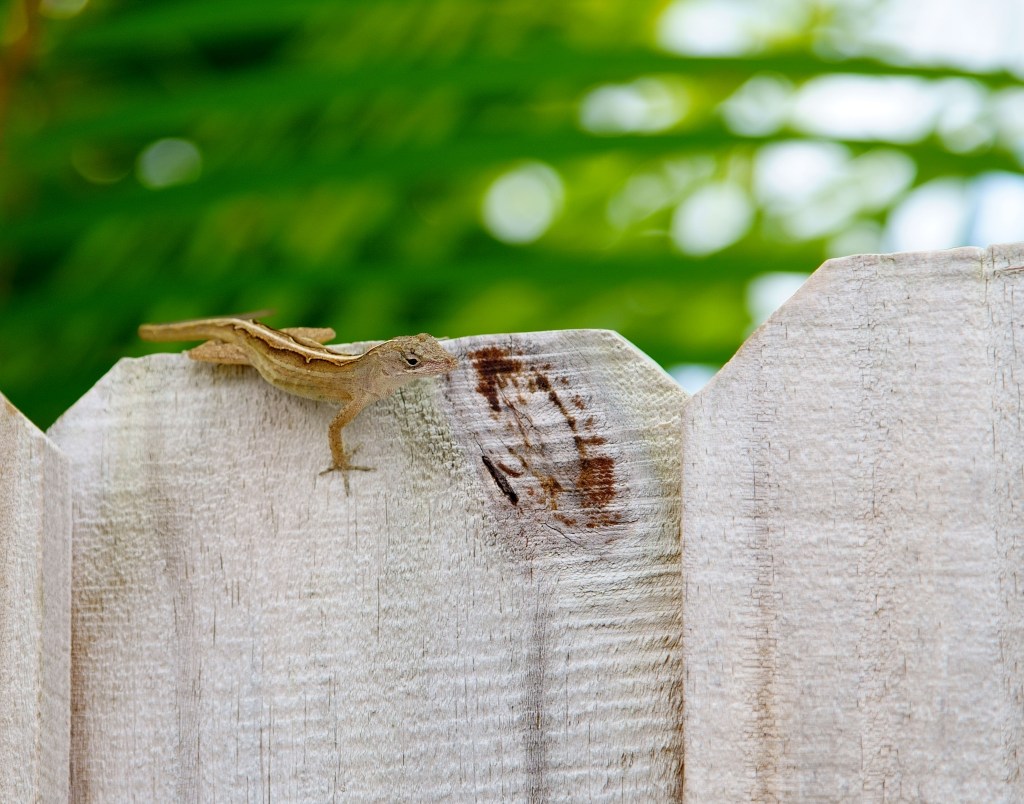
Karl noticed one other thing as he photographed this particular anole. The displaying of the dewlap occurred when another anole showed up. The purpose of the display is generally to challenge a rival male, or impress a local female. Based on size and the white dorsal stripe, the anole below that sat near this male is definitely a female.

Summer Bird and Updates

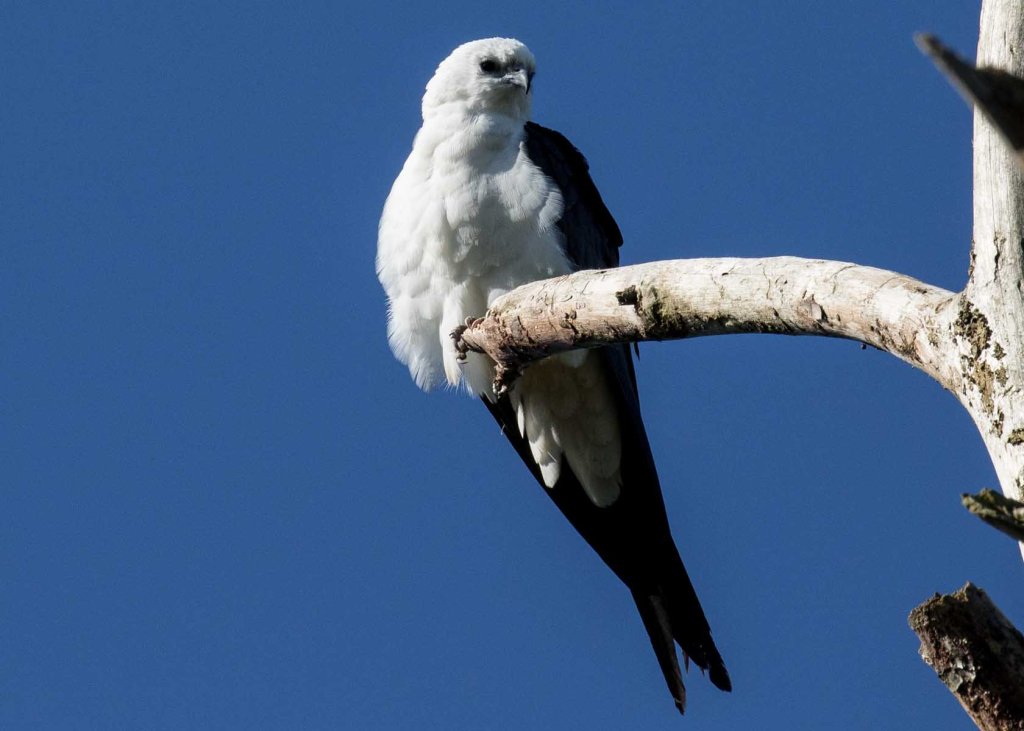
We know summer is coming when we see our first Swallow-tailed kite soaring overhead, feasting on flying insects. We rarely see them sitting still, or up close, so imagine our surprise when we looked up while hiking and saw this beautiful bird. The layers of feathers came out so well with the sun shining at that angle.

Thank you to those of you who attended our first in-person photography presentation in 18 months a few weeks ago. For the first time ever we did not bring a second flash drive with a back-up, and naturally Murphy’s law struck. For the first time ever the presentation corrupted. When the application asked if it should try to recover the file and we pressed yes, it deleted the entire thing. That was also a first. We do not live close to the venue, so driving home to get a new one wasn’t happening. We used an older presentation from a couple of years before. No one left in spite of the change in topic and we stayed an extra half hour answering questions so even though it wasn’t the new presentation we planned it went forward. Note to ourselves: never walk out of the house again without two flash drives containing the presentation!

Summer Schedule and Class

We slow down on travel and outdoor activities in July and August. The west central Florida climate this time of year repeats a pattern of high humidity, temperatures in the 90s, and afternoon or even all day rain and thunderstorms. Stories and postings will be sporadic until we resume our regular schedule in September. We wish all of you the very best of summers!

Saturday, July 17, 2021 we are presenting a program titled “Practical Guide to Nature Photography” 10:30 – 11:30 a.m. at Brooker Creek Preserve. This is a good starter if you are just getting into nature photography, or a nice refresher for those more experienced. It is our first program in a year and a half due to Covid. If you are in the area, check out www.brookercreekpreserve.org events calendar for details.

Behind the Fence

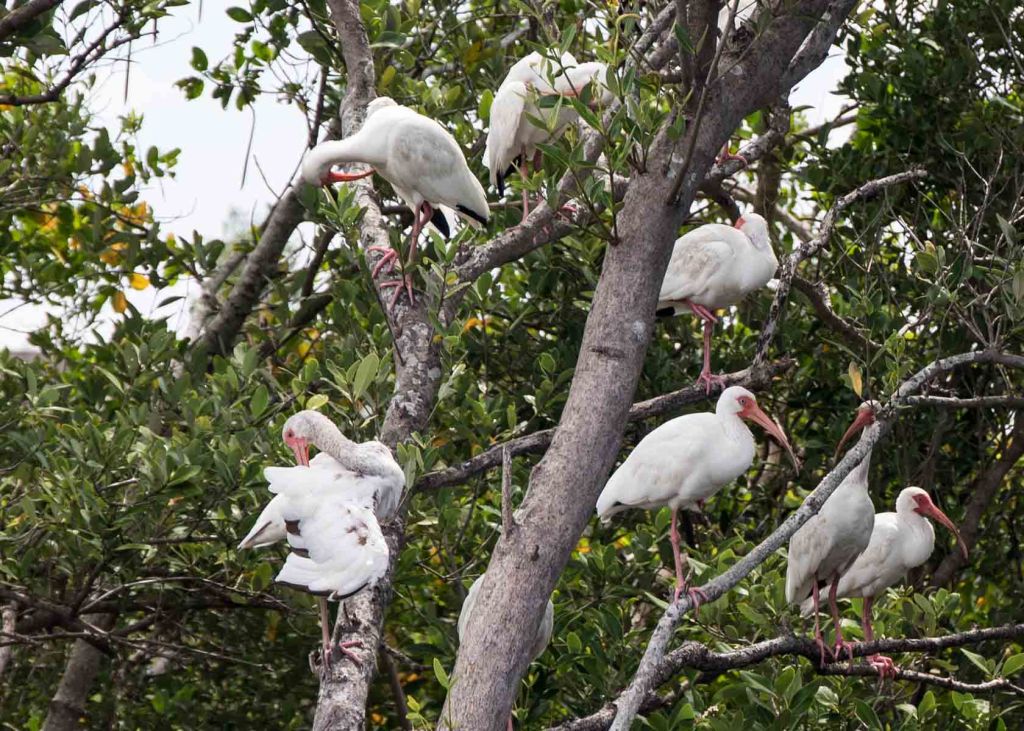
Several months ago a we worked with the owner of the land just behind our fence, which is part of a tidal creek, to have the invasive Brazilian Pepper trees removed. The clearing revealed to us for the first time the stand of black mangrove and red mangrove near and in the creek. A few days ago I happened to look out the back window and saw bundles of white in the trees. I looked again and realized that the flock of White Ibis I noted early standing in the creek decided to take refuge in the mangroves as the tide rose. I took my camera outside, and shot over the fence. They watched me, continuing to sit and preen without a care.

Appleton Museum of Art

Many years ago upon leaving a small art museum a friend commented that she loved small art museums because the size encouraged concentration on the exhibits and artwork rather than feeling a need to rush through to the next for fear of missing something. The Appleton Museum of Art in Ocala fits this perfectly. Just the right size, the well curated permanent collection and special exhibits pique interest and get the creative thoughts and ideas flowing without overwhelming.

The long driveway along with the large fountain and beautiful building start the visit. Inside the greeter takes your admission and provides a map. The galleries on the two floors wrap around a central garden area, which in the past featured exhibits of its own such as a bonsai exhibit many years ago. We headed immediately to Visions of Florida, which included photography, paintings, and mixed media including photography of Clyde Butcher (known as the Florida Ansel Adams). After that we strolled through two other special exhibits, both excellent, and parts of the permanent collection which we enjoyed on prior visits.

At one point we spoke to an employee who mentioned that a small special exhibit about the founder of the museum was located in the auditorium. We made our way there when we finished the galleries, and discovered that the founder of the museum also founded Appleton Electric, which we both knew from our early work in business. We never made the connection before.

This museum has become a favorite. We visit it whenever we take the RV to Ocala, and have scheduled trips around their special exhibits.