Red Flags at the Beach

Practice shot of flag

We arrived at St. George Island State Park on a blustery day. The yellow flags flapped and snapped in the wind from each flag pole along the straight, narrow road through the park. The island changed significantly since we started visiting almost ten years ago. Houses sprang up everywhere on the sand dunes along the narrow main road. Most appear to be rental property. Once past the ranger station to the park, the island reverts to its natural state. Dunes and scrub line the road, with occasional well-placed parking lots for beach access.

We walked along the beach mid-afternoon, enjoying the very stiff breeze which dispelled much of the hot and humid of the air. Several people swam in the water, or sat in their beach chairs under canopies and umbrellas. Others showed all the signs of spending the day there in spite of the wind, surrounded by coolers and beach bags crammed with towels and packaged snacks almost spilling out of the top. They staked out their bit of paradise for this Sunday.

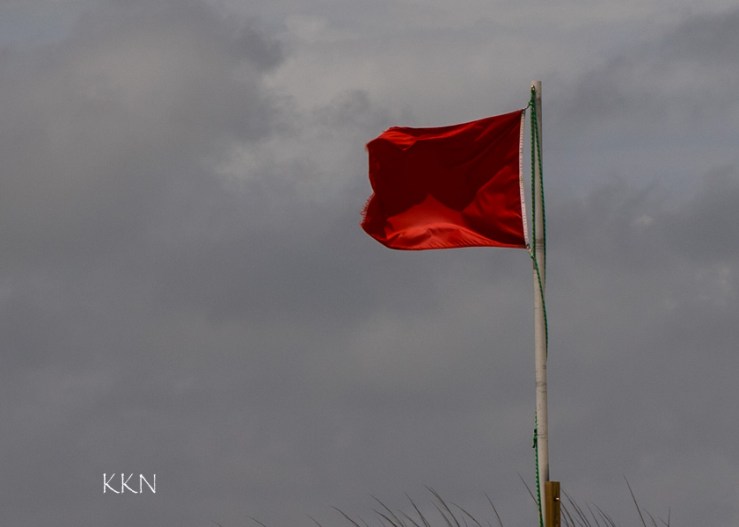
The next morning we noticed the red flags, telling us the marine conditions had turned from a warning to dangerous. We once again walked along the boardwalk and on to the sand. No people dotted the beach this morning, a cloudy Monday morning with rain predicted most of the day. No sun showed between the clouds this day, and with the lack of sunshine and people, the beach took on a different tone. One lone shorebird ran along the waterline, hoping to find something in the sand.

We took a short walk. I spent a lot of time looking at, then photographing the red flags straight out in the wind. I took a lot of practice shots, playing with various settings. One I liked, most were deleted before they ever even made it to the computer!

Photo Hike at Brooker Creek Preserve

BCP Frog

We enjoyed our last photography hike of the season on May 26, 2018 at Brooker Creek Preserve. An enthusiastic group of photographers joined us for a surprisingly biting fly and mosquito free walk. We remembered last year’s hike at the end of May, and the rather quick march along the boardwalk through the swamp area, followed by hungry mosquitoes every step of the way!

Subtropical Storm Alberto made its way toward our area Saturday morning, and we arrived to clouds and rain. The forecast called for showers, so Karl prepared our classroom/roundtable session just in case. When rain or weather cancels one of our hikes, we move inside and do a classroom/roundtable with any photographers brave enough to chance the weather and arrive. It cleared enough that we hiked, and luckily the rain stayed away.

Next season we plan five programs: four hikes and one classroom session. The hikes coincide with the changes around Fall and the Fall wildflowers and take place the last Saturday of September and October, and the same for Spring in March and April. The classroom session, still in development, takes place the last Saturday in January. Please plan on joining us for some of all of these programs!

Reflections of a Yellow-crowned Night Heron

YCNH reflection

We watched this Yellow-crowned Night Heron walking back and forth in the water. He quickly dipped into the water a few times, but came up empty. We remained silent and still at first, then started moving around slowly and quietly. Apparently, he saw no threat because he remained for those in our group to photograph.

I took several photographs. I shot him finally finding that crab, and eating it. Unfortunately, those photographs did not meet my standards, the bird came out well but the sharpness of the prey in his bill did not.

I noticed him looking intently into the water, and saw his eye looking back at him. I shot that one on a whim, and it became my favorite. After all these years of bird photography, I still grab my camera whenever I see a bird. My focus changed over time, and the challenge of getting something different or unique for my own portfolio makes the challenge even greater.


Broad-headed Skink

broad headed skink 1

While hiking the boardwalk at Falling Rivers state park, we noticed the skink in a tree crevice, enjoying the sun. I stopped, backed up slowly, and reached for my camera. I think walking on boardwalks creates more noise and vibration, even when we try to walk softly and I didn’t want to spook him. I took several shots, at several focal lengths and settings. After observing the skink for a few minutes, it suddenly became aware of our presence, turned, and left. Or, maybe it just let us get a good look before it left. After all, he displayed full breeding colors and a bit of preening made sense.

Broad headed skink 2

The Broad-headed skink ranges from northern Florida to part way down the peninsula and is the largest of Florida skinks. The orange head gives this one away as a male.


Photographing Waterfalls

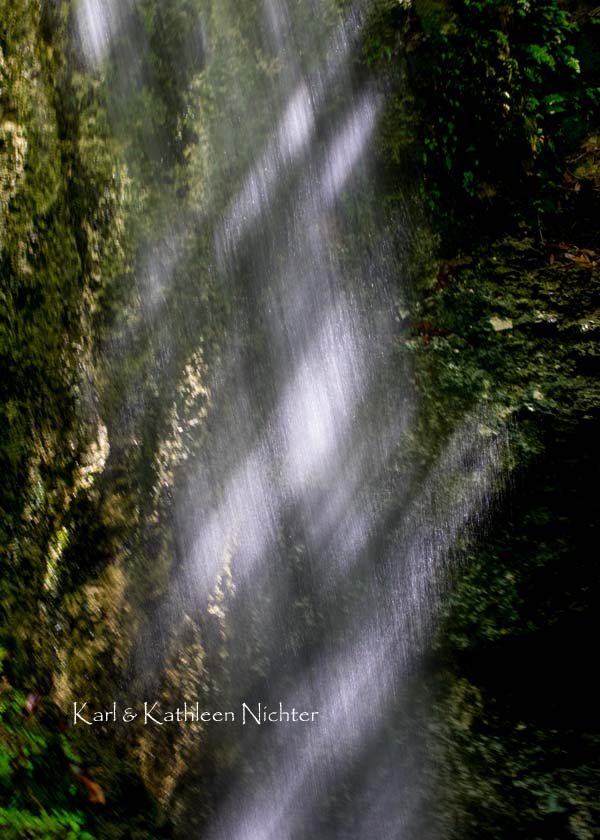
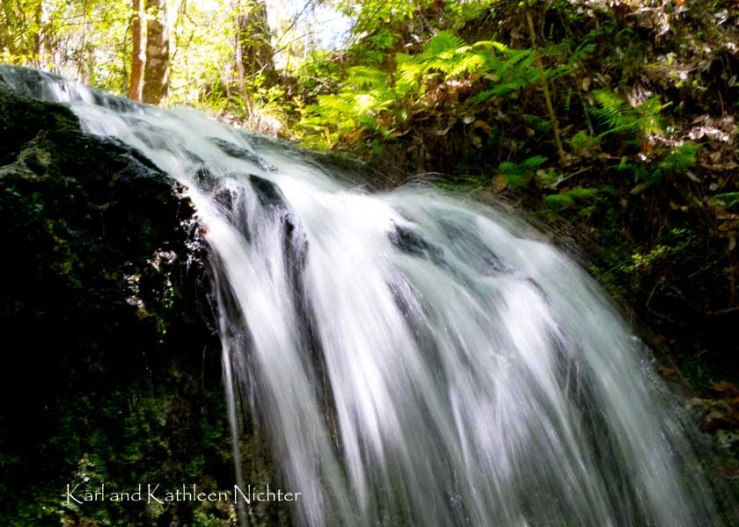
Thanks to cooler morning temperatures we had the Falling Waters State Park Waterfall to ourselves for quite a while. Most of the photographs I took initially froze the droplets. Since I had the time, I decided to play around with setting the time and getting the soft water look, or bridal veil, or any number of other names. The caption below each shows the settings I used on the camera, and the result. I handheld the camera since I did not have a tripod or monopod with me, but used the boardwalk to prop myself and avoid shake.

Soft waterfall 1
I shot this image at F22, 1/4 second
soft waterfall 2
This image, of just the waterfall, I shot at F22, 1 second
soft waterfall 3
I shot this image at F22, 1/6 second


Visit to Falling Waters State Park

falls

The morning started cold but sunny at our campsite in Florida Caverns state park. We stay at this park frequently, and took the cave tour many times so this time we decided to explore more of the area. The wind kept the temperatures lower, but out of the wind the sun felt so good. We decided to visit another state park so drove west on 90, stopping at the Main Street market in Chipley (stop there if you can) and then on the Falling Waters State Park.

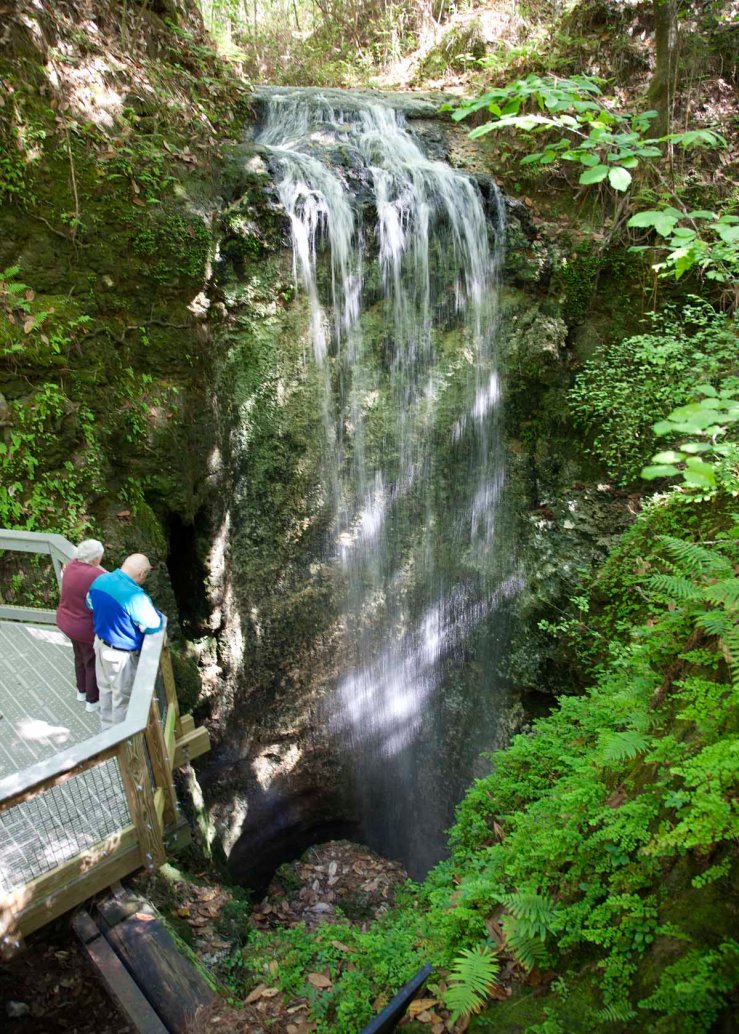
The park contains the highest waterfall in Florida at 73 feet. We walked along the boardwalk from the parking lot, and even with the wind heard the falls before we saw it. The heavy rain the day before made the water flow stronger. As we approached, another photographer stood on one of the steps taking his shots. We waited, and composed a few of our own from that angle. The water rushed over the rocks, and into sinkhole below that from our view seemed bottomless.

FWSP water into sinkhole

We spent some time at the Falls on the lower platform and then retraced our steps and moved to the upper platform. After taking a few photographs to give some scale to the falls, we took advantage of the beautiful sunny day and walked the boardwalk trail to the lake. Signs appear along the way, explaining native plants or history such as the gristmill and legal still that once used the falls for power, or the remains of an oil well that never produced oil. The lake has a small swimming area, and I sighted most of the birds I noted around the lake.

I keep a field notebook for most hikes, somewhat casually especially in the plant category, but in the past the information languished after the hike. I stopped using eBird for bird lists so don’t have a formal recording area. I now review my notebooks after the hike, when I review my photographs, and pick notable sightings to record. For Falling Waters State Park:

Notable Sightings

Birds

 
Eastern Kingbird Flew by, first I have seen this season
Great Crested Fly Catcher Heard, then it flew directly in front of us and landed in a nearby tree

Reptiles/Amphibians

 
Broad-headed Skink Beautiful, in a tree crevice

Insects

 
Ebony Jewelwing Damselfly Stopped briefly a few times
   

Mammals

 
Sherman’s Fox Squirrel Two sightings, one as we entered the car, and the other in the parking lot. The first was light colored, the second almost black