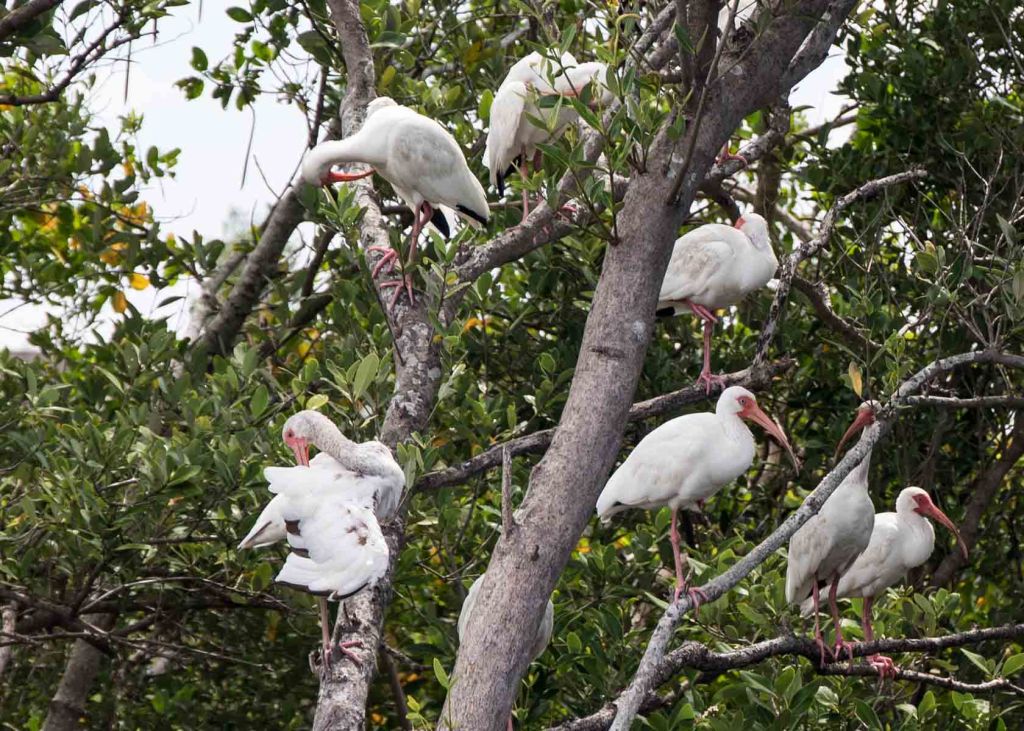
Several months ago a we worked with the owner of the land just behind our fence, which is part of a tidal creek, to have the invasive Brazilian Pepper trees removed. The clearing revealed to us for the first time the stand of black mangrove and red mangrove near and in the creek. A few days ago I happened to look out the back window and saw bundles of white in the trees. I looked again and realized that the flock of White Ibis I noted early standing in the creek decided to take refuge in the mangroves as the tide rose. I took my camera outside, and shot over the fence. They watched me, continuing to sit and preen without a care.
Many years ago upon leaving a small art museum a friend commented that she loved small art museums because the size encouraged concentration on the exhibits and artwork rather than feeling a need to rush through to the next for fear of missing something. The Appleton Museum of Art in Ocala fits this perfectly. Just the right size, the well curated permanent collection and special exhibits pique interest and get the creative thoughts and ideas flowing without overwhelming.
The long driveway along with the large fountain and beautiful building start the visit. Inside the greeter takes your admission and provides a map. The galleries on the two floors wrap around a central garden area, which in the past featured exhibits of its own such as a bonsai exhibit many years ago. We headed immediately to Visions of Florida, which included photography, paintings, and mixed media including photography of Clyde Butcher (known as the Florida Ansel Adams). After that we strolled through two other special exhibits, both excellent, and parts of the permanent collection which we enjoyed on prior visits.
At one point we spoke to an employee who mentioned that a small special exhibit about the founder of the museum was located in the auditorium. We made our way there when we finished the galleries, and discovered that the founder of the museum also founded Appleton Electric, which we both knew from our early work in business. We never made the connection before.
This museum has become a favorite. We visit it whenever we take the RV to Ocala, and have scheduled trips around their special exhibits.
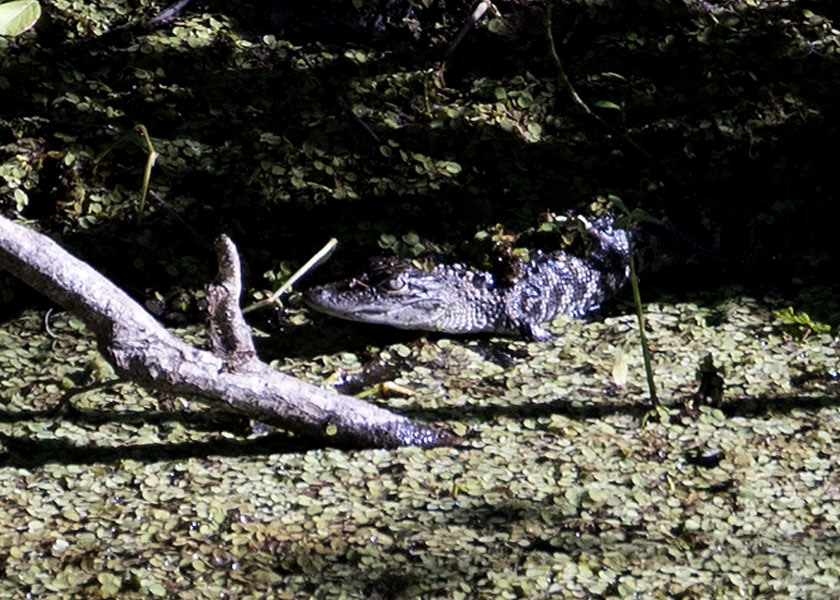
For several weeks people told us they saw some larger alligators hanging out near the main bridge over Brooker Creek at the Preserve. We spotted them once or twice. May brought a drought, and the waters of the creek, which are fed by rainwater and not by a lake or spring, began to dry up. Invasive salvinia, which looks like native duckweed but larger, covered most of the water.
A couple already on the bridge told us they saw a small alligator and pointed in the general direction. Once he moved, we spotted him. Once in the water, we saw only the eyes and snout, everything else covered with green.
Our summer is upon us. The temperatures rose in May, but thankfully the accompanying high humidity that signals summer held off until recently.
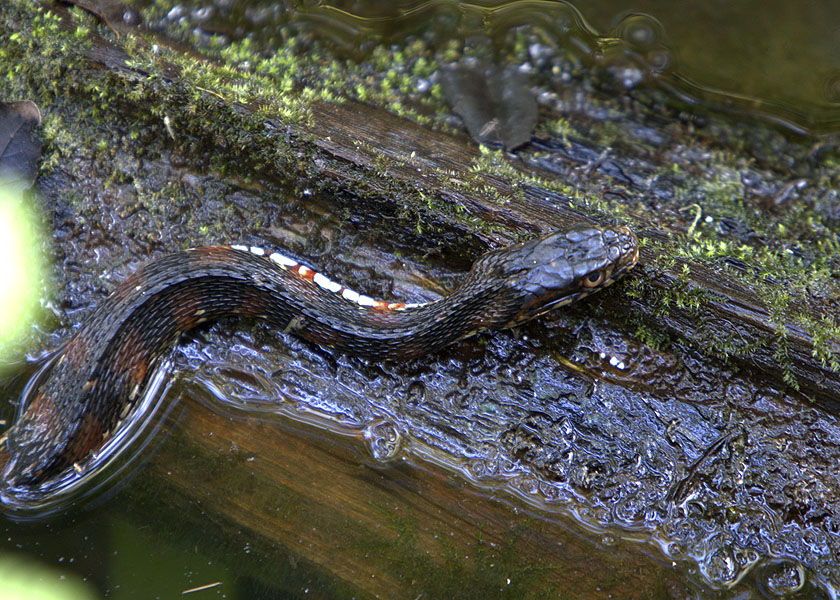
We stopped at Brooker Creek Preserve in Tarpon Springs for a meeting. Naturally, we came early to walk around and enjoy the Preserve. At the wetland between the two buildings, a Florida Water Snake relaxed on a piece of wood.
I was struck by the brightness of the white and red bands. Perhaps a juvenile? The snake stayed and put up with us taking its photograph, just moving enough to reposition. Summer weather arrived in the last week or so. Though temperatures were in the 80s through most of May, the humidity remained low giving us a wonderful sprint. Just before June arrived, so did the humidity and thankfully some rain.
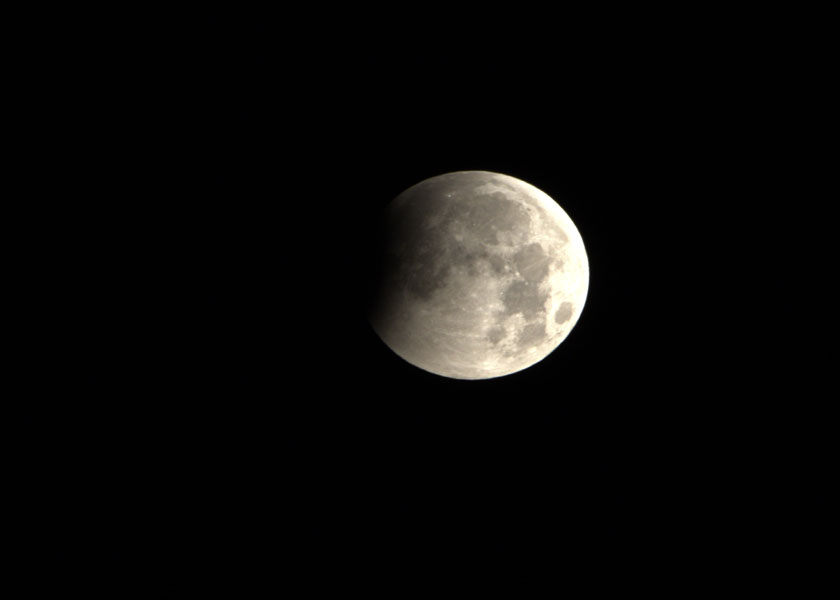
Naming of full moons started as long ago as ancient Rome. The names used today in conjunction with full moons, and published in the Farmer’s Almanac, primarily uses the names used by the Native Americans. In May 2021 the moon came closest to earth for this calendar year, which makes it a supermoon. The Farmer’s Almanac calls the May moon the Flower moon, also known as the Blossom moon. With a lunar eclipse also occurring the color changes to a reddish color, called a Blood moon. I photographed the full moon first, as it rose.
The eclipse also took place in the morning when I normally run so I saw it start, came back from my run, and photographed a good portion of it. The total eclipse happened after it sank behind the tree line, so I missed that. Even so, I managed to capture parts of the eclipse including the reddish tinge. This year many of our full moons occurred during very clear nights here on the coast in west central Florida, so I took a lot of photographs over several months. I think I finally found the lens/setting combination to get the photographs I wanted.
The start of the eclipse
The last photograph before it went below the treeline. My favorite, I love the clouds moving across the lit portion
We planned this eight day RV trip for a couple of months. We decided to limit driving to 4 – 5 hours or 200 – 250 miles per day. Too often we hurry for no reason. We reached a city about 20 miles from our first destination when we hit a bump/pothole, heard something, and then an alarm sounded. We found a commercial parking area mercifully somewhat empty and parked. Karl inspected under the RV and discovered some damage. Unsure of what to do, we proceeded to the campground and checked in.
Six months ago we camped at this same park. A man arrived to see the people next door, and while he waited for them he and Karl talked. He owned a mobile RV repair business. He impressed Karl and Karl took a business card. Thankfully we still had it and called. He would be out the next day. Our stop here was one night, and going on to another park for the week, then back to this park for the weekend and from there home.
Florida state parks require reservations for camping. No walk-ins or campers in overflow areas, we think until all Covid restrictions lift. The parks are full this time of year, and as so many people bought campers over the past few years so reservations can be difficult. We managed to secure an additional night just in case.
Then we listened to the local news. Due to the hacking of an oil pipeline, many gas stations in the southeast were selling out of gasoline. We knew we had the fuel to get to our next destination, but not back home from there. We also knew that if we could not find gas, that park was already full for the weekend so we likely did not have the option of staying until things came back to normal. A fellow camper told us she heard from friends near our planned destination and they said that some gas stations already closed. Our experience finding gasoline when we evacuated for Hurricane Irma played into our decision. We JUST made it home that time, with no gasoline to be found anywhere along the six hour trip. We doubted things were that bad, but…
It took some doing, and moving around to different sites, but we managed to secure reservations where we were, cancelled the other park, and stayed here. The mobile RV technician repaired the damage, inspected the underside of the RV and for any additional damage, and charged a reasonable price. While initially disappointed, we enjoyed a different trip than we planned. We met some fellow travelers and exchanged stories and pleasantries, and spent some time making the inside of the RV better organized for living for us and the cat, and for traveling, and hiking places we saw along the way but never stopped before to check out. We plan to take our adventure to the other park again in the near future.
Florida, like most of the country, changed significantly in the late 19th and 20th century. The original industries such as cotton, turpentine, logging, citrus,and the tourism that arose from game hunting and the “healing waters” of various springs shrunk or gave way to other industries. For most people, Florida consists of theme parks and the annual winter migration from the north for the sun, beach, and tourist activities provided by local entrepreneurs.
We sometimes come across remains of the infrastructure that supported the reduced or extinct industries. Entire towns disappeared along rivers that no longer provided the primary transportation mode, other towns shrunk when the healing waters of their springs no longer drew crowds. In some places the only physical reminder of a once thriving town where people lived, worked, and died years ago is a historical marker along a busy road. In other places the remains of structures such as this bridge provide the only visual evidence of the past.
The pilings of Old Godwin Bridge and the marker sit along the banks of the Suwanee River, accessed via a hiking trail in Big Shoals State Park.
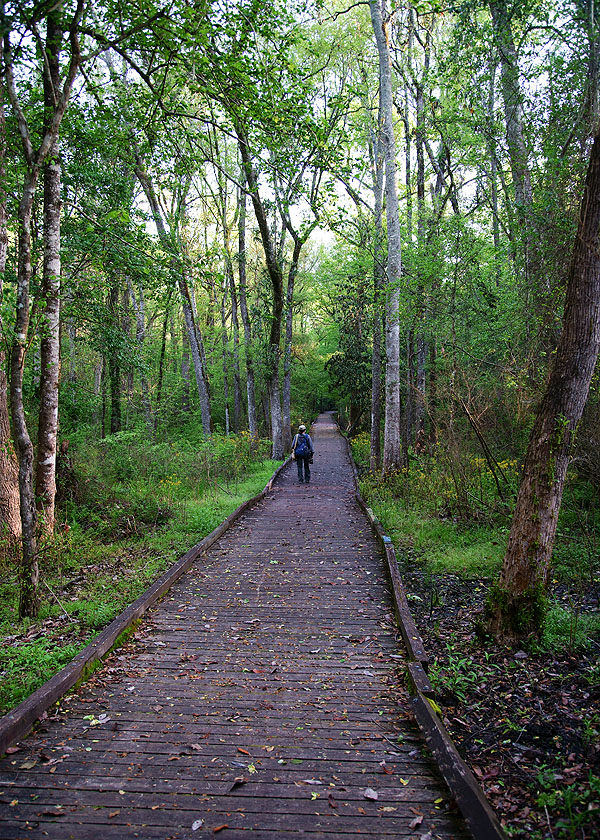
The first morning we headed to Little River Trail, and the following days hiked several of the other trails. The seven miles of trails are well laid out, and connect at various points to loop back so you can create your own hike, either short or long.
Birds called and sang in the canopy throughout the hikes, and occasionally they briefly left the cover of bushes or leaves for a brief sighting or photograph. We saw white-tailed deer, who bounded away at our approach as did the cotton tail rabbits. Mid-April means wildflowers, and we saw some absolutely beautiful displays. Boardwalks cover the wetlands area, where dragonflies fly by, but the mosquitoes land so wear long sleeves or use bug spray. Most likely due to cool mornings no snake or other reptiles crossed our path.
Heavy rains for two days prior to our arrival meant large puddles on some of the trails, and muddy areas. For the most part we could bypass the puddles just off to one side or the other without needing to go off-trail.
Each morning we walked a different combination of the trails. We heard and saw the most birds on our short walk along the Turkey Oak trail.
We saved Gopher Tortoise Loop for the last day. We saw on the website that a prescribed burn took place the week before our arrival, and parts of this trail definitely looked like they were part of a recent burn. We walked in the morning, and saw a lot of Gopher Tortoise burrows but no tortoises. Since the morning started cool, late morning or early afternoon would have been a better time so see the them.
Me with hiking along with camera a daypack
We loved our walks each morning, saw a lot, and took a lot of photographs. This park will be a yearly stop for us from now on.
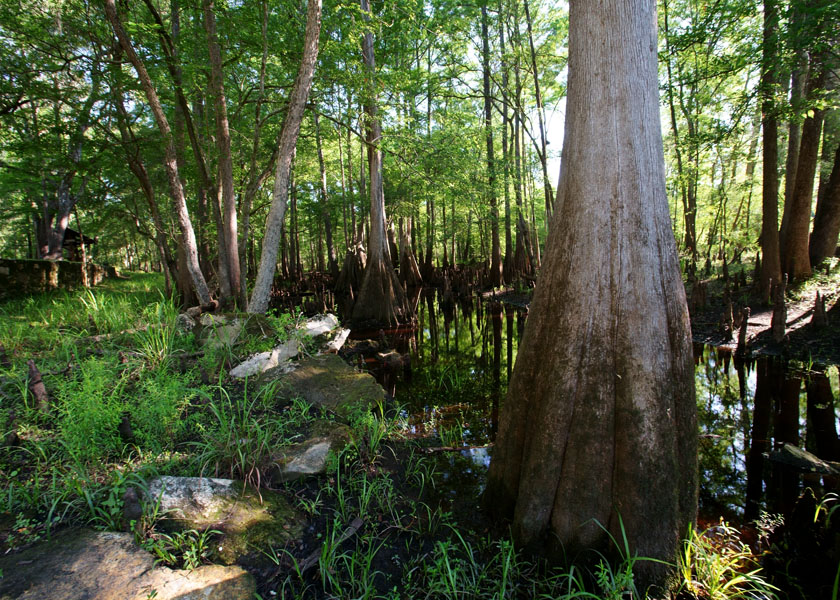
After a wonderful but short visit last year to Reed Bingham State Park in Georgia, we decided to return with this park as our destination and spend some time exploring it.
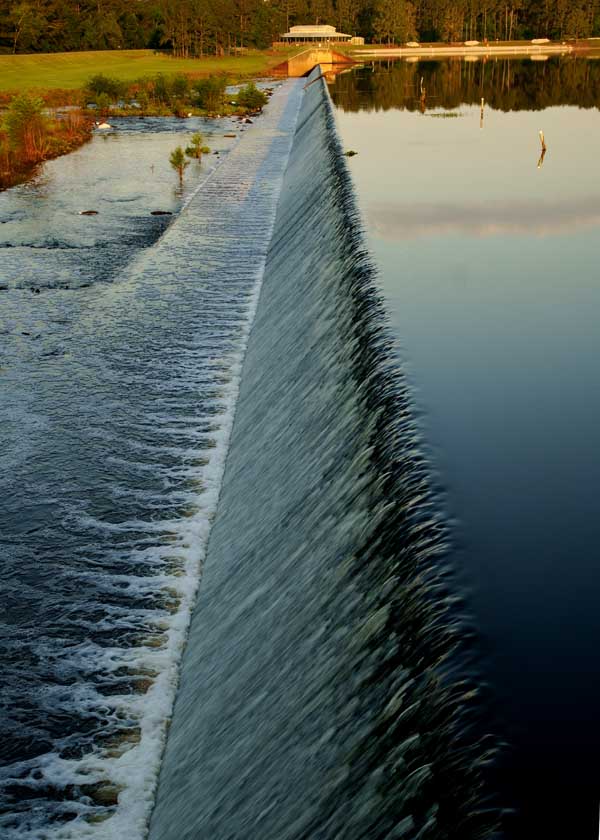
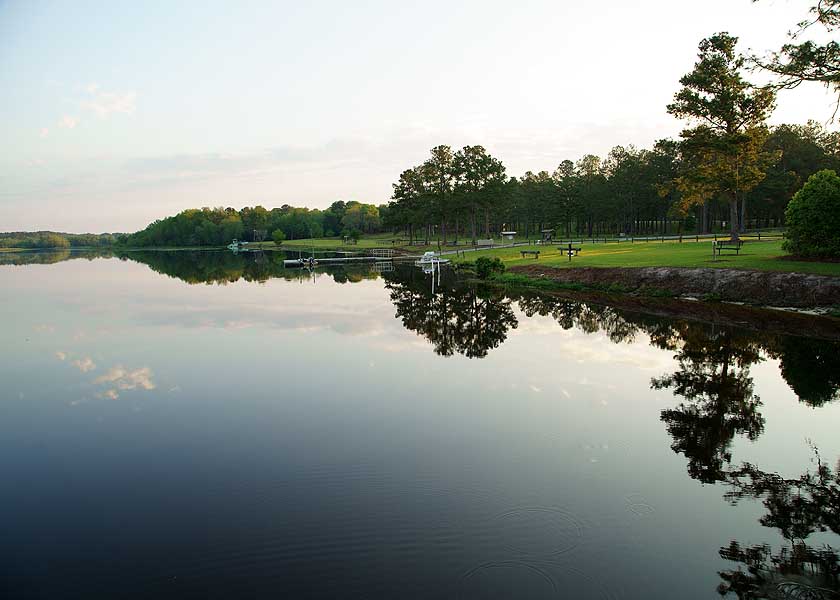
We came primarily to hike, but the variety of activities available impressed us. At the lake, people fished, kayaked, swam at a small, sandy beach area, and picnicked. The park contains seven miles of hiking trails, plus walking along the paved areas across the bridge next to the dam. We walked by another picnic area with a miniature golf course and a children’s playground. The Sunday we arrived families filled the picnic area, so seems to be a popular place locally.
For campers, the campground sites are large and spaced, and we saw a mix of tents, campers, and motorhomes. Electric and water come with the site, and some sites also have a sewer connection. The campground is a fairly open area, most sites are in full sun or partial shade but a few seemed to have shade most of the day. Everything appeared clean and well kept. Georgia makes reservations easy. They use Reserve America so you choose the park and then choose the specific campsite you want. The weather cooperated for our stay. We drove through some heavy rain to get there, and it threatened rain the entire drive home, but we enjoyed cool mornings and sunny, warm afternoons the entire time we camped.
We loved all the amenities, especially our favorite the hiking trails. More detail on our hikes in the next post.
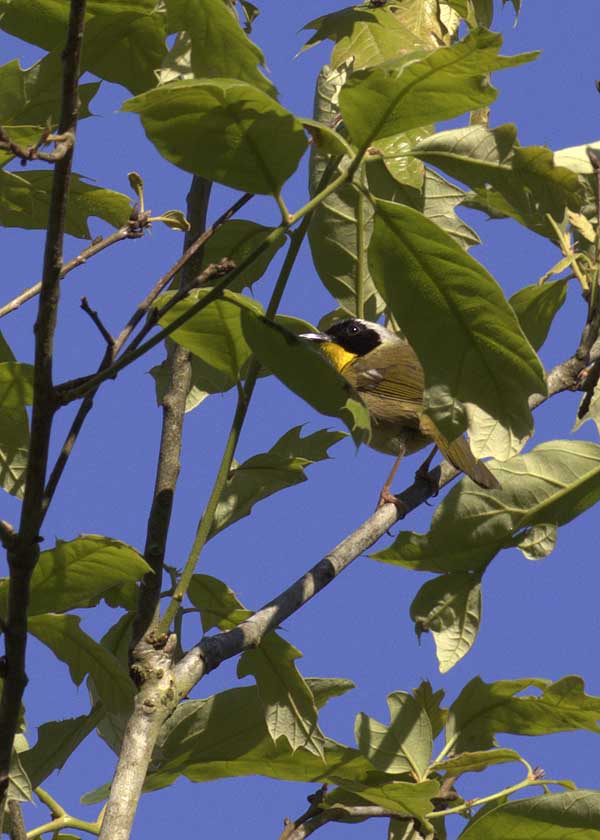
Most birds have calls and songs, so birding by ear can be challenging. During the birding we did for various citizen science projects I recognized the Common Yellow-throat warbler by its witchity, witchity, witchity, witch call. One spring a fellow birder, noted for his ability to identify birds by sound, called a Common Yellow-throat for the list. I asked if he heard the call, and he replied no, I hear the song. We waited and the bird sang again. I realized then that birding by ear involved a lot more than I realized.
On a recent hike I heard a loud bird song, repeated many times. I admit, I did not recognize it at all. Karl pointed in the direction he heard it, and I saw a flash of yellow in a tree. I approached carefully, and stopped, watching the tree. A few minutes later I heard the song again, then saw some movement. I spend at least ten minutes by that tree, listening and enjoying. Finally the bird showed enough of itself from behind a leaf for identification. I caught a photo of it looking at me, but when he sang he lifted his head behind the leaf, which blocked my view. All I managed to get is the open beak as he threw his head back to sing.
Lately we find ourselves doing more “slow birding”. When we birded for people or groups collecting research data, we followed their protocol and timing. We really enjoyed that time, and would like to do it again. But, we also really enjoy being able to stop and focus our time and attention (and camera) on one single bird.









 Nichter Photography PLUS