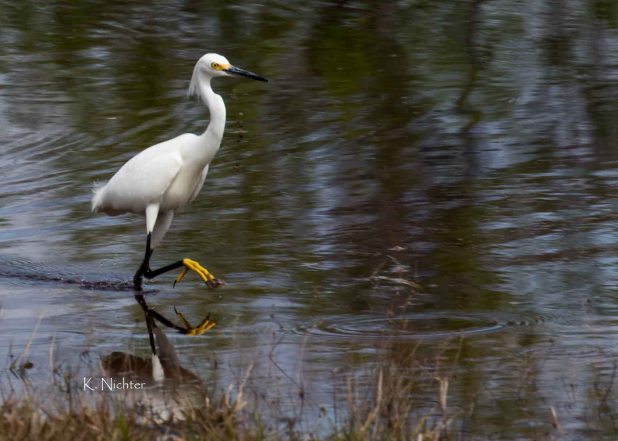
Snowy Egret stepping through the water in his breeding plumage and eye coloring
Birds are part of the fun of visiting the Okefenokee Swamp. I watched the Snowy Egret high-stepping toward me, and kept the camera on him waiting to capture one of the “golden slippers” of his feet in the air, along with a reflection.
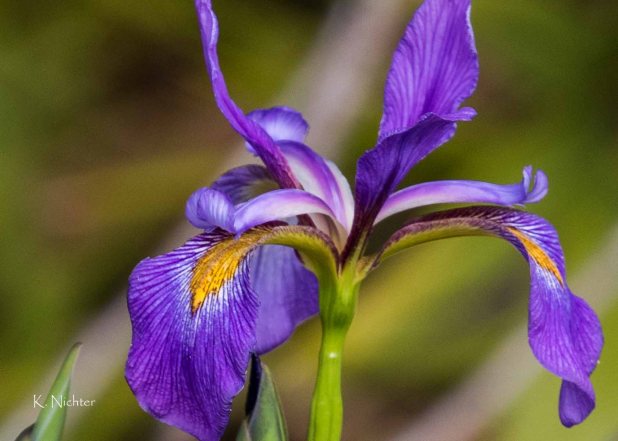
He flew not long after this shot, and I turned around and walked toward the purple I saw on the other side of the road. The Blue Flag Iris just bloomed, with several more set to bloom. The color when they are new is so rich and vibrant.
Blue Flag Iris
Another bird caught my eye, this time a Great Egret. He also walked along the shore, but on the other side.
When we first arrived I walked along the docks next to the ranger station. Something caught my eye, and I looked down to see a smaller alligator taking the sun. From the dried mud caked on its head, he had been sunbathing for a while.
I decided to take advantage of the time at home and review my photographs on the organizer this week. I need to delete those I keep ‘just in case’. They are not good shots and I won’t use them but I do like to keep them a little longer to look at again with fresh eyes. They never get better, so time to do some cleaning up. Who knows, maybe I will find a gem taken at a busier time and overlooked due to the volume of other shots.
A month ago we arrived at Stephen Foster State Park, GA in the middle of the Okefenokee Swamp for a two-day camping stay. We visited a few times before on day trips and looked forward to this trip for quite a while. Prior to our arrival, the area received quite a bit of rain. We saw flooding on the drive there, and were not surprised to find the camping area quite wet. Camping in a swamp of that size, we expected bugs. Due to the additional wet and rain, including a couple of fairly deep puddles in our campsite, oh did we have insect life!
As a designated dark sky site, we hoped for some clear skies but did not expect them. It remained partly to mostly cloudy for the trip so no night sky gazing, but that just means we need to go back again. We had been warned that internet, TV, and cell phones did not receive seventeen miles into the swamp where we camped. Our mobile phones had a weak signal that fluctuated in and out, but not even strong enough to call or text.
We took the ranger tour on our prior day trips, and decided since we only had two days to skip it this trip and explore the other areas. We hiked around the campground area, and then drove up to Savannah River Sill recreation area where we spend two mornings. The first day we walked around, alone except for one other group. Later we ran into a birder who showed us where Swallow-tailed Kites had nested the year before and told us she heard that people were seeing kites so came daily to see if they returned. She went on her way, and as we left we looked across the access road, not too far from the nest area, and saw a Swallow-tailed Kite soaring over the trees.
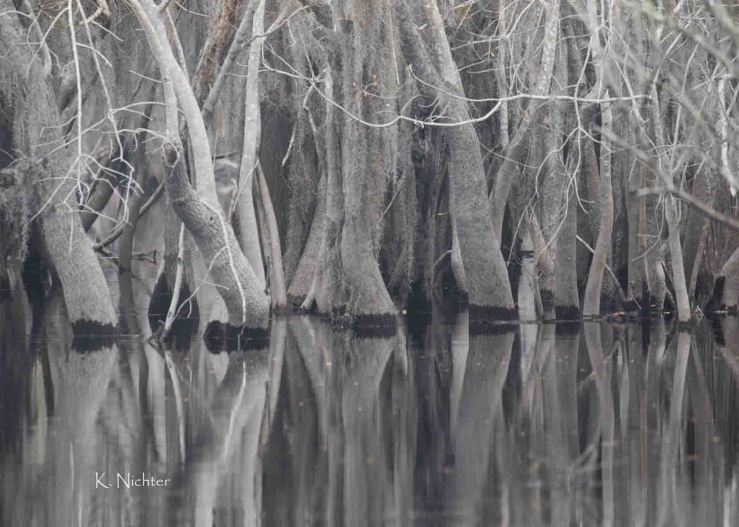
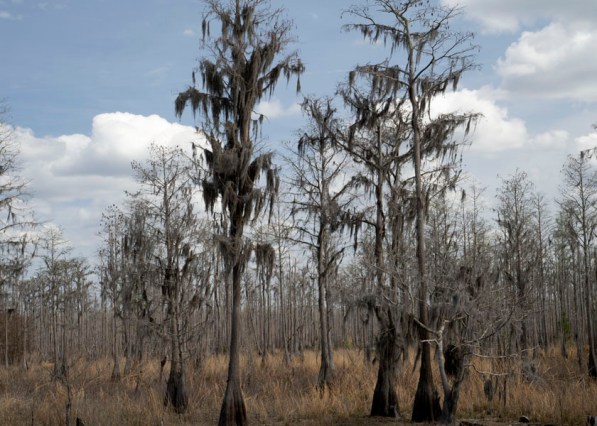
The second morning we woke to fog, so had a quick breakfast, grabbed our cameras, and went back. This time we had the place to ourselves. The fog created some beautiful shots. The shot above came out exactly as it appeared, somewhat ghostly and alien looking. Then I turned around and saw this bird, the only white spot, flying across.
Flying across the water in the fog
No description of the swamp would be complete without the requisite American Alligator picture. We saw other alligators on the opposite bank the day before, this one was just down the bank from the road where we walked.
We will return, and this time for more than two days.
We hope everyone is doing well during this time. The pandemic changed so much so quickly. Most parks and preserves around us remain closed. Normally this week we would have family staying with us and spend the week with them hitting all of our favorite birding hotspots. We talked on Easter and planned for next year when we can resume our several decade tradition…
We left for Reed Bingham State Park in Adel, GA almost one month ago for the first leg of an eight-day, three park RV trip. We started early Sunday morning, stopped for one or two rest breaks, and arrived less than six hours later. All the trip planners we used predicted a 7 – 8 hour drive.
We checked in at the ranger station/store. Though early, the site we reserved was ready so we were able to get settled immediately. We found the camping area beautiful, with space and vegetation between most sites. Our site included a bit more privacy and shade, both very welcome. Reserving a specific site is a newer feature, within the last year or so, of the Georgia State Parks and we love it.
We explored the park, and used it as a base to check out the area including a trip to Thomasville, GA. The weather stayed beautiful, we loved the park, and hope to return in the near future.
Naturally we kept up with the news about the corona virus, which escalated the entire week we were gone. In those beautiful, natural surroundings the news almost seemed surreal and very far away though we knew better. By our last day there, as all of us walked or hiked, the distance we left between each other lengthened. We left for our next stop, Stephen Foster, GA, early on Wednesday morning.
Today’s post is from Karl. He promised to keep us updated as he worked with the Sony A7 III. Here are his notes so far as he learns the new mirror-less camera:
From the time I switched from film to digital I have been using a full frame sensor by choice.
We have been reading quite a bit about mirror less cameras and their benefits, so I decided to take the leap, looked around and chose a Sony A7 III, with Kathleen’s agreement of course.
In our classroom sessions and the hikes we lead, we talk about how the tool is less of camera as we knew it, and more of a “computer with a lens”. In the case of the Sony, we were spot on. Auto focus options for example.
The Canon 1Ds MK 3 I had been using (and still do) is quite a hefty bit of gear, so the smaller Sony took some getting used to in the field. I was concerned about not having a good grip, and was afraid about dropping the camera . (I almost never wear a camera strap they seem to get in the way.) Might consider a wrist strap like Kathleen has, have not found one I like yet.
I bought an adapter so as to use the existing canon “L” series lenses which we already own. Depending on how much I use the camera and the lenses available, we may decide buy a Sony FE mount lens or two for convenience and comparison.
I am happy with the camera, and will send more feedback as I have more opportunities to use this in the field.
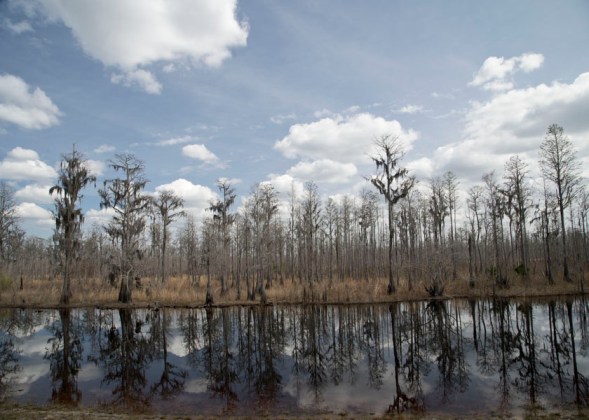
Karl gave the camera a good workout on our last trip, which included two days camping in the Okefenokee Swamp in southeast Georgia. The park and camp sites are 17 miles into the swamp, on a road which ends at the ranger station and park. It is quiet and remote. These photographs are from the Suwanee River Sill.
We don’t have a stay home directive in place in our county, though the ones directly south of us both do. The cases are climbing fast here and everywhere we look, so we will be staying home and keeping a safe distance when we do go out. Stay healthy, and be kind to one another.
My usual Wednesday post never made it last week. Karl and I returned from an eight day camping trip last Sunday. Things were calm when we left, but day by day we listened to the news, our concern and alarm growing. Though we camped at rural state parks in Georgia and Florida far from known cases of COVID-19 after the second day we stopped visiting local sites and eating out even though all those places seemed busy with locals carrying on normally, and stayed close to the RV hiking and birding. All the parks were completely full, but we noticed as days went by that other campers were friendly as usual but we all stayed at a distance from each other and waved and smiled in greeting rather than visiting each other’s sites. At one point we decided to return early. I spoke with my sister and she suggested we stay. As she said, and we should enjoy the peace and quiet for the next two days. She also said out loud what we were thinking, it might be the last trip for quite a while.
We returned to a surreal world of empty shelves in grocery stores and email boxes that daily filled with emails announcing cancellations of events and at first reduced hours for places and then complete closing. We shopped for groceries, which took two days and visits to several stores to find what we needed, but otherwise stayed home.
Our hearts go out to everyone around the world fighting this disease, and for those dealing the massive changes in daily life. For a time, most of our interactions with others will be from a distance, by reading their blogs, emails and texts. Stay healthy, and we will work on doing the same.
I plan to keep posting, we have some interesting things from our last two trips and updates on Karl’s experiences with the mirror-less SLR. Our photography will be a close to home endeavor for the near future.
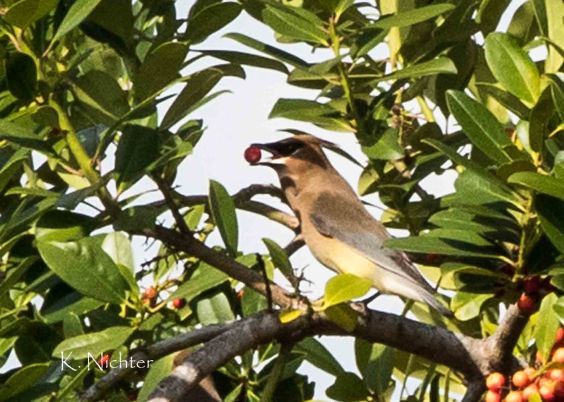
I just started to open the car door in the supermarket parking lot when a flock of birds flew overhead and settled on one of the landscaped trees in the parking lot. They rose as one, flew around, and landed again. I couldn’t quite make them out due to distance and all the foliage, but the way they flocked together and the prominent berries in the tree led both Karl and I to guess Cedar Waxwings.
I grabbed my camera and opened the window, not wanting to scare them away. With the 24 – 70 mm lens at 70 mm I took a few shots. In spite of the numerous berries, they stayed only briefly and left. The supermarket fronts a very busy Florida highway, and this time of year especially traffic remains heavy all day long, not just during rush hour. Perhaps they decided to find a quieter place with fewer people.
I had no time to adjust settings, and discovered later the ISO had been a bit high, but considering the quick shots with the short lens I was happy with the results.
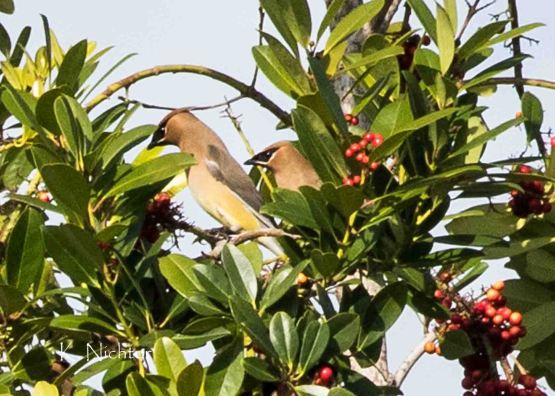
This shot is really too busy, but I liked the bird coming in for a landing. The overall picture reminded me of one of those puzzles: How many Cedar Waxwings can you see in this shot? I counted five for certain, but I think there might be another one hidden.
This bird winters in the area, but we don’t see them very often the places we bird and hike. This was nice and unexpected.
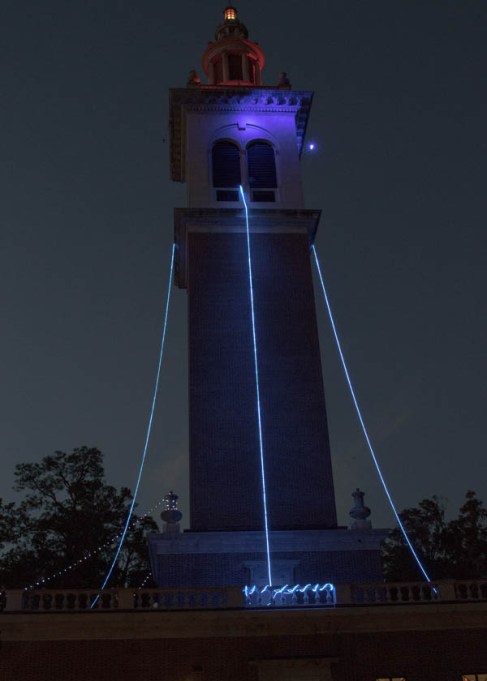
The lights from the Festival of Lights December 2019
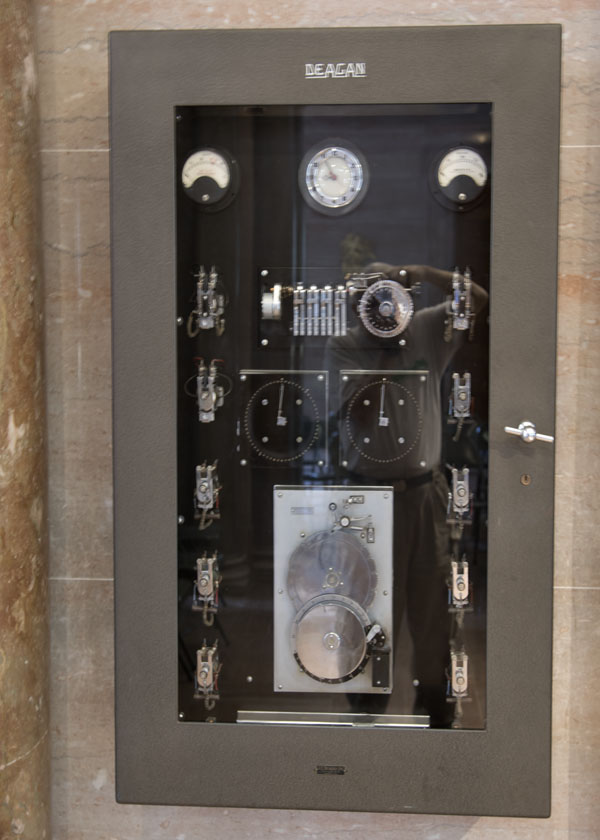
In the building beneath the Stephen Foster Memorial Campanile Tower (Stephen Foster Folk Music State Park, White Springs, FL) is a museum explaining the 97-bell carillon. It is the largest tubular carillon in number of bells in the world.
Installed in 1958, the bells stopped ringing their regular quarter hour chimes in the 1980s due to the cost of maintaining the system. One set of 32 bells was restored in the early 1990s, and it is this set that you hear today. Efforts continue to raise the money to restore the rest. During our December visit we heard the bells regularly, and paused briefly each time to listen and identify the tune. Unfortunately they have been silent several times during prior and subsequent visits due to required maintenance. The museum is worth a visit if you are in the area. Hopefully the bells will be ringing.
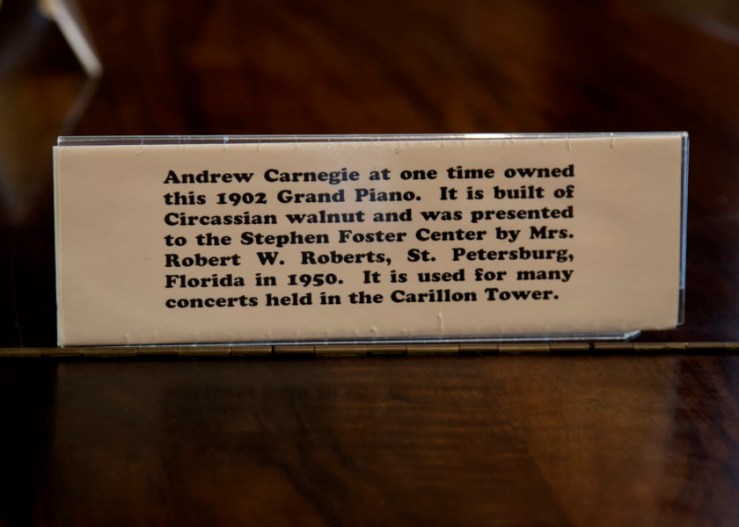
Notice the chairs set up in the foreground for an event held here the day beforePart of the mechanism that makes it work.Sign on one of the several classical pianos on display.
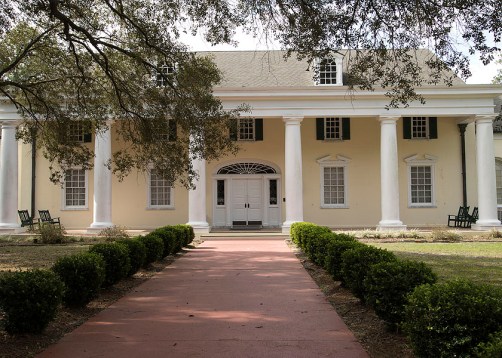
We’ve talked about Stephen Foster Folk Heritage State Park in White Springs, FL several times. We love camping there. They have events like Rural Days and a Festival of Lights which we like to attend, made all the more convenient by being able to walk to the event. Last visit Karl realized that while we often tour the museum and bell tower, we rarely photograph them. This last trip we spent an afternoon doing a photo shoot of the buildings and had fun doing it, and comparing photographs. Karl shot the first three of these, I shot the last.
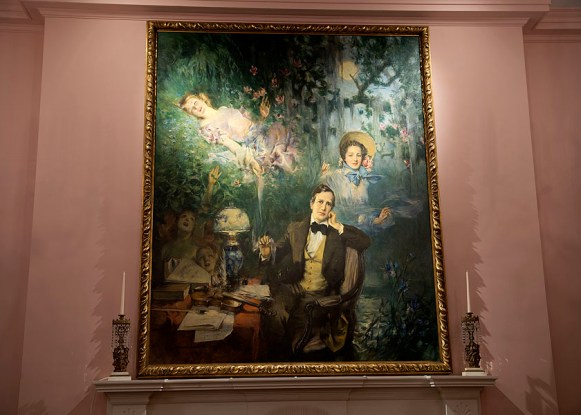
The museum contains information and exhibits about Stephen Foster. He wrote many songs, one of the most famous “Way Down Upon the Suwanee River”. Large dioramas illustrate his most famous works, and there are many antique pianos and furniture from the period.
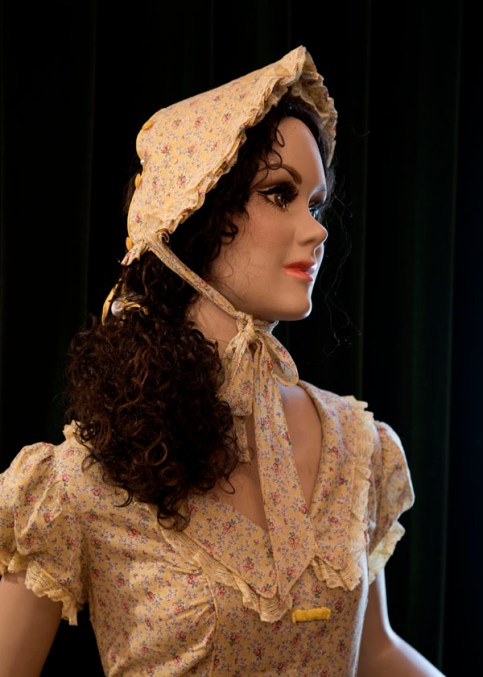
Painting over one of the Fireplaces, showing Foster and scenes from his songsMannequin depicting “Jeannie with the Light Brown Hair” song.Silhouettes in the front garden
It is out of the way, but a fun place to visit if you are in the area or passing by.
I never looked closely at how a forest looks after a prescribed burn. I saw many burn areas through the years, but mostly smaller sections, where green trees and undergrowth surrounded the small burned area. Somehow it blended into the color around it, taking away from its starkness. Recently we happened upon an area where a large burn occurred.
Florida requires these prescribed burns. In natural areas the plants evolved around a cycle of growth and burn, and show it in their adaptations. People suppressed the natural fires for years, until they realized that the land and in fact many species of plant required burning to release their seeds, or nudge those seeds into bloom. Not only plants suffer without regular burns, people can too. If the under-story grows too thick a wild fire, usually caused by our frequent lightening, burns hotter and stronger and can kill the trees and spread to nearby houses and other man-made structures.
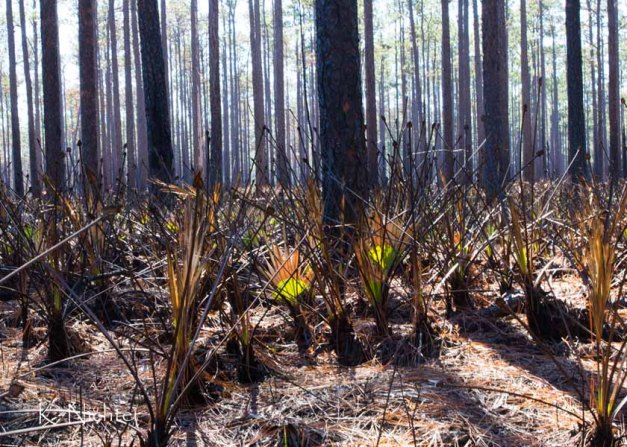
This burn appeared to be fairly recent but some grasses already grew back in parts of the area. The scene of so many pines receding into the distance stood out starkly. The trunks appeared charred; some more than others, but the fire adaptations showed in the green living pine needles on branches that start further up the trunk to protect the crown, not near the ground.
The very cold and cloudy morning gave way quickly to bright, clear sunlight and a very blue sky. By late morning that light hit the area in such a way as to show a great amount of texture and detail. I focused at first on the green areas I saw, providing the contrast. As the sun rose higher I noticed the way the light hit some of the burned areas gave many of the trees an almost surreal look. The top photo was not processed to give that look; it is how the camera captured it.