Big Shoals and the Old Godwin Bridge

_Z9X7173

We find the most interesting things when hiking. We hiked Big Shoals State Park in Hamilton Country, Florida for views of the Suwanee River, the limestone outcroppings, and the rapids. I posted photographs and wrote about those before, and on our last visit we discovered something different.

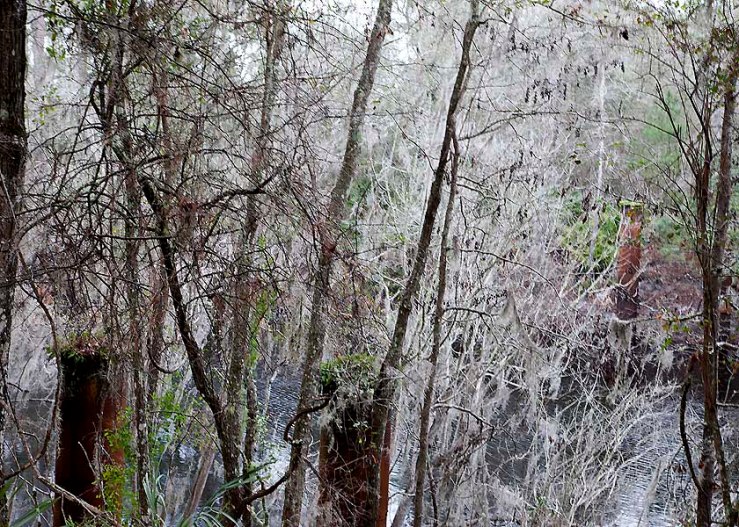
Karl found the sign for the Old Godwin Bridge and set up the shot above of the bridge pilings through the trees. The sign below tells the history of the bridge. The pilings lasted all this time, in spite of over a century of further floods and high water. Several places we camp and visit contain sites of former towns, bridges, and industry, now all gone. I wish more places kept local histories to make these places more alive. Then again, they lived their lives never thinking that one day their town or industry would be gone, just a sign in a park remaining to mark the place.

godwin1

Tarpon Springs Florida

Karl and I judge photography contests fairly regularly, sometimes together and sometimes individually.  I recently joined a panel of two other local photographers to judge a photography contest for Explore Tarpon Springs, part of the launch of a new tourism initiative. Last week we attended the introduction of the new video, and the exhibition and prize awards for the winners of the contest.

If you have not been to Tarpon Springs, I highly recommend you make time the next time you are in the area. We are fortunate to live about a 20 minute drive away, so visit often for meals, to see special exhibits, for photography (of course), shopping, and to take one of the many boat rides available. Everyone who visits us wants to spend at least a day there, every time they visit.

The cup above shows part of their new logo. I will update this post when I get the URL for the website.


Dining out…outside of course

No Dining

Contrary to popular belief, or at least the belief of those who do not live in central Florida, we do not hide inside all summer sitting in front of air conditioning.

I don’t recommend hiking, biking, or sitting out in the blazing afternoon sun with 90+ degree temperatures and comparable humidity unless of course you love that. You find us out and about mornings, evenings, and during the day under a canopy or roof. We sat out on a deck, very comfortable with shade and a light breeze, at a local restaurant having lunch recently. Plenty of boats went by, and we and our fellow diners enjoyed a nice, leisurely meal watching the boats, water, and of course wildlife.

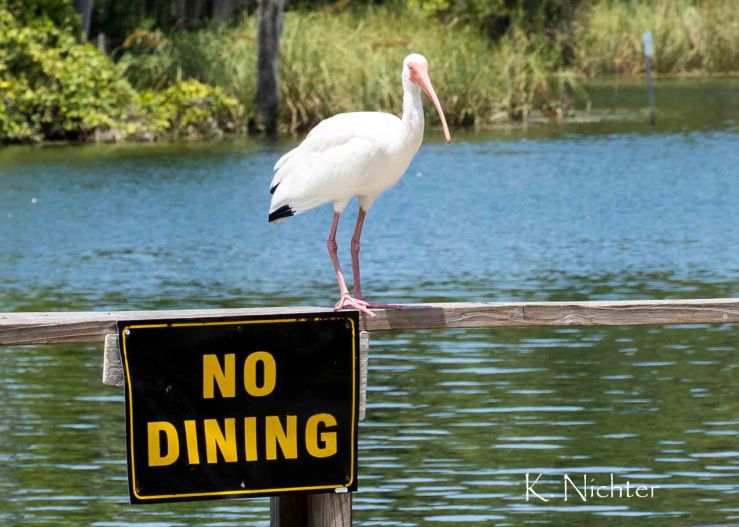
This White Ibis posed atop this sign briefly, before realizing that it meant only on the boardwalk. He then jumped down, walked over and up the steps to the dining deck, and walked around the wait staff and diners hoping for a handout. Thank goodness none were forthcoming, people food does not agree with wildlife. We sat near a nature preserve where plenty of his native food could be found, but who could blame him for trying?

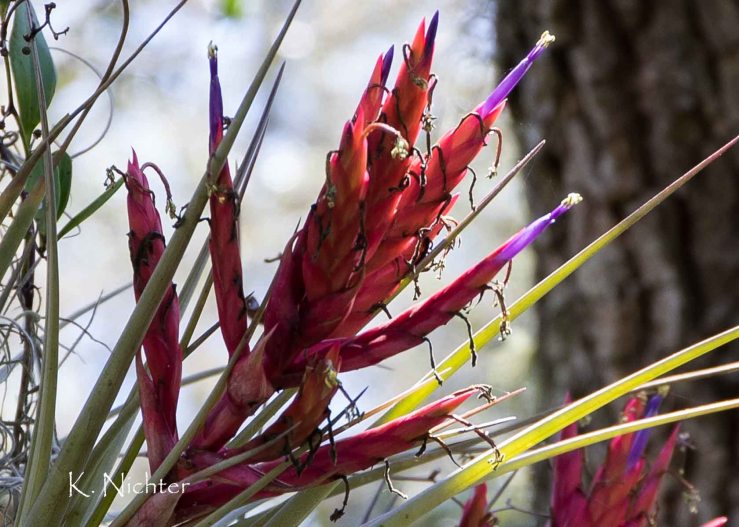
Tillandsia fasciculata- Cardinal Airplant

Giant Airplant

We hiked the end of May, and the hike leader showed us this beautiful air plant just off the trail. This is the Cardinal Air plant, one of the larger air plants once common in Florida. The Mexican bromeliad weevil, introduced accidentally to Florida in about 1989, spread to central Florida by 200?. The larva of this weevil feed on the interior of the larger air plants, including this species, killing them. This is the first Cardinal Air plant I have seen in years. Prior to the weevil we saw them all the time. Due to the weevil, the Cardinal air plant is now endangered.

Closeup airplant
Closeup of flower

The bright red flower bracts are the most common, but yellow and green are also found in Florida. It flowers all year, particularly from spring to early summer.

These can be challenging to photograph. Often they contain a lot of dead leaf or pine needles, and because of their habit lighting can be iffy. This one contained a couple of very small dead branches, and of course a small insect on one leaf (just visible in the upper right). I used my Canon 24 – 70 mm lens at 70mm and cropped the original photo to get the second photograph.


Ad Astra and George Washington

starburst 1
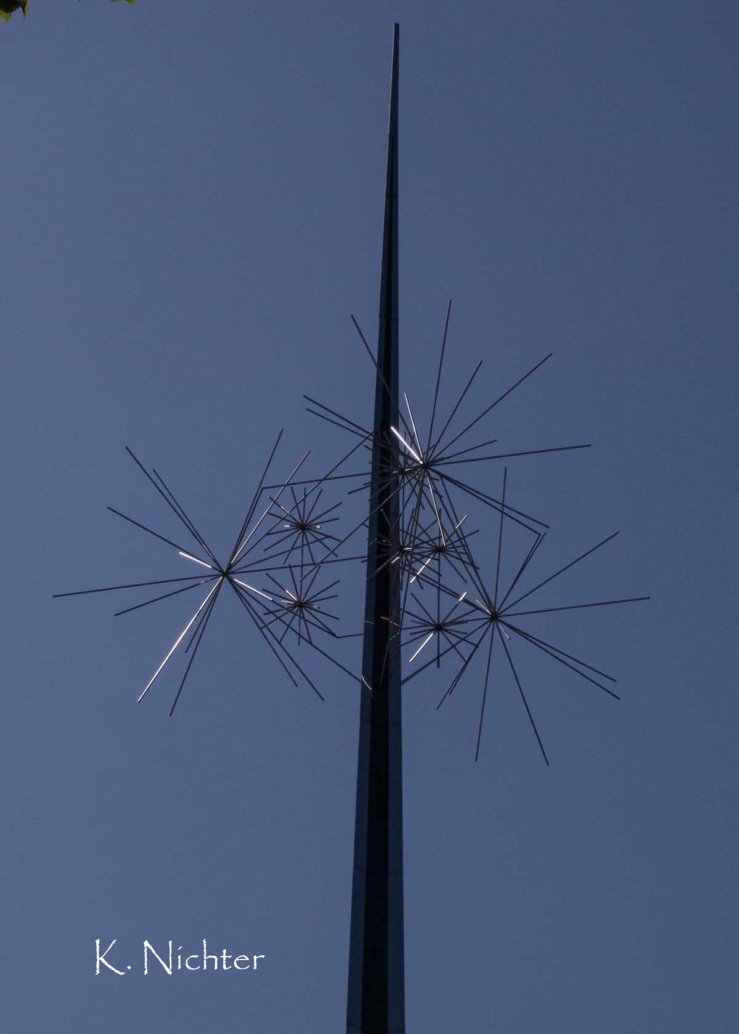
Ad Astra (To the Stars)

We visited the Smithsonian Air and Space Museum on the Mall first. The last time our co-travelers visited this museum it contained such a large crowd they left after a short time. We arrived early (all Smithsonian  museums open at 10 a.m.) and found others already waiting.

I took several photos in the museum, but due to the crowds the angles and views I pictured rarely happened. I took the usual tourist type shots, (I will not bore you by posting them) and after a few hours when the crowds became such that enjoyment left, we also left.

Photography aside, we loved the museum. I particularly liked the Pioneers of Flight exhibit, and spent a lot of time there before making my way around the rest of the museum.

Arriving early gave me time to contemplate the Ad Astra sculpture. I photographed it several times, finally deciding to concentrate on what I call the star bursts. Shortly afterwards the light changed, and as I gazed around so did my perspective. starburst 2

The contrast of both color and form between my initial shot and the reflection in glass struck me so I photographed that also. Finding a unique angle or view of something so often photographed is one of the fun challenges of tourist travel.

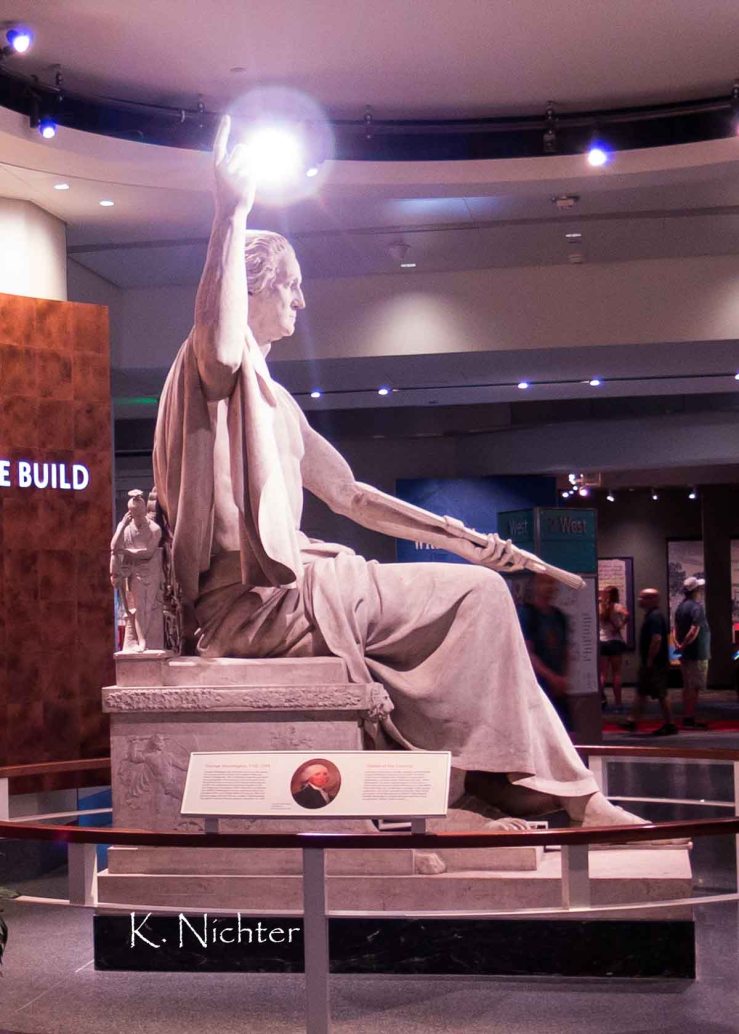
In the American History Museum we admired the sculpture of George Washington, and I did take a standard shot. Moving on, I turned to find my companions and realized from that angle, George had a burst of light over his head.GW with light

I waited until several people moved to take the photograph. I want to visit Washington again. There is so much to see, and so much of it free admission. I could spend the day at the National Gallery of Art, and that is rarely crowded!

Street (?) Photography

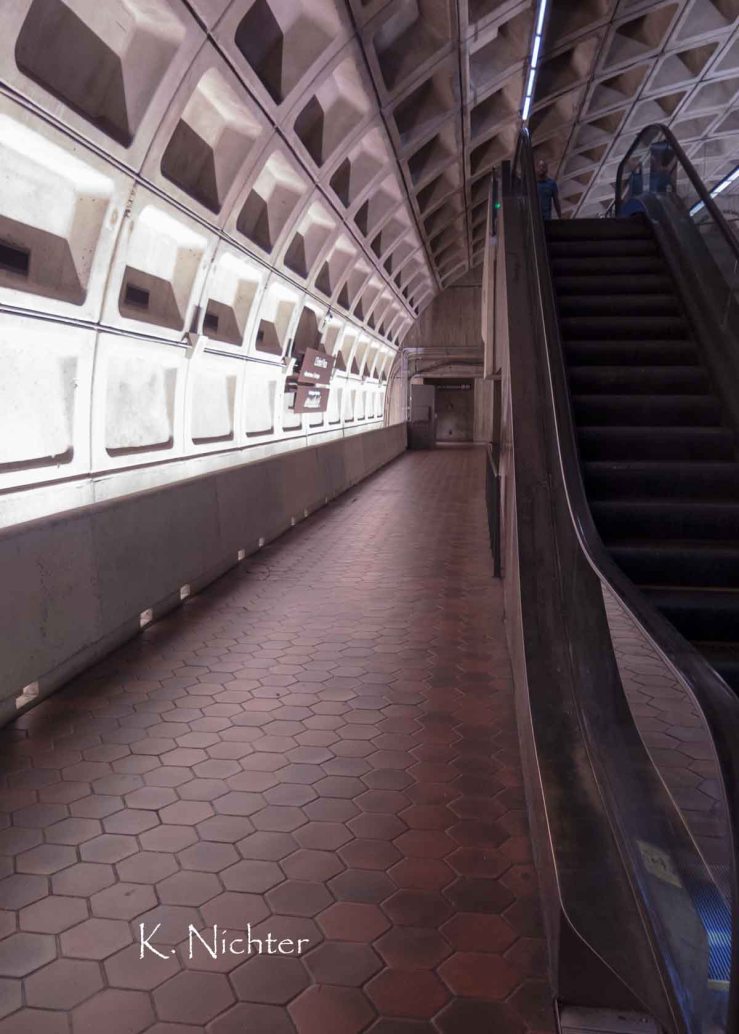
Metro station 1
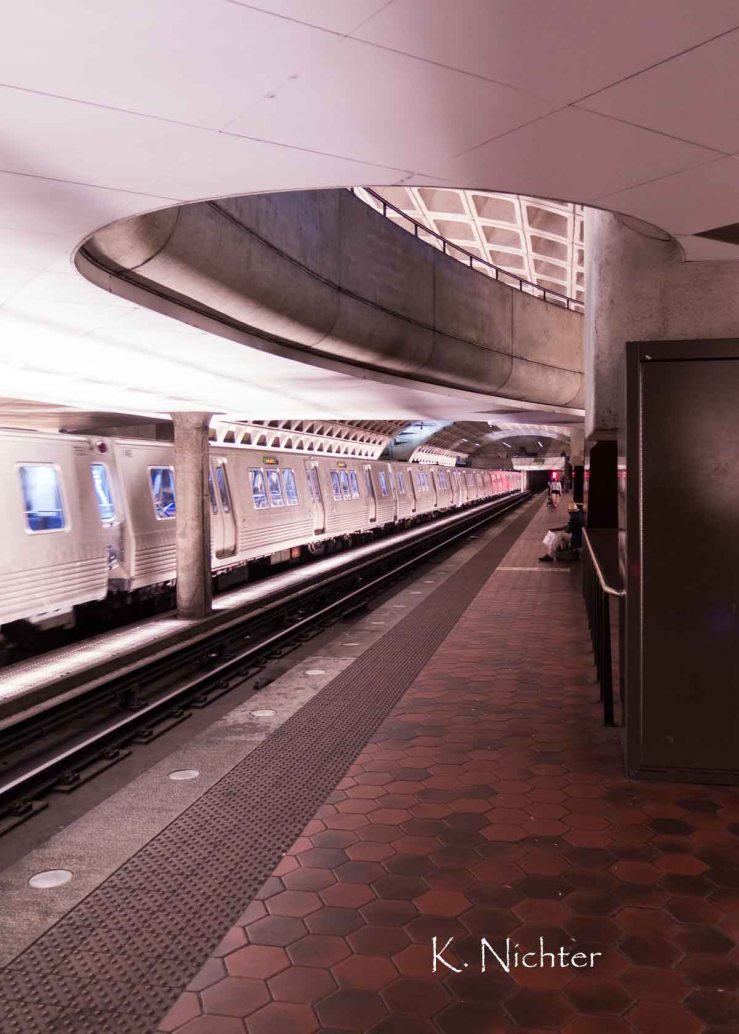
Washington, D.C. Metro

Technically, it is not a street. There are people in it. During a discussion regarding the resurgence in popularity of ‘street photography’ several months ago someone informed me that if the photograph did not contain people, it did not count as street photography. I wonder if they write letters to well known street photographers who publish street photographs with only a dog in a storefront in their street photography monographs, or a silhouette that might be a person, telling them to change their profession. What if no street appears? After all, street appears in the name. Someone always adds new rules to suit their taste.

I love public transportation, especially subways and trains. It started decades ago during my first trip to London when this car loving suburbanite, then a young adult, found out about good public transport. I still have those photographs of the “Mind the Gap” signs. The lines and curves of the Washington metro, with harsh lighting in some places and almost none in others, and the vanishing lines of the tracks reminded me of that first experience. While my fellow travelers checked the stations and waited for the train, I wandered around and took my photographs.

Metro Station 2
For any purists, note that a person is on top of the escalator.

I mentioned before that the G16 sets limits on me that my SLR does not. In this case, it worked well. I shot both of these at ISO 200 at 1.8. As unobtrusive as a mobile phone, it gives me more options without attracting undue attention.

On this trip to Washington, DC, I carried the Canon G16 exclusively. Celebrating anniversaries with another couple and seeing the museums for which our taxes paid covered the purposes of this trip. Photography, if done at all, took a back seat. Well, sort of. I did get a few more photographs I’ll be sharing with you.


Working with a smaller camera

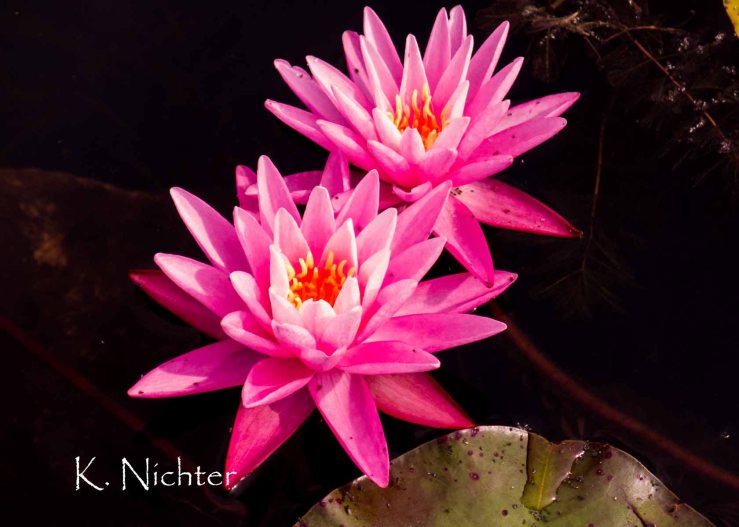
g16 closeup of lily

Karl and I lead photography hikes several times a year and teach workshops once or twice a year. Before we semi-retired we did both several times a month. We focus our attention on the basics and beginners, since the hikes and workshops attract a wide variety of people with an equally wide variety of cameras. Our first class back in 2009 said “It’s the Photographer, not the camera” and we still believe and teach that position.

Recently I realized that I rarely use my Canon G16 camera anymore, or the camera on my phone (which I rarely ever used). I carry my Canon 7D Mark II with the 24 – 70 mm lens daily in my bag, and add the Canon 100 – 400 mm when I think I will need it. I decided it was time to start carrying the G16 exclusively on some trips just to prove to myself that it is the photographer.

I shoot in raw even on the G16. My aperture range on this camera is 1.8 to 8.0, very limiting for depth of field but workable. The ISO range is 80 to 12,800 though it is grainy at the high end. I turned off the digital zoom and use only optical. Every camera and lens combination requires the photographer to work the photo composition, the point and shoot cameras perhaps more due to fewer options. When used to a larger range of options as in the SLR I usually carry, I did have to constantly remind myself and adopt other angles and concentrate on my settings and position even more. It required me to stretch and exercise more creativity, always a good thing in photography.

On a recent trip I photographed some water lilies. I worked mostly in aperture mode at f8, and because of the bright sun stayed at ISO 80 or 100. Both required a lot of cropping due to the lack of zoom and my inability to get any closer to the flowers. g16 water lilies

These are my two favorites. I loved the reflection in the second one, and I am happy it came out as I pictured it. My dragonfly photographs did not turn out as I wanted. Getting close enough to get detail is difficult without scaring them off. The G16 has the advantage of small size, lightweight, and not attracting the attention of the larger SLRs. I was impressed with how well it did, and plan to work with it more.


Taking Walks with a Camera

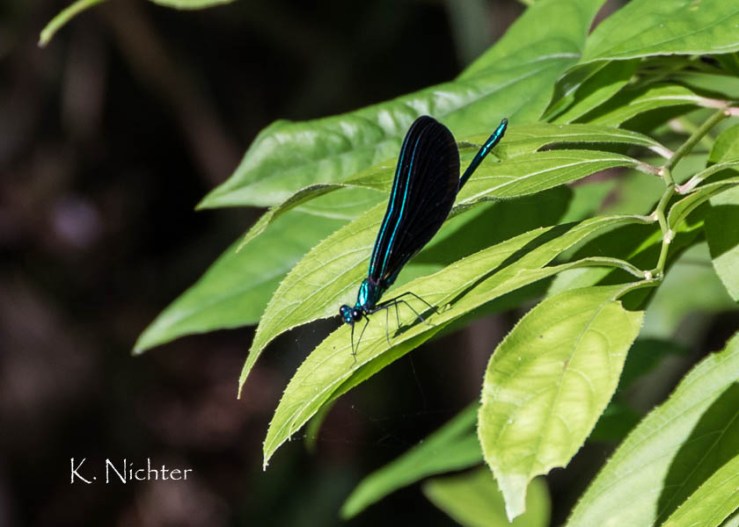
Ebony Jewelwing
Ebony Jewelwing damselfly.

Our beautiful spring gave way to a hot summer about a month ago. It follows the same pattern every year, but this year the hot seems hotter because the spring weather came so close to perfect. Our photography slowed down a bit, less because of the weather and more because the house required some attention.

Here are some recent random shots:

Spotted Sandpiper Eagle Point
Spotted Sandpiper
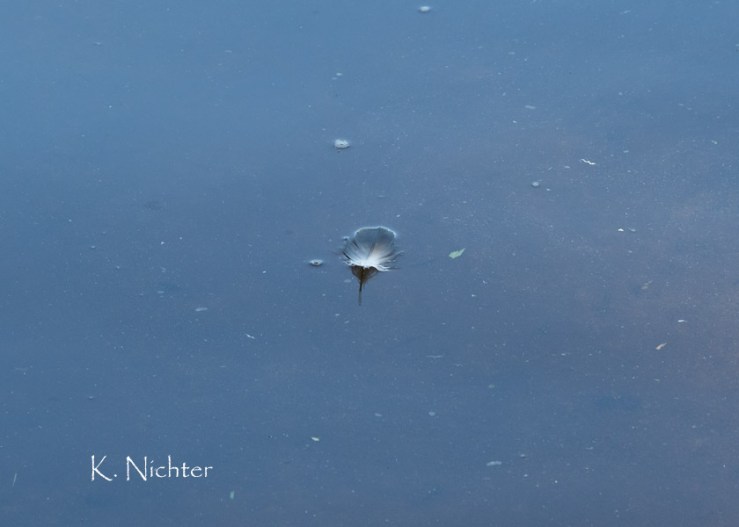
Feather on Water Kolomoki
Feather on a Still Lake

FYI: Karl and I are doing a July workshop at Brooker Creek Preserve this year. Check www.brookercreekpreserve.org for details. We rarely do summer programs, but decided to try it this year and see what kind of response we get.

The Southernmost Covered Bridge

Covered Bridge

For over a century a covered bridge named Coheelee Creek Bridge spanned the Coheelee Creek ten miles southwest of Blakely, GA. To find this amazing relic from the past, be sure to pick up a brochure with directions at the Chamber of Commerce. The bridge remains well-hidden in a beautiful, quiet, and scenic rural area. According to an article by David Williams of Valdosta State College, few covered bridges were built in this part of Georgia. This is the only one located south of Macon, making it the southernmost covered bridge in the United States. Built in 1891 in the queen-post modified style with a central pier, the bridge crosses the creek at 96 feet in length. In 1976 it was placed on the National Register of Historic Places, and restored by 1984.

We discovered the existence of this little known bridge accidentally. We stopped at a store and found the brochure with some other local information. The driving directions in the pamphlet provided by the Chamber of Commerce made finding the hidden bridge easy. The sun came out as we admired and photographed the structure. We took our time. The contrast when the sun came out made photographing the inside a challenge. Karl set up several shots to get the tricky lighting to cooperate, and got this shot.

_Z9X7465

We find the most interesting and amazing things when we visit an area and just slow down, look around, and wander around.

The Butterfly Time of Year

Zebra Swallowtail GA

On our recent trip to Georgia we took a back road to find the only covered bridge left in this area. We found the bridge, and enjoyed exploring and finding different angles to photograph it. As we walked back to the car, I started noticing the butterflies. Pursuing one in an attempt to get a shot, I realized not only did butterflies surrounded me, but they included many different species.

Because I had been photographing the bridge I had the Canon 24 – 70 mm lens rather than my butterfly photo preferred Canon 100 – 400 mm. That meant getting closer, and watching my shadow as I approached. Had anyone but Karl been watching me, I am sure that they would have wondered what I was doing as I stepped carefully, stopping and shooting, then continuing, sometimes ducking one way or another.

The Zebra Swallowtail above eluded me for many years. Usually by mid-morning they fly and flit hardly stopping in one place before going for the next. I took many shots of them in flight, this is the first one of one resting. The Spice-bush Swallowtail flew more leisurely, and stopped longer. The Pearl Crescent varied, and so many individuals flew around the area subjects at rest were easier to find.  Numerous blues covered the area, but between flight, background, and their smaller size I  did not manage to get the shot I wanted.Spicebush Swallowtain GAPearl Crescent GA